

Table of Contents
- What Separates an Automatic Watch Movement from an ETA Caliber
- Movement Comparison Table: ETA 2824-2, Sellita SW200-1, Miyota 9015, and Seiko NH35
- ETA 2824-2 Reliability: What the Numbers Actually Tell You
- In-House vs ETA Movement: Cost, Craft, and What You're Actually Paying For
- Servicing ETA Watch Movements: Intervals, Costs, and Finding a Watchmaker
- Which Automatic Watch Movement Is Right for You?
- Conclusion
Last Updated: August 11, 2026
What Separates an Automatic Watch Movement from an ETA Caliber
An automatic watch movement is any self-winding mechanical caliber that winds its mainspring through wrist motion, eliminating the need for a battery or daily hand-winding. ETA is a specific Swiss movement manufacturer and Swatch Group subsidiary that produces widely used automatic calibers. Confusing the two is a common mistake among newcomers evaluating watches.
At Haim Watch Company, this distinction shapes every product decision, from the Swiss-made Viajero SE to the 100% US-assembled Legacy Automatic with its custom-designed caliber. Understanding the difference directly affects what you're paying for, how long the watch runs between services, and whether you can find a watchmaker to fix it in a decade.
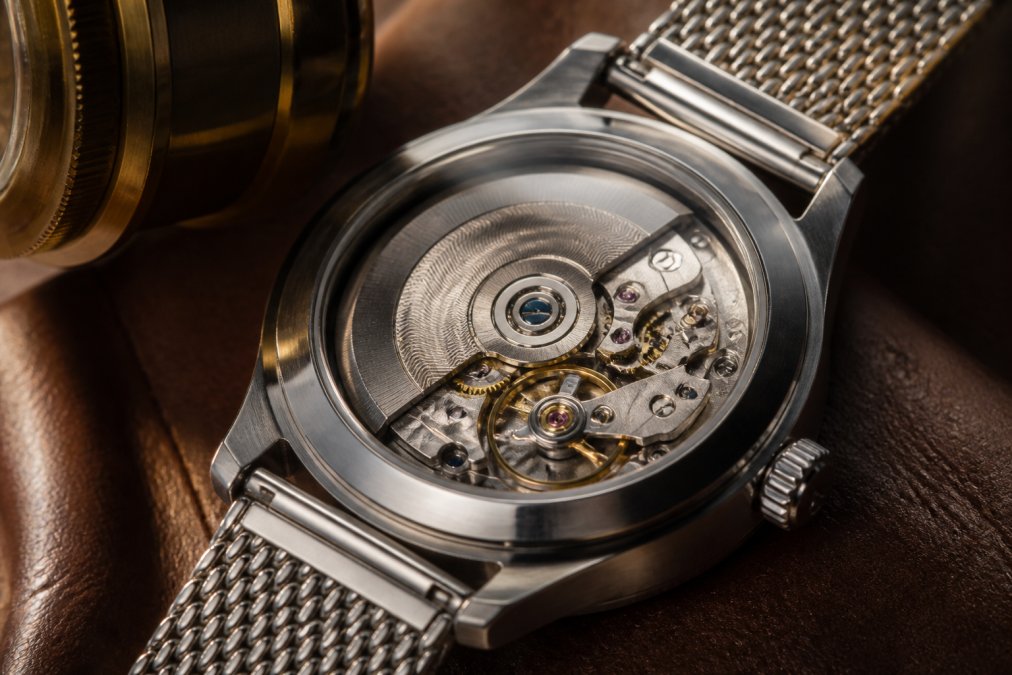
How Automatic Winding Works: Rotor, Mainspring, and Escapement
The automatic winding mechanism relies on three core components. A semicircular rotor, weighted at its outer edge, pivots freely as the wrist moves and winds the mainspring, a coiled strip of metal that stores mechanical energy. The escapement releases that energy in precise increments, driving the gear train and moving the hands.
The balance wheel oscillates at a fixed frequency measured in vibrations per hour. Most modern automatic movements beat at either 21,600 vph or 28,800 vph. Higher beat rates produce a smoother second-hand sweep and greater resistance to positional error, though they increase component wear over time.
Hacking seconds, the ability to stop the balance wheel by pulling the crown, is standard on most contemporary calibers. Hand-winding capability, which lets you manually tension the mainspring without wearing the watch, is less universal but highly desirable for long-term ownership.
Where ETA Fits in the Movement Landscape
ETA is the dominant supplier of Swiss ebauches, unfinished movement blanks that other brands purchase, finish, and regulate to their own standards. The ETA 2824-2 is arguably the most widely deployed automatic caliber ever made, found in everything from entry-level microbrands to mid-tier Swiss names. Its 25.60mm diameter and 4.60mm height have become an industry standard.
The Swatch Group's gradual restriction of ETA supply to external brands, accelerating in the early 2010s, forced much of the industry to seek alternatives. That supply pressure drove independent movement manufacturers like Sellita to gain traction and made in-house development a genuine competitive differentiator. According to the Federation of the Swiss Watch Industry's industry overview, movement architecture and supply chain independence remain central strategic concerns for watch brands at every price tier.
Movement Comparison Table: ETA 2824-2, Sellita SW200-1, Miyota 9015, and Seiko NH35
The four movements below represent the most commonly encountered automatic calibers across the microbrand and mid-market watch space.
| Movement | Origin | Beat Rate | Power Reserve | Jewels | Hacking / Hand-Wind | Best For |
|---|---|---|---|---|---|---|
| ETA 2824-2 | Swiss | 28,800 vph | ~38-40 hrs | 25 | Yes / No | Mid-tier Swiss brands |
| Sellita SW200-1 | Swiss | 28,800 vph | ~38-41 hrs | 26 | Yes / No | Microbrands, Swiss alternatives |
| Miyota 9015 | Japanese | 28,800 vph | ~42 hrs | 24 | Yes / Yes | Slim-case designs |
| Seiko NH35 | Japanese | 21,600 vph | ~41 hrs | 24 | Yes / Yes | Entry-level, modding community |
The ETA 2824-2 and Sellita SW200-1 are nearly identical on paper, with the same diameter, height, and beat rate. The Miyota 9015 is the thinnest at 3.9mm, making it ideal when case thickness is a design constraint. The NH35's lower beat rate produces a less fluid second-hand arc compared to 28,800 vph alternatives. Neither the ETA 2824-2 nor Sellita SW200-1 includes native hand-winding capability in standard configurations, a real limitation for collectors who store watches in rotation.
ETA 2824-2 Reliability: What the Numbers Actually Tell You
The ETA 2824-2 reliability reputation is genuinely earned. This caliber has been in continuous production for decades, refined through iterations that addressed early weaknesses. Watchmakers across the country know it intimately, which means service turnaround times are shorter and diagnostic errors rarer than with obscure calibers.
Accuracy Grades: Standard, Elaboré, Top, and Chronometer
The ETA 2824-2 reliability story becomes more nuanced when factoring in movement grades. ETA supplies the same base caliber in four finishing levels, each with tighter regulation tolerances:
- Standard: -10/+30 seconds per day. The baseline grade, typically found where movement cost is the primary constraint.
- Elaboré: -7/+15 seconds per day. A meaningful step up with additional regulation and component inspection.
- Top: -4/+6 seconds per day. Approaching chronometer territory with intensive casing-position regulation.
- Chronometer: -4/+6 seconds per day, certified by the COSC independent testing bureau. Every movement tested individually across five positions and two temperatures for 16 consecutive days.
Most watches marketed with an ETA movement use Standard or Elaboré grades. Top and Chronometer grades add meaningful cost and are rarely specified at entry level. Two watches can both contain an "ETA 2824-2" and perform very differently out of the box.
The Sellita SW200-1 follows a similar grading structure, and because its dimensions match the ETA 2824-2 exactly, many parts are directly interchangeable, a significant advantage for long-term serviceability.
In-House vs ETA Movement: Cost, Craft, and What You're Actually Paying For
The in-house vs ETA movement debate is polarizing, and the conventional framing, "in-house is always better", misses the real question. What you're paying for depends entirely on what the brand did with the movement, not just where it came from.
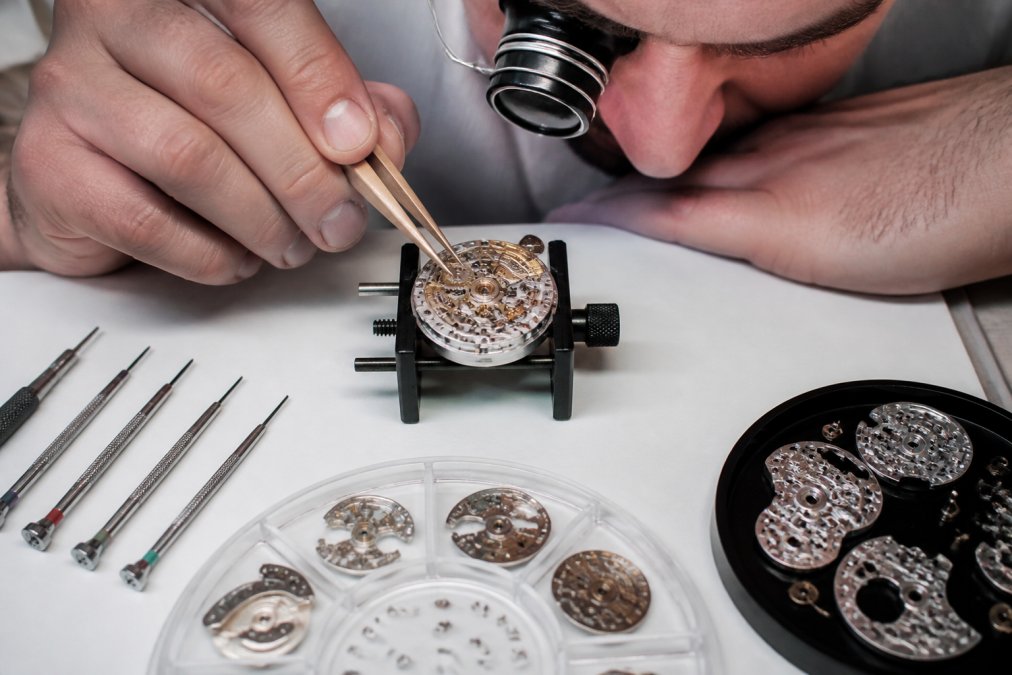
An ETA-based watch from a brand that regulates to Elaboré or Top standards, decorates the bridges with Geneva stripes, and hand-finishes the case can represent more genuine craft than a poorly executed in-house caliber. The movement's origin is one data point. The execution is what matters.
A truly in-house automatic movement, where the brand designed the architecture, cut the parts, and controls the supply chain, carries real advantages. The brand can modify tolerances, add complications, and service the watch without depending on a third-party supplier. The Legacy Automatic from Haim Watch Company is 100% US-assembled with a custom-designed caliber, meaning the movement architecture reflects the brand's own engineering decisions rather than a licensed ebauche.

Aftermarket Parts Compatibility and Long-Term Ownership
The ETA 2824-2 and Sellita SW200-1 genuinely shine here. Because these calibers are widely deployed, aftermarket parts, replacement mainsprings, balance staffs, cannon pinions, are available from multiple suppliers. A watchmaker in any major city can source components without waiting weeks for a factory order.
The Miyota 9015 has decent parts availability through Citizen's distribution network, though not at the same depth as the ETA ecosystem. The NH35 benefits from an enormous modding community that has driven strong aftermarket supply, particularly for dials and hands, though movement-internal parts are less accessible than for ETA calibers.
Custom or in-house calibers depend entirely on whether the brand maintains a service program and stocks spares. For a brand with long-term commitment to its products, this is not a concern. For brands that discontinue models quickly, it can become a genuine problem a decade down the line. This is a real question to ask before committing to any watch above a certain price point.
Servicing ETA Watch Movements: Intervals, Costs, and Finding a Watchmaker
Servicing ETA watch movements follows a predictable schedule most owners underestimate. Industry guidance recommends a full service, disassembly, ultrasonic cleaning, lubrication, regulation, and reassembly, every five to seven years under normal wearing conditions. Watches stored unworn or exposed to water may need attention sooner, as lubricants degrade regardless of use.
Service costs vary by watchmaker, region, and movement complexity. A standard ETA 2824-2 service at an independent watchmaker typically costs less than at a brand service center, primarily due to lower overhead and open-market parts sourcing. The Sellita SW200-1's interchangeability with ETA parts means comparable service costs.
Finding a qualified watchmaker for an ETA-based watch is straightforward. The American Watchmakers-Clockmakers Institute's watchmaker directory maintains a searchable registry of certified practitioners. Because the ETA 2824-2 is so common, most certified watchmakers have serviced dozens of them.
A few practical notes on servicing:
- Power reserve check: A healthy ETA 2824-2 should deliver close to its rated 38-40 hours. Significantly less indicates lubricant degradation.
- Accuracy drift: An increase in daily rate deviation often precedes a needed service by 12-18 months.
- Rotor noise: A grinding or rattling rotor bearing is a clear service indicator and should not be ignored, as rotor debris can contaminate the gear train.
The Miyota 9015 and NH35 follow similar service intervals. Japanese movements generally tolerate deferred service better than Swiss movements, though this is not an argument for skipping maintenance.
Which Automatic Watch Movement Is Right for You?
The right automatic watch movement depends on three variables: your budget, your tolerance for service complexity, and what you value in the mechanical experience.
| Scenario | Best Movement Choice | Reason |
|---|---|---|
| Entry-level, easy to modify | Seiko NH35 | Affordable, durable, huge parts ecosystem |
| Slim dress watch design | Miyota 9015 | Thinnest profile, 28,800 vph sweep |
| Swiss credibility, wide service network | ETA 2824-2 or Sellita SW200-1 | Proven reliability, grade options, parts availability |
| Custom architecture, US-made | Haim Watch Company Legacy Automatic | In-house caliber, 100% US assembly, brand-controlled quality |
| Maximum precision, certified accuracy | ETA 2824-2 Chronometer grade | COSC-certified, individually tested |
The ETA 2824-2 and Sellita SW200-1 are sensible defaults for buyers who want Swiss provenance, a proven service network, and predictable performance. The Miyota 9015 wins on case geometry and beat rate for its price tier. The NH35 is the entry point for anyone who wants to understand mechanical watchmaking without significant financial risk.
A custom-designed caliber, properly regulated and cased in a hand-finished case, offers something none of these ebauche-based movements can: a movement genuinely specific to the watch it lives in. As documented in Worn & Wound's coverage of American microbrand watchmaking, the most compelling independent brands differentiate themselves through mechanical decisions that reflect a distinct point of view.
For buyers considering the Legacy Automatic, the relevant comparison is not "ETA vs. Haim", it's "what does it mean to own a watch whose movement was engineered for this specific case, assembled domestically, and backed by a brand that controls its own supply chain?" That's a different value proposition than a licensed ebauche.
Movement selection is one of the most consequential decisions in watchmaking, and most buyers encounter it without enough context to evaluate it properly. Haim Watch Company builds watches around this question deliberately, whether through the Swiss-made architecture of the Viajero SE or the custom-engineered caliber in the Legacy Automatic. If you're ready to own a timepiece where every mechanical decision was made with intention, explore the Legacy Automatic collection and see what 100% US assembly and a custom-designed caliber actually look like in practice.
Frequently Asked Questions
What makes an ETA movement different from other automatic movements?
The ETA 2824-2 is a Swiss-made third-party caliber produced by ETA SA, a Swatch Group subsidiary. It beats at 28,800 vibrations per hour, carries 25 jewels, and offers a 38-to-40-hour power reserve with hacking seconds and a quick-set date. What sets it apart is its standardized architecture: parts are interchangeable across thousands of watches, making it one of the most serviceable automatic movements available. An in-house caliber, by contrast, is engineered and produced by a single brand for its own watches.
Are ETA movements considered high-end or entry-level?
ETA movements span a wide performance range depending on their finishing grade. The Standard grade targets volume production, while Elaboré, Top, and Chronometer grades deliver progressively tighter accuracy tolerances. A Chronometer-certified ETA movement meets COSC standards of -4 to +6 seconds per day. Many respected mid-range and luxury brands have used ETA calibers. The movement's quality is real, the distinction between ETA and in-house is more about exclusivity and brand identity than raw reliability.
Why do watch brands use ETA movements instead of in-house calibers?
Developing an in-house caliber requires years of engineering, specialized tooling, and significant capital investment. For microbrands and smaller manufacturers, sourcing a proven movement like the ETA 2824-2 or Sellita SW200-1 reduces development time and cost while delivering a reliable, serviceable automatic watch movement. The trade-off is exclusivity: an ETA caliber runs in thousands of other watches, whereas a custom-engineered movement is unique to the brand that built it.
How often does an ETA watch movement need servicing?
ETA recommends a full service for the 2824-2 every three to five years under normal use. A service typically involves disassembly, ultrasonic cleaning, replacement of worn gaskets and oils, reassembly, and regulation. Servicing ETA watch movements is straightforward because parts are widely stocked and most certified watchmakers are familiar with the architecture. Service costs vary, but budget between $150 and $350 at an independent watchmaker for a standard overhaul.
Is a custom in-house movement worth the premium over an ETA caliber?
It depends on what you value. An in-house automatic watch movement offers exclusivity, a deeper brand story, and often unique finishing that a third-party caliber cannot match. The ETA 2824-2, on the other hand, delivers proven Swiss accuracy, broad parts availability, and lower service costs over time. If long-term serviceability and cost predictability matter most, ETA is a sound choice. If you want a movement no other brand runs, and the craftsmanship that comes with it, an in-house caliber justifies the higher price.
This article was written using GrandRanker