

Table of Contents
- The Old Rules of Watch Etiquette Are Gone
- What Makes a Watch Work With Casual Wear
- How to Style a Dress Watch Casually: The Strap Swap
- A Watch Strap Styling Guide for Every Outfit
- The Best Luxury Watches for Everyday Wear
- Watch Proportions: Size, Thickness, and Wrist Presence
- When a Dress Watch Feels Out of Place
- Conclusion: Wear the Watch, Not the Rules
- Frequently Asked Questions
Last Updated: September 7, 2026
The stuffy rulebook that once dictated when a luxury timepiece could leave the house is gathering dust. For decades, the prevailing wisdom held that a refined dress watch belonged exclusively with formal attire, while casual outfits demanded a rugged tool watch or a sporty steel bracelet. That binary thinking has collapsed, and wearing luxury watches with casual clothes is now not only accepted but celebrated as a mark of personal style. At Haim Watch Company, we build timepieces designed to bridge this exact gap, proving that a hand-finished case and an ornate dial look just as compelling against a cotton t-shirt as they do against a suit jacket.
The shift reflects a broader change in how men and women dress. As workplace dress codes relax and "smart casual" becomes the default uniform, the watch on your wrist has become the primary vehicle for expressing sophistication. Below, we'll show you exactly how to master this balance, from the single most effective styling trick to the proportions that separate a natural fit from a clumsy one.
The Old Rules of Watch Etiquette Are Gone
The historical conventions of watch etiquette were rigid: a thin, leather-strapped dress watch was reserved for black-tie events, and anything sportier belonged on the weekend. Those rules assumed you owned multiple watches for distinct occasions, a luxury that feels outdated in an era defined by versatility and curated wardrobes.
Modern style prioritizes the individual over the occasion. A watch enthusiast today wants a single timepiece that can transition from a client meeting to a weekend market without feeling misplaced. The death of the suit-and-tie default in many industries has accelerated this, making the dress watch a far more flexible companion than its historical reputation suggests.
What Makes a Watch Work With Casual Wear
Not every dress watch translates well to a t-shirt and jeans. The key factors come down to design restraint and visual texture. A minimalist design with a clean dial and understated case diameter tends to blend seamlessly, while heavily polished, ultra-thin dress pieces can look starkly out of place next to denim.
Dial color plays a significant role in versatility. A stark white or glossy black dial can feel formal, whereas textured dials, like the guilloche center on the [Legacy Automatic(/products/legacy-automatic): Azure | haimwatchco.com], or warm metallic tones, introduce an element of visual interest that reads as intentional rather than overdressed. The goal is aesthetic balance, where the watch feels like a considered accessory rather than a formal object that wandered onto the wrong outfit.
How to Style a Dress Watch Casually: The Strap Swap
The single most effective way to make a dress watch work with casual clothes is to change the strap. Swapping a polished bracelet or a glossy alligator band for a textured leather strap or a rugged textile option fundamentally transforms the character of the watch, instantly shifting its context from boardroom to backyard.
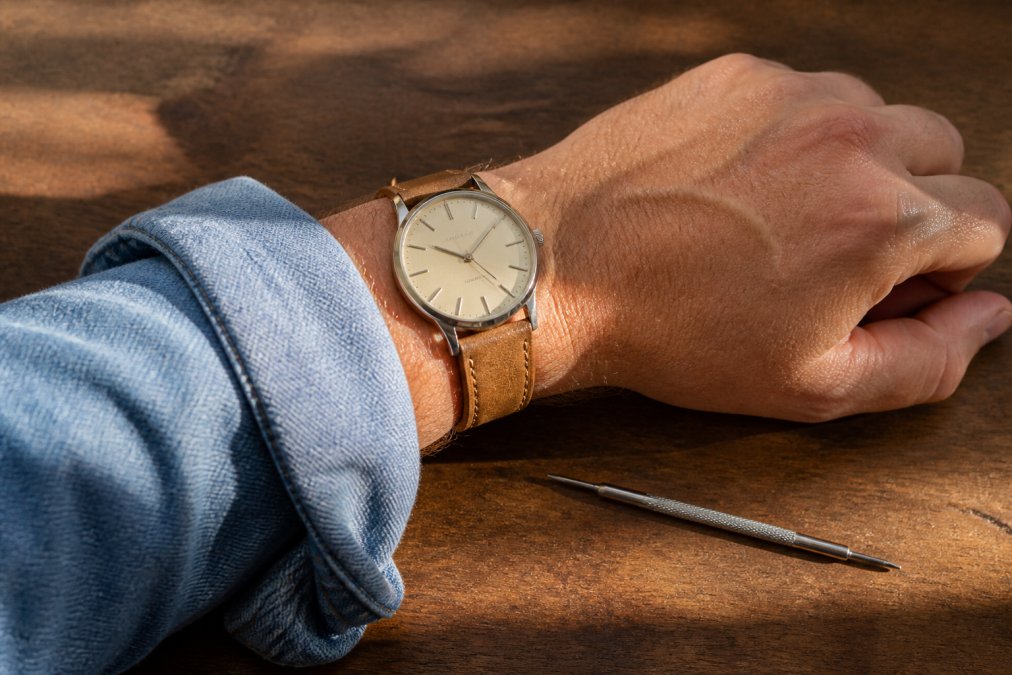
This is the insider secret that most guides miss. The case and dial remain the same, but the strap dictates the dress code. A matte suede strap in a muted tone is arguably the most versatile option you can own, pairing effortlessly with chinos, denim, and even tailored shorts. The process of changing a strap takes under two minutes with a simple spring bar tool, making it the cheapest and most effective way to expand your watch's wardrobe.
A Watch Strap Styling Guide for Every Outfit
The rule of thumb is to match the strap's visual weight and texture to the fabric of your outfit. Heavy fabrics like denim and wool call for a substantial strap with visible grain or stitching; lighter fabrics like linen and cotton pair better with a smoother, slimmer profile. But beyond that, the real mastery lies in color and material coordination. Here’s a visual guide to building specific looks, moving beyond the generic to the intentional.
- The Denim Standard (White Tee + Jeans): The goal is to avoid looking like you're wearing a formal piece by accident. A rugged, oil-tanned leather strap in a deep brown or black adds a masculine, workwear feel that complements the indigo of the denim. Avoid polished metal bracelets here; the shine creates a stark contrast that reads as mismatched. For a more modern, utilitarian edge, a sailcloth or a grey/black NATO strap works exceptionally well, echoing the casual nature of the fabric.
- The Smart-Casual Bridge (Oxford Shirt + Chinos): This is where a classic brown or tan leather strap shines. The key is the leather's finish. A polished, glossy strap can still feel formal, so opt for a matte or lightly textured leather. A strap with a subtle grain or a suede finish in a shade like taupe or snuff brown adds a layer of relaxed sophistication that a standard black alligator strap cannot. The color should complement, not match, your belt and shoes.
- The Summer Rotation (Knit Polo + Shorts): Here, you want to introduce a lighter, more breathable element. A suede strap in a soft, warm hue like olive, sand, or a muted blue is a perfect choice. The texture of suede is inherently casual and pairs beautifully with the knit of a polo. For a more sporty look, a high-quality rubber or tropic strap in a solid color can also work, especially if you're near water or in a very hot climate.
- The Layered Urban Look (Hoodie + Jacket): This outfit is about texture and attitude. A textile or NATO-style strap is your best ally. The weave of the fabric adds a utilitarian, streetwear-inspired edge that feels intentional. Consider a strap with a subtle stripe or a muted camo pattern to add a point of interest. This is the one area where a slightly thicker strap (e.g., a 20mm or 22mm) can feel more balanced against the bulk of a hoodie and jacket.
:::tip A Unique Angle on Strap Color Most guides stop at material. To truly master the look, consider the color wheel. For a pair of faded blue jeans, a strap in a complementary color like a warm tan or a burnt orange creates a visually pleasing contrast. For olive chinos, a strap in a muted burgundy or a deep navy adds a sophisticated pop of color without being loud. The goal is to create a cohesive palette where the watch strap is a deliberate part of the outfit's color story. ::: style knitwear.
The Best Luxury Watches for Everyday Wear
When selecting a timepiece intended for daily rotation, durability and visual versatility are paramount. A watch destined for everyday wear needs a case material that resists scratches and a design that doesn't demand a specific dress code.
Hand-finished titanium cases offer an ideal balance, providing exceptional lightness and resilience while displaying a level of artisanal craftsmanship that elevates the piece beyond a mere tool. The Legacy Automatic, with its custom-designed caliber and 100% US assembly, is engineered for this exact purpose. It offers the refinement of a dress watch, yet its strong construction and thoughtful dial design, which Worn & Wound described as reminiscent of "galaxies and starlit nights," ensure it feels at home in any setting.
Watch Proportions: Size, Thickness, and Wrist Presence
The most common mistake in casual styling is wearing a watch that is proportionally wrong for the outfit. It's not just about the watch looking big on your wrist; it's about how it interacts with the clothing around it. A chunky diver's watch can overwhelm a slim-fitting casual shirt, while an ultra-thin dress watch might get visually lost against the bulk of a chunky knit sweater. The concept of 'wrist presence' is about how the watch occupies space in the context of your sleeve and your overall silhouette.
Case Diameter: The Versatility Sweet Spot
A case diameter between 36mm and 40mm is generally considered the sweet spot for a watch that needs to transition from a boardroom to a backyard (hodinkee.com). This range is not a hard rule, but a practical guideline. A 36mm watch sits elegantly on the wrist, sliding easily under a dress shirt cuff, and looks refined against a t-shirt. A 40mm watch has a bit more presence, making it feel more robust and sporty, which can be a great match for casual wear. The key is to avoid extremes: a 34mm watch can look too delicate and formal next to denim, while a 44mm+ watch can look like a tool, not an accessory, when paired with a casual blazer.
Lug-to-Lug: The Real Fit Indicator
Case diameter is only half the story. The lug-to-lug distance, the measurement from the top of one lug to the bottom of the other, determines how the watch sits on your wrist. A watch with a 40mm case but a long 50mm lug-to-lug can overhang a smaller wrist, looking clumsy and catching on your sleeve. For casual wear, you want the watch to sit flat and comfortably. A good rule of thumb is that the lug-to-lug should be less than the width of your wrist. This ensures the watch doesn't look like it's floating on your arm and that it will slide under a rolled-up cuff without catching.
Thickness and the Sleeve Interaction
Thickness is the most overlooked dimension in casual styling. A watch that is too thick (over 13mm) will not only feel bulky but will also struggle to fit under a shirt cuff or a jacket sleeve (ablogtowatch.com). This creates an awkward bulge that ruins the line of your outfit. A slimmer profile, ideally under 11mm, slides effortlessly under a cuff, making it a more versatile companion. When you roll up your sleeves, a common move in casual style, a thinner watch sits closer to your wrist, feeling more integrated and less like a separate object. The goal is for the watch to complement your personal style, not to dominate it or fight with your clothing for space.
:::takeaway The Practical Test Before you commit to a watch for daily casual wear, do the 'cuff test.' Put on the shirt or jacket you wear most often. Roll the sleeves to your preferred casual length. Does the watch slide under the fabric easily, or does it create a bulge? Does the lug-to-lug overhang your wrist? If you answer 'yes' to the latter, the watch is likely too large for your frame, regardless of its case diameter. A well-proportioned watch should feel like a natural extension of your arm, not a separate piece of equipment.
When a Dress Watch Feels Out of Place
There are moments when even the most versatile dress watch misses the mark. High-impact physical activities, such as hiking, swimming, or intense sports, call for a purpose-built tool watch or a sports watch with superior water resistance and shock protection. Wearing a delicate dress watch in these scenarios risks damage and looks unintentionally mismatched.
Similarly, ultra-formal events, like white-tie galas, still warrant a strictly minimalist dress watch with no complications. The key is to read the room and understand that versatility has its limits. Recognizing these boundaries allows you to appreciate your dress watch for its strengths and prevents you from forcing it into situations where it feels out of place.
Conclusion: Wear the Watch, Not the Rules
The most important shift in modern watch wearing is the permission to trust your own eye. The old etiquette served a different era; today, wearing luxury watches with casual clothes is an expression of confidence and a deep appreciation for horology. Your timepiece should reflect your personal style, not a century-old rulebook.
A well-chosen watch should be your daily driver, a constant companion that marks your milestones and elevates your everyday aesthetic. At Haim Watch Company, we craft timepieces with ornate dials and custom calibers, built to be worn, not stored. If you're ready to find a watch that moves effortlessly between your boardroom and your weekend, explore the Legacy Automatic collection and discover a piece that honors both heritage and your individual journey.
Finding the perfect balance between a refined timepiece and a relaxed outfit is a skill, not a strict science. It requires a watch with the right proportions, a versatile aesthetic, and the confidence to make it your own. Haim Watch Company designs its hand-finished titanium cases and custom-engineered calibers for exactly this lifestyle, blending sophisticated design with the durability for everyday wear. Get started with Haim Watch Company and find a timepiece that transitions as effortlessly as you do.
Frequently Asked Questions
Is it acceptable to wear a dress watch with a t-shirt and jeans?
Yes. The old etiquette rule against mixing formal timepieces with casual clothes has faded. The key is balance. A dress watch with a t-shirt and jeans looks intentional when the watch has a clean dial and you swap the polished bracelet for a textured leather or fabric strap. This combination works because the watch becomes the single refined element in an otherwise relaxed outfit. Avoid overly ornate or diamond-set pieces with ripped denim, as the contrast can feel mismatched.
How do you balance a formal watch with casual clothing?
Balance comes from adjusting the watch's formality, not the outfit's. The most effective method is strap swapping: replace a polished metal bracelet with a suede, canvas, or aged leather strap to instantly dress down a formal timepiece. Also consider proportions. A thinner, smaller dress watch (38-40mm) pairs more naturally with casual layers than a large, bulky piece. The goal is for the watch to complement the relaxed feel of your clothes, not fight it.
Should you match your watch strap to your casual shoes?
Matching your watch strap exactly to your shoes is an outdated rule. Instead, coordinate the leather type and color tone. If you are wearing brown suede boots, a brown suede strap will look cohesive. If you wear white sneakers, a grey or navy fabric strap often works better than leather. The aim is aesthetic balance, not a perfect match. Treat the watch strap as part of your overall color palette, not a mirror of your footwear.
What makes a watch versatile enough for daily wear?
Versatility depends on three factors: case size, dial design, and strap options. A case between 38mm and 40mm suits both a suit and a t-shirt. A minimalist dial with no complications and a neutral color like black, white, or silver transitions between settings easily. Finally, a watch that accepts multiple strap types offers the most flexibility. Models like the 38mm Legacy Automatic with hand-finished titanium case work as a daily driver because swapping the strap changes its entire character.