

Table of Contents
- What Makes Titanium Watches Better Than the Rest
- Titanium vs Stainless Steel Watch Weight: How Much Difference Does It Make?
- Are Titanium Watches Hypoallergenic? Skin Sensitivity and Biocompatibility
- Grade 2 vs Grade 5 Titanium Watches: Which Grade Actually Matters?
- Corrosion Resistance, Anti-Magnetic Properties, and Long-Term Durability
- Coating Technologies and Finishing Techniques for Titanium Cases
- How to Clean a Titanium Watch and Keep It Looking Its Best
- Conclusion
Last Updated: August 12, 2026
What Makes Titanium Watches Better Than the Rest
Titanium watches are timepieces constructed from titanium metal or titanium alloy, offering a combination of low density, high tensile strength, and exceptional corrosion resistance that no other common case material can match. At Haim Watch Company, we work with hand-finished titanium cases precisely because the material rewards the kind of close attention to craft that defines serious watchmaking.
The case for titanium isn't just marketing. It rests on metallurgy. Titanium's strength-to-density ratio exceeds that of stainless steel, meaning a titanium case can be engineered to the same structural integrity at roughly 40% less mass. For a wristwatch worn every day, that difference is felt immediately and appreciated for years.
Most guides stop there. They mention weight and hypoallergenic properties, then move on. What they skip is the nuance: not all titanium is the same, surface treatments matter enormously, and the long-term ownership experience of a titanium watch is genuinely different from that of any steel alternative. Below, we'll cover all of it, from grade comparisons to coating technologies to daily maintenance.
Titanium vs Stainless Steel Watch Weight: How Much Difference Does It Make?
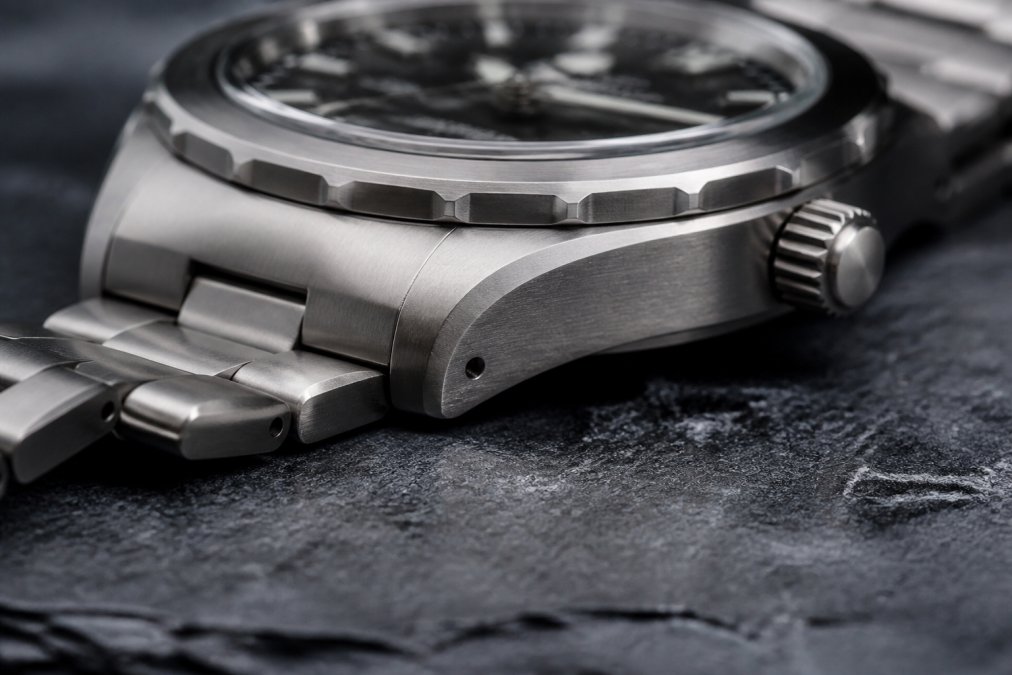
The weight difference between a titanium watch and a stainless steel watch is substantial enough to notice the moment you put one on. Titanium's density sits at roughly 4.5 g/cm³ compared to stainless steel's 7.9 g/cm³, which translates to a case and bracelet that can weigh less than half of an equivalent steel construction.
Strength-to-Density Ratio Explained
Strength-to-density ratio is the measure of a material's tensile strength relative to its weight. Titanium's ratio is significantly higher than steel's, which is why aerospace and medical industries adopted it decades before watchmakers caught on. For a watch case, this means the walls and bezel can be made thinner without sacrificing structural integrity, contributing further to reduced overall weight.
According to ASM International's materials reference on titanium alloys, titanium's specific strength outperforms most structural metals, including common grades of stainless steel used in consumer goods.
Wearability and Ergonomics on the Wrist
The practical consequence of that lower density is wearability that steel simply cannot replicate. A 42mm titanium case with a titanium bracelet sits against the wrist with almost no perceptible drag. Larger tool watch proportions, which would feel oppressive in steel, become genuinely comfortable across a full day of wear.
This matters more than it sounds. Ergonomics determine whether a watch stays on your wrist or ends up in a drawer. Many collectors who move to titanium report they reach for their steel watches far less often, not because they love them less, but because the titanium piece is so much easier to forget you're wearing.
| Property | Titanium | Stainless Steel |
|---|---|---|
| Density | ~4.5 g/cm³ | ~7.9 g/cm³ |
| Relative Case Weight | ~40% lighter | Baseline |
| Tensile Strength | High | High |
| Strength-to-Density Ratio | Superior | Lower |
| Corrosion Resistance | Excellent | Good (varies by grade) |
| Hypoallergenic | Yes | Not always |
| Anti-Magnetic | Yes | Varies |
Are Titanium Watches Hypoallergenic? Skin Sensitivity and Biocompatibility
Titanium watches are hypoallergenic because titanium is biocompatible, meaning the human body does not mount an immune response to it. This property is well-documented in surgical and orthopedic applications, where titanium implants are used precisely because they integrate with bone and tissue without triggering rejection.
The contrast with stainless steel is meaningful. Many steel alloys used in watchmaking contain nickel, which is a common contact allergen. People who experience redness, itching, or rash from steel bracelets often find that titanium eliminates the problem entirely. As noted in the American Contact Dermatitis Society's guidance on metal allergies, nickel sensitivity affects a significant portion of the population, making material choice a genuine health consideration for everyday wearers.
For anyone who wears a watch continuously, including during exercise and sleep, biocompatibility isn't a luxury feature. It's a baseline requirement. Titanium meets it without compromise.
Grade 2 vs Grade 5 Titanium Watches: Which Grade Actually Matters?
The grade of titanium used in a watch case is one of the most underreported specifications in watchmaking, and it has real consequences for durability, machinability, and long-term performance.
Grade 2: Pure Titanium for Everyday Wear
Grade 2 titanium is commercially pure titanium, containing 99.2% titanium with minimal alloying elements. It's softer than Grade 5, which makes it easier to machine into complex case shapes and more receptive to decorative finishing techniques like bead-blasting and brushing. The trade-off is lower surface hardness, which means Grade 2 cases pick up scratches more readily under daily use.
For dress watches and everyday wear pieces where refinement matters more than ruggedness, Grade 2 is a legitimate choice. The material's corrosion resistance remains excellent, and its hypoallergenic properties are identical to higher grades.
Grade 5: Aerospace-Grade Alloy for Tool and Sport Watches
Grade 5 titanium, also designated Ti-6Al-4V, is an alloy containing 6% aluminum and 4% vanadium. It's the same material used in aircraft structural components and surgical implants requiring maximum strength. The addition of those alloying elements increases tensile strength and surface hardness substantially compared to Grade 2.
For tool watches, diving watches, and sport pieces designed to absorb punishment, Grade 5 is the correct choice. The higher hardness means better scratch resistance, and the increased strength allows case construction with thinner walls while maintaining structural rigidity. According to the ASTM International standard for titanium alloy specifications, Grade 5 titanium delivers roughly twice the yield strength of Grade 2.
The absence of grade information in a watch's specifications is itself informative. Brands that invest in Grade 5 tend to say so.
Corrosion Resistance, Anti-Magnetic Properties, and Long-Term Durability
Titanium forms a passive oxide layer on its surface when exposed to oxygen, a process called oxidation in the protective sense. This layer regenerates automatically if scratched or abraded, giving titanium a self-healing corrosion resistance that stainless steel cannot match. Steel relies on chromium content to resist rust, and that protection can be compromised by prolonged exposure to chlorides or acids.
Performance in Marine Environments
A marine environment is the most demanding test for any case material. Saltwater accelerates corrosion in most metals, including many grades of steel. Titanium is effectively immune to seawater corrosion, which is why it's the material of choice for submarine components, offshore equipment, and serious diving watches.
For a watch rated to meaningful diving depths, a titanium case and bracelet offer genuine long-term protection rather than just short-term water resistance. The bezel and case construction maintain their integrity without the pitting or surface degradation that can affect steel over years of marine exposure.
Scratch Resistance and Surface Hardness
This is where titanium's reputation gets complicated. Pure titanium and Grade 2 alloys have lower surface hardness than steel, which means they scratch more easily in daily use. Grade 5 improves this significantly, but even Grade 5 titanium is not as hard as some steel alloys.
The honest answer: titanium watches scratch. They scratch differently than steel, often developing a softer, more diffuse patina rather than sharp gouges, but they do scratch. The anti-magnetic properties of titanium, however, are a genuine advantage over steel. Titanium is non-ferromagnetic, meaning it won't be magnetized by everyday exposure to electronic devices, bag clasps, or speaker magnets. For a mechanical movement, magnetic interference is a real accuracy concern.
Coating Technologies and Finishing Techniques for Titanium Cases
Surface treatment is where titanium watchmaking becomes genuinely sophisticated. The relatively soft surface of titanium, particularly Grade 2, has driven the development of several coating technologies that dramatically improve scratch resistance without adding meaningful weight.
Diamond-Like Carbon (DLC) coating is the most common high-performance option. Applied through physical vapor deposition, DLC creates an extremely hard, low-friction surface that resists scratching far better than bare titanium or steel. It's available in matte black and dark grey finishes, which have become closely associated with modern tool watch aesthetics.
Physical Vapor Deposition (PVD) coatings more broadly allow watchmakers to apply a range of colors and textures to titanium cases, from gold tones to deep blacks, without the weight or allergy concerns of plating.
Finishing techniques for bare titanium include bead-blasting, which creates a uniform matte texture that hides minor scratches effectively, and brushed finishing, which produces a directional satin appearance. Polished titanium is less common because the material's lower hardness makes maintaining a mirror finish difficult in daily wear. Many high-end titanium cases combine brushed and polished surfaces, using the contrast to define case architecture.
The refinishing advantage of titanium is underappreciated. A bead-blasted or brushed titanium case can be restored to near-original condition by a watchmaker using the appropriate tools, something that's far more difficult with coated steel cases where the coating itself must be stripped and reapplied.
How to Clean a Titanium Watch and Keep It Looking Its Best
Cleaning a titanium watch is straightforward, but a few specific practices protect both the metal and any coating applied to it.
For routine maintenance, follow this process:
- Remove the watch from your wrist and, if the bracelet is integrated, check the crown is fully pushed in or screwed down.
- Rinse the case and bracelet under lukewarm fresh water to remove surface salt, sweat, and dust.
- Apply a small amount of mild, non-abrasive soap to a soft-bristled brush, such as a clean toothbrush.
- Gently scrub the bracelet links, case sides, and bezel, paying attention to crevices where debris accumulates.
- Rinse thoroughly under clean water to remove all soap residue.
- Pat dry with a soft, lint-free cloth. Do not rub aggressively, particularly on brushed or bead-blasted surfaces.
- Allow to air dry completely before wearing or storing.
Avoid ultrasonic cleaners if the watch has a DLC or PVD coating, as vibration can cause micro-fractures in the coating over time. Avoid abrasive cloths or polishing compounds on brushed titanium surfaces, as these alter the texture.
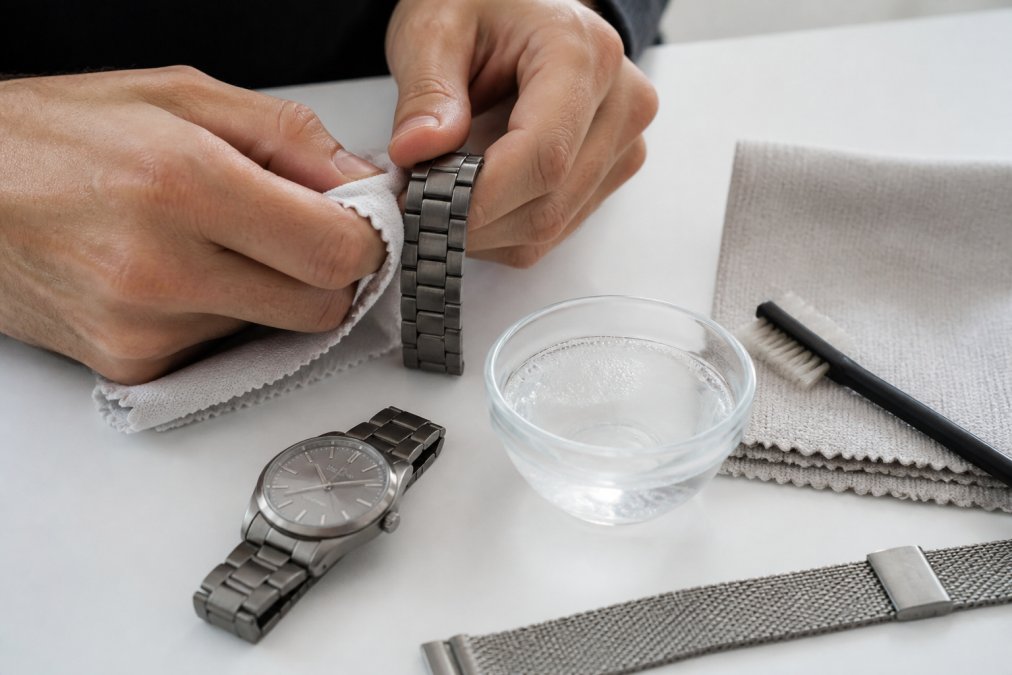
For deeper refinishing, particularly on scratched Grade 2 cases, a watchmaker with the appropriate bead-blasting equipment can restore the original finish. This is one area where titanium genuinely outperforms coated steel: the base material itself can be resurfaced, whereas a worn DLC coating on steel requires complete reapplication.
For ongoing care, a weekly wipe-down with a damp cloth is sufficient for most wearers. The self-healing oxide layer means titanium doesn't require the same vigilance against rust that steel demands, but regular cleaning preserves the finish and keeps the bracelet moving freely.
As documented in the Gemological Institute of America's guide to watch metal care, proper routine cleaning significantly extends the visual life of any metal watch, regardless of material.
Titanium's advantages over steel are real, measurable, and felt every day on the wrist. The challenge is finding a titanium watch that does justice to the material, pairing its technical qualities with craftsmanship worth the investment. Haim Watch Company approaches this directly: our hand-finished titanium cases are worked to the standard the material demands, with ornate dial decoration and custom-designed calibers that make the technical case for titanium inseparable from the aesthetic one. If you're ready to wear the difference, shop now at Haim Watch Company and find the timepiece that belongs on your wrist.
Frequently Asked Questions
Are titanium watches more durable than stainless steel?
Titanium watches are lighter and more corrosion-resistant than stainless steel, but stainless steel typically has a higher surface hardness, making it more scratch-resistant in everyday use. Grade 5 titanium (Ti-6Al-4V) closes much of that gap with greater tensile strength than Grade 2. For long-term durability in demanding environments, titanium holds a clear edge due to its resistance to oxidation and corrosion, particularly in marine or high-humidity conditions.
Do titanium watches scratch easily?
Titanium is softer on the surface than stainless steel, so it does accumulate fine scratches over time, particularly on polished sections. Bead-blasted or brushed finishes hide light scratches far better than mirror-polished surfaces. The advantage titanium has is that a watchmaker can re-finish the case relatively easily, restoring much of its original appearance. Coating technologies like DLC (diamond-like carbon) can dramatically improve scratch resistance on titanium cases.
Are titanium watches hypoallergenic?
Yes. Titanium is biocompatible and contains no nickel, which is the most common cause of metal contact allergies in watch wearers. Stainless steel alloys used in watchmaking typically contain 8-12% nickel, which can trigger reactions in sensitive individuals. Titanium watches are routinely recommended for people with skin sensitivity, and the same biocompatibility makes titanium the material of choice for medical implants. If you react to standard metal watch cases, a titanium watch is the most reliable solution.
Why are titanium watches more expensive?
Titanium's machining difficulty drives up manufacturing costs. The metal is harder to cut, work-harden quickly, and demands specialized tooling and slower machining speeds compared to stainless steel. Case construction and bracelet finishing take longer, and the material itself costs more per kilogram. Grade 5 titanium adds further expense due to its aerospace-grade alloying process. The result is a case that requires more skilled labor and more precise equipment, both of which are reflected in the final price.
This article was written using GrandRanker