

Table of Contents
- Why Collectors Seek Alternatives to Baltic Watches
- How to Choose a Microbrand Watch: A Data-Driven Framework
- Best Microbrand Watches Under $1000: Top Picks for 2026
- US-Assembled Automatic Watches: The Legacy Automatic Advantage
- Swiss-Made Alternatives to Baltic Watches: The Viajero SE
- Feature Comparison: Haim Watch Company vs. Typical Microbrand Specs
- How Haim Watch Company Designs Compare to Baltic
- Frequently Asked Questions
Last Updated: September 16, 2026
Why Collectors Seek Alternatives to Baltic Watches
Baltic built its reputation on vintage-inspired design at a price that made entry-level collecting feel serious. That success created a problem: the best references sell out fast, and the secondary market rewards patience over enthusiasm. Collectors looking for the best alternatives to baltic watches aren't abandoning the formula. They want the same retro proportions, sector dials, and stepped cases without the waitlist, the flip premium, or the risk of seeing their exact watch on three other wrists at the next meetup.
At Haim Watch Company, we hear this constantly from buyers who love the aesthetic but want more personal gravity. Microbrands now offer sapphire crystal, applied indices, and custom calibers that were unthinkable at these price points a decade ago.
Most "alternatives" lists just swap brand names. Below, we'll show you how to evaluate a microbrand on specs that actually matter, then walk through picks for chronograph, diver, and worldtimer buyers.
How to Choose a Microbrand Watch: A Data-Driven Framework
Choosing a microbrand watch means matching five variables to your wrist and habits: case diameter and lug-to-lug distance, movement reliability and serviceability, lume performance, strap compatibility, and country of origin versus assembly location. Get those five right and the brand name matters far less than the spec sheet.
Most buyers start with the dial and work backward.
Case Diameter, Lug-to-Lug Distance, and Wrist Presence
Case diameter gets all the attention, but lug-to-lug distance determines whether a watch actually wears well. A 38mm case with 46mm lugs fits very differently from a 40mm case with 48mm lugs.
| Measurement | Vintage-Proportion Target | Why It Matters |
|---|---|---|
| Case diameter | 36-39mm | Preserves period-correct proportions |
| Lug-to-lug | Under 48mm | Keeps lugs within wrist edge |
| Case thickness | Under 11mm | Fits under a cuff, reduces bulk |
| Lug width | 20mm | Opens up the widest strap options |
Movement Reliability, Caliber Specs, and Serviceability
Movement reliability comes down to three questions: who made the base caliber, how easy is it to service, and does the brand stand behind it long term.
Lume Performance and Night-Time Legibility
Lume is the spec most comparison lists skip, and it's the one you notice every night. The two compounds you'll see most often are Super-LumiNova (the Swiss standard, sold in grades like C3, BGW9, and X1) and Seiko's Lumibrite. C3 glows green; BGW9 glows blue-white and looks cleaner in daylight; X1 is a higher-grade variant.
Strap Compatibility and Lug-Width Versatility
Collectors who rotate straps, the "strap monster" crowd, should weight lug width and lug shape heavily. A 20mm lug width with drilled lugs and a short lug-to-lug is the most versatile combination because it accepts thick NATOs, tapered leather, and steel bracelets without crowding the case. Quick-release spring bars, now common on microbrands, let you swap straps without tools.
Country of Origin vs. Assembly Location
Origin and assembly are different claims, and microbrand enthusiasts increasingly ask about both. A watch can use a Swiss or Japanese movement and still be assembled domestically; a watch can be assembled domestically while sourcing its case, dial, and hands overseas. "Swiss Made" has a specific legal meaning tied to where the movement is made and where final assembly occurs, so it's a stronger claim than "Swiss movement" or "designed in Switzerland." When a brand says "assembled in" a given place, ask where the movement, case, dial, and hands were each made.
Best Microbrand Watches Under $1000: Top Picks for 2026
The best microbrand watches under $1000 in 2026 combine sapphire crystal, reliable movements, and quality finishing. Here are three picks organized by what each does best.
L2 Chronograph: Vintage-Style Chronograph Value at $489
The L2 Chronograph is the second generation of the Legacy Chronograph family, and at $489 it's the sharpest entry point into vintage-style chronograph collecting. It runs on the VK64 caliber, a meca-quartz movement that pairs quartz accuracy with a mechanical chronograph feel.
Descent: A 200m Diver Watch With a Duo-Bezel
Descent answers a question most diver watches ignore: why choose between a dive timer and a GMT? Its proprietary Duo-Bezel combines a 60-minute timer and a GMT function on a single brushed steel rotational bezel.
Viajero: Worldtimer Functionality at $899.99
Viajero translates to "Traveler," and it's the brand's inaugural Worldtimer. At $899.99, it brings a complication usually reserved for five-figure watches into reach.
US-Assembled Automatic Watches: The Legacy Automatic Advantage
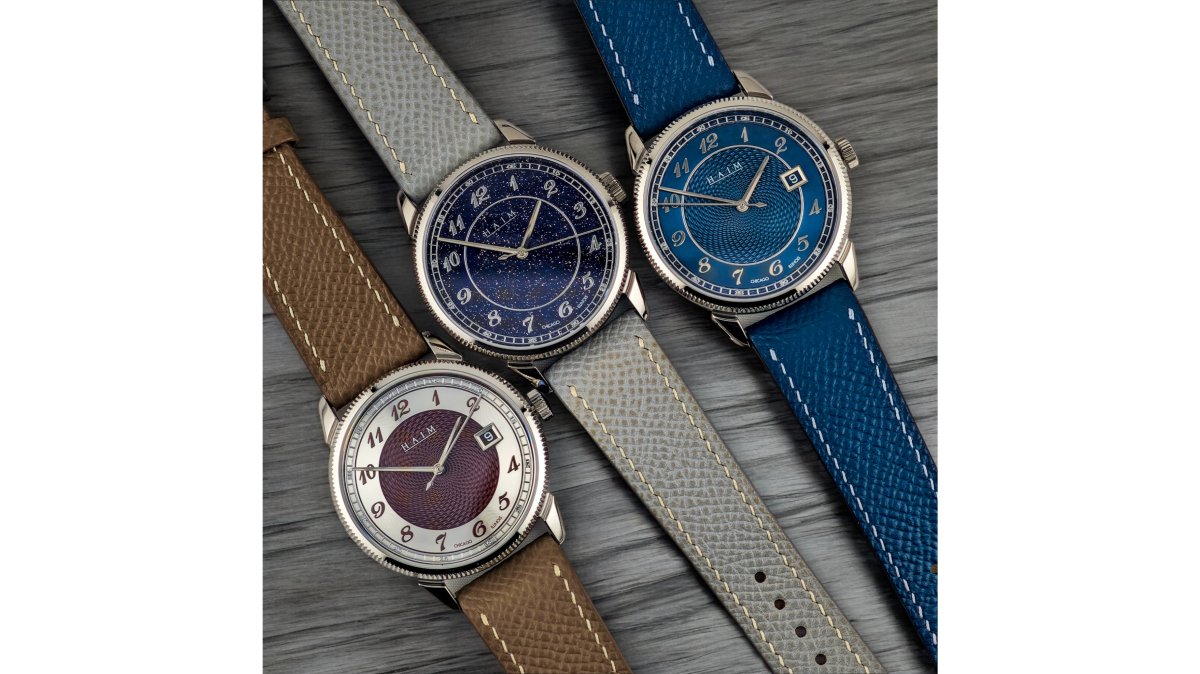
US-assembled automatic watches occupy a unique space. The Legacy Automatic is 100% US assembled, including the movement, and it's built to order so each watch is made for its buyer.

What "US Assembled" Actually Means
"Assembled in the USA" is a marketing phrase, not a regulated one the way "Swiss Made" is. Swiss Made carries a legal definition tied to where the movement is made and where final assembly occurs; there is no equivalent federal standard for watches assembled domestically, so the burden falls on the buyer to ask what was actually done onshore.
Caliber HWC-1, Titanium Cases, and 100% US Assembly
Caliber HWC-1 is the brand's first custom-designed caliber, and it anchors the Legacy Automatic at $1,350. The case is hand-finished titanium with a subtle coin edge bezel, hollowed lugs, and an exhibition caseback.
Why Domestic Assembly Commands a Premium
Domestic assembly costs more than overseas assembly for three reasons. Labor rates are higher, small-batch tooling is less efficient than high-volume production, and domestic suppliers for cases, dials, and hands are fewer, which raises per-unit costs. That premium shows up in the price: a domestically assembled automatic with a custom caliber typically lands above $1,000, while a comparable overseas-assembled microbrand can land under $700.
Swiss-Made Alternatives to Baltic Watches: The Viajero SE
Swiss-made alternatives to Baltic watches usually mean paying a significant premium for the label. The Viajero SE at $2,495.99 is the brand's first Swiss Made timepiece, positioned as an elevation of the standard Viajero rather than a replacement.

Feature Comparison: Haim Watch Company vs. Typical Microbrand Specs
Here's how the lineup stacks up on the specs collectors actually compare.
| Model | Price | Case | Movement | Standout Feature |
|---|---|---|---|---|
| L2 Chronograph | $489 | Steel, chamfered | VK64 meca-quartz | Four dial themes |
| L2 Anniversary | $515 | Steel, chamfered | VK64 meca-quartz | Pulsometer, 30 pieces |
| Descent | $625 | Steel | Automatic | Duo-Bezel, 200m WR |
| Viajero | $899.99 | Steel, 38.5mm | Automatic | Worldtimer, Atlas rotor |
| Legacy Automatic | $1,350 | Titanium, 38mm | Caliber HWC-1 | 100% US assembly |
| Legacy Azure | $1,349.99 | Titanium, 38mm | Caliber HWC-1 | Guilloche, 25 pieces |
| Viajero SE | $2,495.99 | Steel, 39.5mm | Swiss Made | Grand Feu enamel dial |
| Annum | $2,149.99 | Steel, 38mm | Caliber HWC-2 | Complete Calendar, Moonphase |
How Haim Watch Company Designs Compare to Baltic
The honest answer is that both brands chase the same vintage-inspired design language, but they resolve it differently. Baltic leans into sector dials and stepped cases. Haim Watch Company leans into ornate dial decoration and custom calibers, with hand-finished cases and movements designed in-house.

Frequently Asked Questions
Are Baltic watches worth it compared to other microbrands?
Baltic watches have earned a following for vintage-inspired design and accessible pricing, but whether they are worth it depends on your priorities. If you value US assembly, custom calibers, or Swiss-made options, alternatives to Baltic watches offer more variety. Look at movement specs, case diameter, and build quality before deciding. The best microbrand watches under $1000 often offer comparable finishing and movement reliability.
What are the best microbrand watches under $1000?
Several standout options exist in this range. The L2 Chronograph at $489 offers a VK64 caliber and a case blending brushed and polished surfaces. The Descent at $625 provides 200m water resistance and a Duo-Bezel combining a 60-minute timer and GMT. The Viajero at $899.99 adds a Worldtimer complication. Each delivers strong value for money with distinct design language and build quality.
How do Haim Watch Company designs compare to Baltic?
Haim Watch Company focuses on ornate dial decoration, hand-finished cases, and custom-designed calibers. The Legacy Automatic features a titanium case, coin edge bezel, and a 38mm diameter with 20mm lug width. Baltic watches lean toward vintage-inspired aesthetics with standard movements. Haim offers US-assembled automatic watches and Swiss-made options, giving collectors a different value proposition around craftsmanship and exclusivity.
Are there US-assembled alternatives to Baltic watches?
Yes. The Legacy Automatic is 100% US assembled, including the movement, and features the custom Caliber HWC-1. It comes in a hand-finished titanium case at 38mm with a 20mm lug width and 10.5mm thickness. Each dial variant is limited to 50 pieces. For collectors seeking US-assembled automatic watches, this provides a direct alternative with transparent origin and limited production.
What should I look for when buying a microbrand watch?
Start with case diameter and lug-to-lug distance to ensure wrist compatibility. Check movement reliability, whether it is a standard caliber or custom-designed, and serviceability. Examine build quality: sapphire crystal, screw-down crown, and finishing standards. Consider water resistance, lume performance, and strap compatibility. Finally, assess the price point against the spec sheet and secondary market potential.