

Table of Contents
- What Makes Longines a Benchmark in Luxury Watchmaking
- Best Entry-Level Luxury Watches Beyond the Established Names
- Swiss-Made vs US-Assembled Watches: Understanding the Difference
- How to Choose a Mechanical Watch That Matches Your Aesthetic
- Haim Watch Company: Bridging Heritage and Modern Horological Innovation
- Service, Maintenance, and Long-Term Ownership Value
- Dress Watch vs Sports Watch: Finding Your Style
- Frequently Asked Questions
Last Updated: September 20, 2026
What Makes Longines a Benchmark in Luxury Watchmaking
Longines represents accessible luxury with serious horological credentials. Luxury watch brands similar to Longines don't need to replicate it, they need to understand what it does well, then offer something distinct.
Longines excels at reliable, beautifully finished mechanical watches that balance heritage with modern manufacturing, appealing to collectors who value movement quality and case finishing over brand hype.
The real question is whether you want what Longines represents or something that challenges that formula. The market for luxury watch brands similar to Longines has expanded dramatically, offering options that weren't viable five years ago.
Best Entry-Level Luxury Watches Beyond the Established Names
Entry-level luxury typically means watches between $1,000 and $3,000, where the real craftsmanship conversation starts. Below this range, you're paying for brand recognition; above it, complications and rare materials drive the price.
The best entry-level luxury watches share specific qualities: visible movement finishing, hand-applied details, and mechanical movements you can service locally, a point many collectors overlook until needing repair.
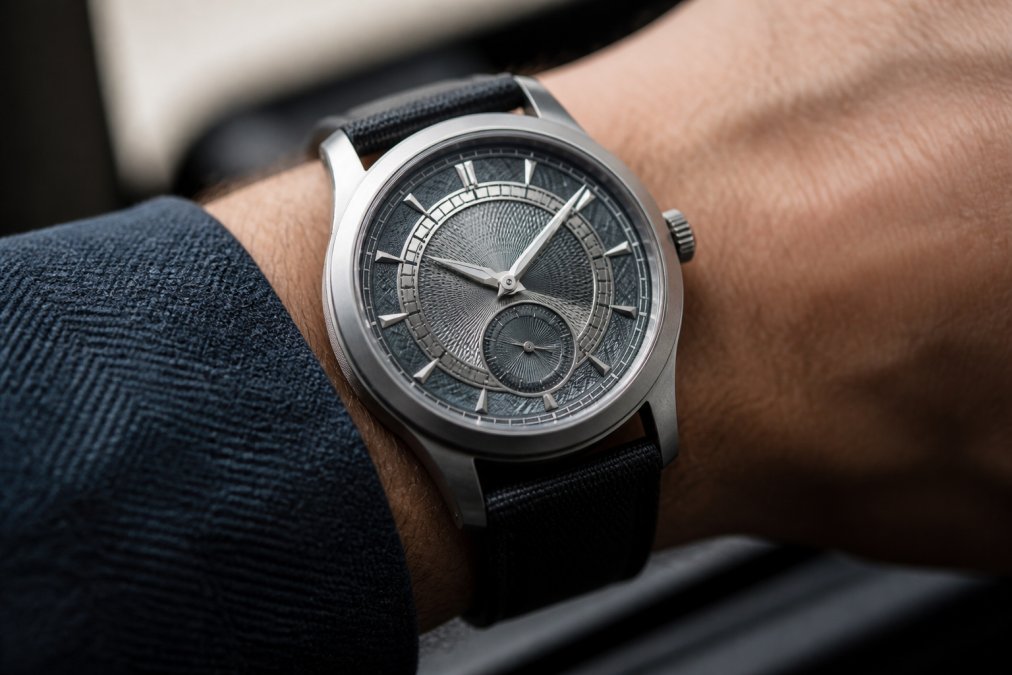
Haim Watch Company's Legacy Automatic at $1,350 delivers a custom-engineered caliber, hand-finished titanium case, and ornate dial work, not an off-the-shelf movement but a proprietary design built specifically for this watch.

What separates credible entry-level luxury microbrands from marketing-heavy ones is transparency about movement sourcing and case finishing. Haim's 100% US assembly for the Legacy Automatic, including the movement, is unusual at this price point; most competitors source movements from Swiss suppliers.
| Watch | Price | Movement | Case Material | Best For |
|---|---|---|---|---|
| Legacy Automatic | $1,350 | Custom HWC-1 Caliber | Hand-finished Titanium | Daily wear with heirloom quality |
| L2 Chronograph | $489 | VK64 Caliber | Brushed/Polished Steel | Chronograph functionality on budget |
| Descent | $625 | Automatic | Brushed Steel | Hybrid dress-sports aesthetic |
| Annum | $2,150 | Custom HWC-2 Caliber | Stainless Steel | Calendar complications and finishing |
Swiss-Made vs US-Assembled Watches: Understanding the Difference
Marketing has blurred the distinction between "Swiss-made" and "US-assembled," but the reality is more nuanced.

Swiss-made watches are governed by strict regulations: at least 50% of value added in Switzerland, movement cased in Switzerland, and final inspection in Switzerland. The designation carries weight because infrastructure, expertise, and oversight are concentrated there.
US-assembled watches operate under no regulatory framework, meaning depends on the brand's definition. Some assemble case and dial locally while importing the movement; others, like Haim, feature 100% US assembly, including the movement.
Neither approach is inherently superior, they're different value propositions.
For US collectors, US-assembled watches can offer an advantage in service, not requiring international shipping.
You're choosing a different supply chain and service ecosystem.
How to Choose a Mechanical Watch That Matches Your Aesthetic
Most guides treat aesthetics as secondary, but you'll wear this watch thousands of times. It needs to feel right on your wrist, not just score well on a spec sheet.
Mechanical watches fall into three categories: dress watches (thin cases, minimal bezels, designed to disappear under a cuff), sports watches (thicker cases, rotating bezels, high contrast dials for visibility), and hybrids.
Hybrids blur this line. They take dress watch proportions and add sports watch durability. Or they take sports watch durability and apply dress watch finishing. The Descent from Haim Watch Company exemplifies this approach: a 200-meter water-resistant watch with a proprietary dual-bezel system, but finished with the aesthetic restraint of a dress watch.

Your lifestyle determines which category works for you. A professional in business casual settings might assume a dress watch is correct, but if they also travel and exercise, a hybrid or sports watch might see more wrist time.
Dial design matters more than most collectors admit. You're looking at this object multiple times per day. A dial you find beautiful at first glance might feel visually fatiguing after six months. Conversely, a dial that seems subtle initially often reveals depth and complexity over time. This is why ornate dial decoration, applied indices, guillochéed surfaces, hand-finished details, commands premiums. These details reward extended viewing.
Haim Watch Company: Bridging Heritage and Modern Horological Innovation
Haim Watch Company occupies a specific position in the luxury watch market. They're not chasing Swiss heritage directly. Instead, they're building American horological credibility through transparent craftsmanship and custom-engineered movements.
The brand's philosophy centers on creating watches that mark personal milestones rather than chasing hype-driven collecting trends. This positioning appeals to a specific buyer: someone who values the watch as an object of genuine craftsmanship rather than a status symbol or investment vehicle.
What distinguishes Haim from other microbrands is the depth of in-house capability. Many small watch companies design cases and source movements. Haim offers custom-designed calibers, such as the Legacy Automatic's custom caliber and the Annum's custom calendar module with moonphase complication.
L2 Chronograph (Anniversary Edition) →
Custom-Engineered Movements and In-House Calibers
The difference between a custom-engineered movement and a mass-produced movement lies in optimization. A custom caliber is engineered for a specific watch, optimized for that exact application.
Haim's approach with calibers like the HWC-1 and HWC-2 means the power reserve, frequency, and escapement design can be optimized for the intended use case rather than serving as a universal solution.
You're getting optimization specifically designed for your watch.
Hand-Finished Cases and Ornate Dial Design
Hand-finishing elevates a watch from competent to exceptional. The difference shows in how light plays across the case surfaces and how the dial reveals detail at different angles and lighting conditions.
Haim's hand-finished titanium cases feature chamfered edges, brushed and polished surfaces, and exhibition casbacks that reveal the movement. The material choice itself signals commitment to craft.
Dial ornamentation, guillochéed patterns, applied indices, hand-applied numerals, serves a dual purpose. Aesthetically, it creates visual depth and complexity. Functionally, it demonstrates manufacturing precision.
The ornate dial design across Haim's collection, from the Legacy Automatic's three colorways to the Annum's neo-vintage aesthetic, rewards extended viewing. These aren't dials that photograph well and disappoint in person. They're dials that reveal more detail the longer you examine them.
Service, Maintenance, and Long-Term Ownership Value
This is where most watch guides stop thinking, but where actual ownership begins.
A mechanical watch requires service. This means disassembly, cleaning, replacement of worn components, and regulation. This is not optional maintenance. It's the cost of ownership.
Where your watch is serviced matters significantly. If your watch requires specialized service that only the manufacturer provides, you're committing to that timeline and cost structure for the life of the watch.
Haim Watch Company can service their watches locally rather than requiring international shipping.
Resale value for entry-level luxury watches depends on brand trajectory and condition. This isn't predictable at purchase time. It's a risk you accept when buying from an emerging brand.
The hedge against that risk: buy a watch you genuinely want to keep. If resale value is your primary concern, you're buying the wrong category of watch. Entry-level luxury watches are for people who plan to wear them, not flip them.
Dress Watch vs Sports Watch: Finding Your Style
The distinction between dress and sports watches is more than aesthetic. It determines how the watch functions in different contexts.
A dress watch prioritizes refinement. Thin profile, minimal visual noise, elegant proportions. It's designed to complement formal clothing and disappear under a cuff. The trade-off: limited water resistance (often 30-50 meters), no rotating bezel, minimal functionality beyond timekeeping and date display. A dress watch is a statement of restraint.
A sports watch prioritizes function. Thicker case, high-contrast dial, rotating bezel, substantial water resistance (100+ meters). It's designed to be visible and legible in challenging conditions. The trade-off: the watch commands attention on your wrist. It doesn't disappear under a cuff. A sports watch is a statement of capability.
Hybrids, like the Descent, split the difference. They maintain dress watch proportions and finishing while adding sports watch durability and functionality.
Frequently Asked Questions
What luxury watch brands are actually comparable to Longines?
Longines occupies the entry-level luxury segment with Swiss heritage, mechanical movements, and dress-watch aesthetics. Comparable brands share these traits: established watchmaking history, in-house or custom calibers, finishing standards that exceed mass production, and price positioning between $1,000 and $5,000. Haim Watch Company competes in this space with 100% US-assembled timepieces like the Legacy Automatic ($1,350) and custom-engineered movements, offering an alternative to pure Swiss heritage while maintaining horological credibility.
How do I choose a mechanical watch that fits my lifestyle?
Start by determining your primary use: dress watches work for professional settings and formal occasions, while sports watches handle water resistance and durability for active wear. Next, consider movement type, automatic movements like those in Haim's Legacy Automatic require no battery and develop character over time, while hand-wound movements offer ritual and precision. Finally, evaluate case materials (titanium feels lighter; stainless steel offers durability) and dial complexity.
What's the real difference between Swiss-made and US-assembled watches?
Swiss-made designation carries heritage cachet in the market. US-assembled watches, like Haim's Legacy Automatic, can feature custom-designed movements built domestically. Neither guarantees superior quality; the distinction reflects manufacturing location and labor practices. Swiss heritage carries prestige, while US assembly can offer transparency about supply chain and direct relationships with makers. The choice depends on whether you prioritize brand lineage or manufacturing accountability.
Are luxury watches in the $1,000-$3,000 range good investments?
Luxury watches in this tier rarely appreciate like fine art. Factors affecting resale include brand reputation, movement type, dial rarity, and condition. Buy for the craftsmanship and aesthetics first; any resale value is a bonus, not a financial strategy.