

Table of Contents
- What Makes a Microbrand Watch Different: A Beginner's Foundation
- Best Microbrand Watches: Haim Watch Company's Core Collection
- Affordable Microbrand Watches Under $500
- Microbrand Watch Reliability: How to Assess Before You Buy
- Microbrand Watch Warranty and Servicing: What You Need to Know
- Key Specifications Every Beginner Should Understand
- Making Your First Microbrand Purchase: What Matters Most
- Frequently Asked Questions
Last Updated: October 20, 2026
What Makes a Microbrand Watch Different: A Beginner's Foundation
A microbrand watch is a timepiece created by independent watchmakers or small manufacturers who design, engineer, and assemble their own movements rather than relying on mass-produced calibers.
For beginners entering the world of microbrand watch reviews, this distinction shapes everything about your purchase: pricing, availability, warranty support, and resale value all flow from whether a brand controls its own movement design and assembly.
The microbrand landscape has shifted dramatically over the past five years.
Independent Watchmakers vs. Established Brands
The core difference between an independent watchmaker and a heritage brand comes down to movement ownership and design control.
Independent watchmakers, by contrast, often develop proprietary movements from scratch or significantly modify existing calibers.
What matters for your first purchase: independent watchmakers typically offer better value within specific price bands because they eliminate middlemen and global marketing overhead.
Why Movement Type and Finishing Matter
For microbrands, the choice is more nuanced because many independent makers customize their movements. Finishing, hand-finished bridges, perlage (circular brushing), and Geneva stripes, isn't just decorative; it's visible evidence of care during assembly.
Haim Watch Company emphasizes finishing as a core design element. Our custom-engineered calibers feature hand-finished components visible through exhibition casebacks, turning the movement into part of the watch's aesthetic.
Best Microbrand Watches: Haim Watch Company's Core Collection
Our core collection represents three distinct philosophies about what a microbrand watch should accomplish, each proving independent watchmaking doesn't require five-figure price tags.
L2 Chronograph: Precision Meets Accessible Design
The L2 Chronograph ($489.00) is where we believe most beginners should start, a watch that catches your eye immediately.

The L2 combines brushed and polished stainless steel surfaces with chamfered edges that create visual depth without unnecessary complexity.
What works: At this price point, you get custom case design, thoughtful finishing, and a movement selected for performance rather than cost-cutting.
What requires honesty: The L2 is a tool watch first and a jewelry piece second.
Viajero: Worldtimer Complications Made Approachable
The Viajero ($899.99) introduces the worldtimer complication, tracking time across multiple zones simultaneously, at a genuinely accessible price.

The case measures 38.5mm diameter with a 12mm height, balancing presence and wearability.
What works: This is the watch for someone who travels frequently or manages relationships across time zones.
What to consider: If you never need to track multiple time zones, this complication adds cost without utility.
Annum: Custom Calendar and Moonphase Engineering
The Annum ($2,149.99) represents our most technically ambitious offering.

The complete calendar complication shows the date, day of week, and month simultaneously, with moonphase in a subdial.
What works: If you appreciate mechanical complications and want something beyond the standard date window, Annum delivers genuine engineering innovation.
What requires honesty: At $2,149.99, this is a significant investment. The complications add cost and complexity, meaning more potential service points down the line.
Affordable Microbrand Watches Under $500
For beginners with budget constraints, the sub-$500 segment represents genuine value. You're not sacrificing core functionality or design quality, you're simply avoiding premium positioning and limited production runs.
The L2 Chronograph at $489.00 stands alone in this category as our primary recommendation, delivering custom case design, thoughtful finishing, and reliable timekeeping.
For those willing to stretch slightly higher, the L2 Chronograph Anniversary Edition ($515.00) offers limited production (30 pieces per dial variant) and brings back the pulsometer scale from previous Legacy models.
The key insight for this price range: you're buying design intention and movement reliability, not brand prestige.
Microbrand Watch Reliability: How to Assess Before You Buy
Reliability concerns are the most common hesitation among first-time microbrand buyers. Understanding how to evaluate reliability before purchase removes much of that uncertainty.
Movement Quality and Accuracy Standards
Movement quality determines whether your watch will keep accurate time and function reliably for years.
Accuracy expectations differ between movement types. Automatic movements typically hold within 10-20 seconds per day, which is acceptable for mechanical watches, verify better claims through owner feedback rather than marketing.
For Haim Watch Company pieces, our custom calibers undergo testing before shipment, and we document accuracy specifications with each watch, giving you a baseline to compare against and evidence that quality control exists.
Case Materials, Finishing, and Durability
The case material affects both durability and aesthetics. Stainless steel resists corrosion, handles daily wear without special care, and develops a patina many collectors find appealing. Titanium offers superior scratch resistance and weighs significantly less, ideal if you wear your watch constantly.
Finishing quality reveals how seriously a maker approaches their craft. Polished surfaces should reflect light evenly without visible scratches or tool marks; brushed surfaces should show consistent directional patterns.
Our hand-finished titanium cases at Haim Watch Company exemplify this philosophy.
Real-World Wearability: Fit and Design for Different Wrists
Wearability determines whether you'll actually wear your watch or let it sit in a drawer.
For wrists under 6.5 inches, look for cases in the 36-38mm range with lug-to-lug measurements under 46mm; anything larger will overhang your wrist.
Case thickness matters more than many beginners realize. A thick case (over 13mm) can feel bulky under dress shirts and create awkward cuff gaps.
The Viajero's 38.5mm case with 12mm height represents a sweet spot for most wrists.
Microbrand Watch Warranty and Servicing: What You Need to Know
Warranty and after-sales support represent legitimate concerns when buying from independent makers. Established brands operate global service networks; microbrands typically work with regional watchmakers or handle repairs in-house. Understanding these differences before purchase prevents surprises later.
After-Sales Support and Service Accessibility
Most microbrands offer 2-year warranties covering manufacturing defects and movement accuracy issues. What varies significantly is how accessible service becomes after the warranty expires.
Some independent makers handle all repairs in-house, offering consistency but creating shipping delays and longer turnaround times.
Before purchasing, ask directly about service options: Where do repairs happen? What's the typical turnaround time? What does service cost for common procedures?
The reality for microbrands: after-sales support is typically less convenient than established luxury brands.
Key Specifications Every Beginner Should Understand
Watch specifications can feel overwhelming initially. Most don't matter for daily wear. These do.
Case Diameter, Lug-to-Lug, and Water Resistance
Case diameter (measured in millimeters) determines visual presence on your wrist. 36-40mm covers most preferences; anything outside this range requires specific wrist proportions to look balanced.
Lug-to-lug distance measures the straight-line distance between the two lugs where your strap attaches.
Water resistance indicates depth rating, not duration. A watch rated 50m is splash-resistant (safe for hand washing); 100m handles swimming; 300m+ suits snorkeling. Most daily-wear watches sit in the 50-100m range, which covers normal life without overspecifying.
Power Reserve, Accuracy, and Dial Finishing Techniques
Power reserve (for automatic watches) indicates how long the watch runs after you stop wearing it. Typical reserves run 40-48 hours; 60+ hours means the watch keeps time if you skip a day of wear. Shorter reserves require more frequent winding.
Accuracy tolerance specifies how many seconds per day your watch might gain or lose. For automatic movements, ±10 seconds per day is excellent; ±20 seconds is acceptable. Quartz movements hold tighter tolerances (±5-15 seconds per month).
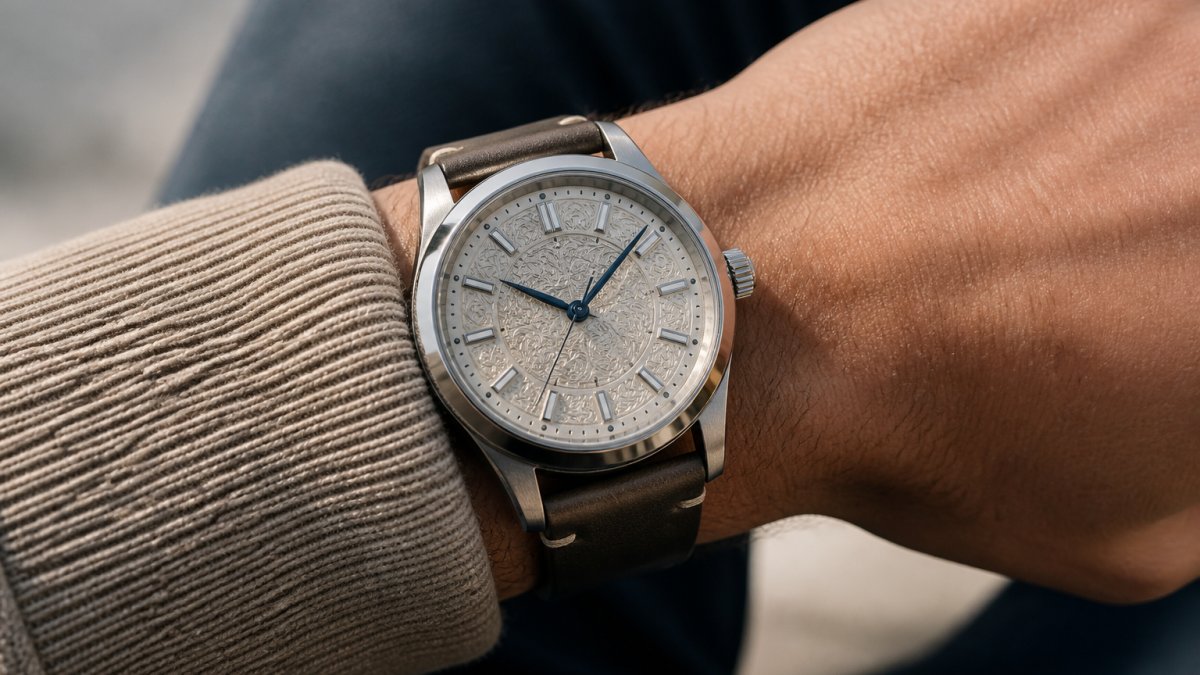
Dial finishing techniques include guilloché (geometric patterns created with specialized machinery), sunburst (radial brushing that creates depth), and grand feu enamel (hand-painted enamel fired at high temperatures). These techniques add cost and require skill but create visual depth printed dials can't match. Annum's CNC guilloché patterns exemplify this, not necessary for timekeeping, but they transform how light interacts with the dial throughout the day.
Making Your First Microbrand Purchase: What Matters Most
Your first microbrand watch should balance three competing priorities: design appeal, reliable performance, and genuine value. Get these right, and you'll own a watch you actually wear.
Budget, Design Preference, and Use Case
Start by defining your actual budget rather than your theoretical maximum.
Design preference should drive your decision more than specifications. A watch you love wearing beats a technically superior watch you avoid because the design doesn't resonate.
Use case clarity prevents buyer's remorse.
For most beginners, the L2 Chronograph at $489.00 represents the optimal entry point.
Limited Releases and Resale Value Considerations
Limited production runs create artificial scarcity that can inflate resale value, or leave you holding inventory when interest fades. The L2 Chronograph Anniversary Edition ($515.00) is limited to 30 pieces per dial variant, making it more collectible than the standard L2.
Here's the honest assessment: resale value for independent watchmakers is unpredictable compared to established brands. For your first purchase, assume you're buying to wear, not to flip.
The counterargument: if a brand you love releases a limited piece and you genuinely want it, scarcity shouldn't be your primary decision driver.
Your first microbrand watch purchase should feel like an investment in something you'll wear regularly, not a speculative gamble on an unknown brand.
Start with the L2 Chronograph if you want accessible entry into independent watchmaking. Move to the Viajero if you value complications that solve real problems. Consider the Annum if mechanical innovation and hand-finished complications justify the investment.
Frequently Asked Questions
What exactly is a microbrand watch, and how is it different from mainstream brands?
A microbrand watch is an independent timepiece created by small watchmakers or boutique companies, often featuring custom-engineered movements and hand-finished cases. Unlike established brands with decades of history, microbrands prioritize artisanal craftsmanship and limited production. Many, like Haim Watch Company, design custom calibers and hand-finished dial decorations that reflect individual horological vision rather than mass-market appeal. This allows beginners to own sophisticated, unique timepieces with genuine mechanical engineering at accessible price points.
Are microbrand watches actually reliable, and how can I verify that before buying?
Yes, quality microbrands are reliable when built with proven materials and rigorous movement standards. Check the movement type (custom caliber vs. standard ETA), case materials (stainless steel, titanium), and water resistance ratings. Examine the watchmaker's transparency about assembly and movement testing. Haim Watch Company's custom-engineered calibers and hand-finished cases undergo the same precision standards as larger brands. Request documentation of movement accuracy specifications and ask about warranty terms, reputable microbrands stand behind their work and provide clear after-sales support details.
What's a good budget for a beginner's first microbrand watch?
Beginner-friendly microbrand watches start around $489 and scale to $2,500 depending on complications and materials. The L2 Chronograph at $489 offers precision engineering and striking design without premium pricing. If you want Swiss-made craftsmanship, expect $2,000-$2,500 for models like the Viajero SE. Budget reflects case finishing, movement complexity, dial decoration (hand-drawn enamel vs. printed), and whether the movement is custom-engineered. Start with what feels comfortable; many collectors build collections over time rather than purchasing one expensive piece immediately.
How do I know a microbrand watch will hold its value or that the company will still exist in five years?
Assess brand longevity by reviewing their track record, customer testimonials, and featured coverage in respected watch publications. Haim Watch Company has been featured in outlets like Worn & Wound, which signals credibility within the watch community. Check warranty length and after-sales service accessibility; brands investing in long-term customer relationships typically remain stable.
What warranty and servicing should I expect from a microbrand watchmaker?
Reputable microbrands offer warranties covering movement defects and case craftsmanship, typically 1-2 years. Servicing accessibility varies; confirm whether the maker provides in-house service, partners with certified technicians, or ships internationally for repairs. Custom-engineered movements may require servicing from the original maker, so ask about service costs and turnaround time before purchasing. Haim Watch Company provides warranty coverage and after-sales support details with each purchase. Factor servicing costs into your long-term ownership budget.