

Table of Contents
- The New Direction of Modern Horology in 2026
- Watch Case Size Trends 2026: The Return to Wearable Proportions
- Ornate Dial Craftsmanship: Texture, Depth, and Visual Storytelling
- Warm Metals and New Material Science in Watchmaking
- High Complications and Technical Innovation for Everyday Wear
- The Swiss Made Wrist Watch Standard Meets Independent Design
- Investment Value and Ergonomics: Buying for the Long Term
- Conclusion: The Future of Watchmaking Innovation
- Frequently Asked Questions
Last Updated: September 5, 2026
The New Direction of Modern Horology in 2026
Modern horology design trends 2026 signal a decisive break from the oversized, hype-driven releases of the past decade. The conversation has shifted from wrist presence at any cost to a more thoughtful balance of proportion, material honesty, and mechanical relevance.
At Haim Watch Company, we have tracked this aesthetic evolution closely through our own design process. Below, we explore the five defining trends of the year and what they mean for how you choose your next timepiece.
The 2026 industry outlook from Hodinkee's market analysis notes that consumer preferences have shifted markedly toward versatile, everyday wearability. This guide breaks down each movement in design thinking so you can identify which pieces will hold both their appeal and their relevance.
Watch Case Size Trends 2026: The Return to Wearable Proportions
The most significant watch case size trends 2026 point toward a return to classic dimensions that prioritize comfort and integration. The days of the 44mm+ behemoth are fading, replaced by a preference for cases between 36mm and 40mm that sit flush against the wrist and slide easily under a cuff.
The sweet spot for most collectors now sits around 38mm, a size that offers enough visual substance for a range of wrist sizes while maintaining an elegant, low-profile silhouette.
How Case Geometry and Lug-to-Lug Matter More Than Diameter
Diameter alone tells an incomplete story. The true measure of wearability lies in the lug-to-lug distance and the overall case geometry. A 38mm case with a short, curved lug profile wears far more comfortably than a 40mm case with long, straight lugs that overhang the wrist edge.
A common mistake among newer collectors is fixating on the case diameter while ignoring these critical proportions. When evaluating a piece, the key is how the caseback sits against the skin and whether the hollowed lugs create a seamless transition to the bracelet or strap.
Ornate Dial Craftsmanship: Texture, Depth, and Visual Storytelling
Ornate dial craftsmanship has emerged as the primary canvas for brand identity and artistic expression in 2026. Where case design has trended toward restraint, dials have become boldly expressive, using texture and depth to create a tactile, layered visual experience.
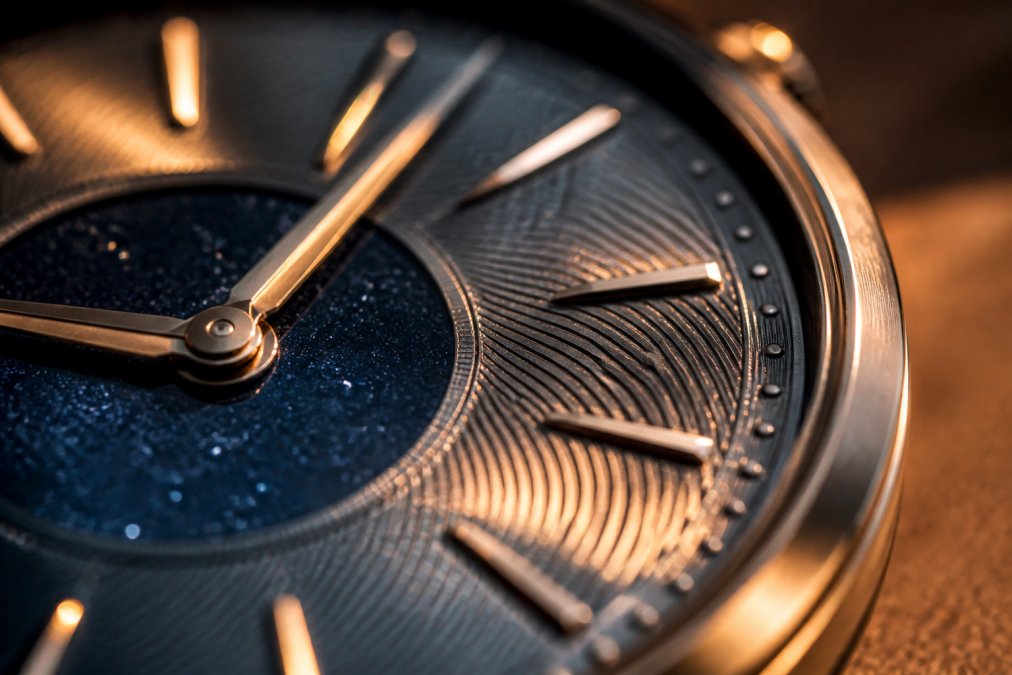
This year's most compelling releases showcase dial depth through the strategic use of color, pattern, and finish. Think of a dial that shifts character as light moves across it, revealing a hidden layer of guilloché or a subtle sunburst that was invisible a moment before.
Guilloché, Aventurine, and the Rise of Layered Dials
Guilloché has returned to prominence as a defining feature of high-end dial decoration, offering a geometric precision that is unmistakably mechanical. When executed via CNC with meticulous finishing, the engine-turned patterns create an interplay of light that changes with every degree of wrist rotation.
Aventurine, with its deep, starry depth, has also moved from niche curiosity to mainstream acceptance. The material's inherent unpredictability means no two dials are identical, lending each watch a unique, personal quality.
Warm Metals and New Material Science in Watchmaking
The dominance of stark stainless steel is being challenged by a renewed appreciation for warm metals like bronze, champagne-toned gold, and rose gold. This shift reflects a broader desire for watches that project warmth and approachability rather than clinical precision.
However, the 2026 conversation goes beyond simple color choice. Collectors are now asking pointed questions about how these materials age and perform. A standard aluminum-bronze will develop a greenish, uneven crust over time, while a modern silicon-bronze alloy like the one used by Oris in their ProPilot X series remains far more stable, developing a subtle, warm brown tone that requires minimal maintenance.
Simultaneously, new material science in watchmaking is expanding the possibilities for case construction. Titanium, once reserved for extreme tool watches, is now a favored choice for its lightweight comfort and hypoallergenic properties. Grade 2 titanium is softer and more prone to scratching, while Grade 5 (Ti-6Al-4V) is significantly harder and more resistant to wear (asm.org).
The luxury segment is also seeing ceramics and advanced alloys used not just for bezels but for full case construction. High-tech ceramic, often zirconium oxide, offers scratch resistance that traditional metals cannot match, but it is highly susceptible to shattering on a hard impact. This is why many brands, including Rado with their Captain Cook line, are now pairing ceramic cases with titanium casebacks and crowns.
A deep dive into the latest case material innovations from the 2026 industry reports highlights that the most exciting frontier is the use of carbon composites and forged carbon. Unlike traditional metals, these materials allow for a completely unique, marbled aesthetic where no two cases look exactly alike. The trade-off is a lack of polishability; a scratched carbon case cannot be refinished, only replaced. For the modern collector, the choice is not just about color or weight, but about understanding the lifecycle of the material and accepting its inherent characteristics as part of the watch's story.
This focus on material honesty is a defining feature of modern horology in 2026. The best pieces are not those that simply look new, but those that age gracefully, developing a character that is unique to the wearer.
High Complications and Technical Innovation for Everyday Wear
Complications are no longer confined to the dress watch or the collector's safe; they are being engineered for daily robustness and ease of use. The goal is to offer the intellectual satisfaction of a complex caliber without demanding the wearer treat the watch with excessive care.
A complete calendar with a moonphase, once a delicate feature, is now designed with custom-engineered modules that offer reliability and a power reserve suited to regular rotation. Similarly, the chronograph has been reimagined with movements that prioritize accurate, consistent actuation and a smooth, tactile feel.
For the enthusiast, the appeal lies in the integration of these complications into a cohesive, wearable package. A watch that offers a GMT function, a chronograph, or a calendar within a 38mm to 40mm case that sits comfortably on the wrist is the ultimate expression of technical maturity.
The Swiss Made Wrist Watch Standard Meets Independent Design
The relationship between the Swiss Made wrist watch standard and independent, microbrand design is more nuanced than ever. While the label still carries significant weight for its assurance of quality and finishing, collectors increasingly understand that innovation often thrives outside the traditional Swiss powerhouses.
What is often misunderstood is what the Swiss Made label actually guarantees in 2026. Under the current regulations, a watch can bear the mark if at least 60% of its manufacturing costs are generated in Switzerland, the movement is Swiss, and the final inspection occurs on Swiss soil. A brand could source a Chinese-made case, fit it with a Swiss movement, and assemble it in Switzerland, and it would still qualify.
Independent brands are navigating this landscape in two distinct ways. The first group uses the Swiss Made label while pushing the boundaries of design language and material choice, offering the heritage and reliability of Swiss watchmaking combined with the bold vision of a smaller, more agile team.
The second, more radical group is choosing to abandon the label entirely. Brands like Christopher Ward have moved their final assembly to the UK, while others like Baltic have embraced their French heritage with movements sourced from various suppliers. For these brands, the value proposition is not about a geographic label but about a transparent supply chain and a direct relationship with the consumer.
This divergence creates a fascinating dynamic for the collector. A Swiss Made watch from a microbrand like Haim Watch Company offers a certain assurance of quality control and access to the Swiss supply chain. But a non-Swiss independent might offer a more unique design or a more compelling story.
The result is a vibrant ecosystem where a collector can choose a piece with a storied Swiss lineage or one that champions domestic assembly and a custom-designed caliber from a smaller atelier. The key is to look past the marketing and understand the actual provenance of the watch you are buying.
Investment Value and Ergonomics: Buying for the Long Term
The conversation around a watch purchase has evolved to include a more analytical view of its long-term value and daily comfort. Investment value analysis now applies to how contemporary releases are positioned in terms of scarcity, brand trajectory, and design longevity.
Ergonomics and wearability are the counterweights to pure investment logic. A watch that spends most of its time in a safe because it is uncomfortable or too fragile to wear fails its primary purpose. The best watches are those you forget you are wearing, yet notice with pleasure throughout the day.
This focus on the long term also encompasses the emotional dimension of ownership. A watch bought to mark a milestone, with a dial that captures a galaxy or a specific memory, holds a value that transcends market fluctuations.
Conclusion: The Future of Watchmaking Innovation
The future of watchmaking innovation lies in the confident synthesis of tradition and progress. Modern horology design trends 2026 are defined by a return to human-centric proportions, a celebration of expressive dial artistry, and the integration of meaningful complications into daily-wear packages.
For collectors seeking a timepiece that embodies these principles, the challenge is finding a maker who executes on all fronts: wearable case geometry, ornate dial craftsmanship, and a strong, custom-engineered movement. Haim Watch Company meets this standard with pieces like the Legacy Automatic, featuring a hand-finished titanium case and a custom-designed caliber, and the Annum, which introduces a complete calendar with moonphase module in a refined 38mm profile. These are watches designed to be part of your journey, not just your collection.

Choosing a watch in 2026 is an exercise in defining your own values. Whether you prioritize the warmth of a hand-finished case, the depth of a guilloché dial, or the quiet satisfaction of a custom mechanical module, the right piece will resonate on both an aesthetic and personal level. Explore the Haim Watch Company collection to find a timepiece that reflects your own milestone, engineered with precision and finished with artistry. Get started with Haim Watch Company and discover a legacy of precision that is yours to wear.
Frequently Asked Questions
What are the biggest watch design trends for 2026?
The biggest shifts center on smaller case sizes, with 38mm becoming the new standard for versatility. Textured and layered dials using guilloché, aventurine, and fumé finishes are gaining momentum. Collectors are also prioritizing warm metal cases in titanium and bronze, along with refined tool watches that blend rugged capability with elegant finishing. The focus has moved from bold statements to wearable, detailed designs that reward closer inspection.
Are smaller watch cases becoming more popular in 2026?
Yes, the watch case size trends 2026 point strongly toward sub-40mm diameters. The shift prioritizes ergonomics and wrist presence over sheer size. A 38mm case with a thoughtful lug-to-lug length wears comfortably under a shirt cuff and suits a wider range of wrist sizes. Buyers are realizing that dial depth and case geometry create visual interest more effectively than a larger diameter ever could.
How is modern horology blending heritage with new technology?
Modern horology in 2026 pairs vintage-inspired aesthetics with contemporary manufacturing. Brands are reinterpreting classic complications like the complete calendar and moonphase using custom-designed calibers. CNC-machined guilloché patterns replicate traditional artisan craftsmanship with greater precision. The result is a design language that respects historical proportion while adopting modern material science and movement architecture for improved reliability and power reserve.
What defines a modern luxury watch design in 2026?
A modern luxury watch in 2026 is defined by restraint and detail. Buyers look for hand-finished cases, ornate dial craftsmanship, and visible movement decoration through exhibition casebacks. The integration of the bracelet or strap with the case matters as much as the dial. The strongest designs balance heritage-inspired cues with a clear point of view, offering something distinctive without relying on trend-chasing or oversized proportions.
This article was written using GrandRanker