

Table of Contents
- How RGM Watches and Independent Microbrands Define Themselves
- Manufacturing Depth: Where RGM Watches and Microbrands Diverge
- In-House Movement vs Off-the-Shelf: What It Actually Means for You
- Price Point Comparison and Value Proposition
- RGM Watch Resale Value vs. Microbrand Liquidity
- Technical Serviceability Over Time
- Which Category Fits Your Collecting Goals?
- Conclusion
Last Updated: August 10, 2026
How RGM Watches and Independent Microbrands Define Themselves
The distinction between RGM watches and independent microbrands matters far more than marketing language suggests. RGM Watch Co. is an American manufacturer that produces genuinely in-house mechanical movements, including the Caliber 801 and the Pennsylvania Tourbillon, the first serially produced tourbillon in North America. An independent microbrand is a direct-to-consumer watch label that designs timepieces without manufacturing its own movement or case components, typically sourcing established calibers and focusing creative energy on dial design and brand identity.
According to the American Watchmakers-Clockmakers Institute's educational resources, true in-house movement production requires designing, machining, and regulating the escapement and gear train internally. By that standard, the number of brands genuinely qualifying is extremely small.
The microbrand category spans an enormous range. Some brands assemble and regulate movements in the United States with meaningful quality control. Others are essentially design studios that outsource everything from case polishing to final inspection. Below, this guide breaks down where RGM and the broader microbrand tier genuinely diverge, what that means for your money, and which collecting philosophy each serves best.
Manufacturing Depth: Where RGM Watches and Microbrands Diverge
Manufacturing depth is the single most important variable in this comparison. RGM machines movement components, applies traditional guilloche engine-turning to dials using antique machinery, and performs hand finishing including polishing, beveling, perlage, and Geneva-style striping. This is watchmaking craftsmanship in the original sense, where the brand controls technical specifications at every stage.

Most independent microbrands operate at a fundamentally different level. They select a movement from an established supplier, commission a case from a specialist manufacturer, and design the dial in-house. The value they add is curatorial and aesthetic, not mechanical. This is not a dismissal, some of the most compelling watches in the current market come from brands that have never machined a single gear tooth. But the manufacturing depth is categorically different from what RGM does.
Full In-House Production vs. Assembled Watches
Full in-house production means a brand designs, machines, and regulates its own caliber. RGM meets this standard. The Caliber 801 is proprietary, and the Pennsylvania Tourbillon represents a level of horological significance that almost no American brand has achieved.
Assembled watches use sourced calibers, typically from Swiss suppliers like Sellita or ETA, or Japanese suppliers like Miyota or Seiko's NH-series movements. The movement is regulated and cased up, but the mechanical heart was designed and manufactured elsewhere. This describes the vast majority of independent microbrands, including well-regarded ones with strong followings.
Buying an assembled watch from a quality microbrand is buying the brand's design vision and curation. Buying from RGM is buying the brand's manufacturing vision. Both are legitimate, they are just different things.
The Hybrid Tier: US Assembly with Sourced Components
Several independent brands perform meaningful assembly, regulation, and quality control in the United States using sourced components. Nodus Watches performs assembly, quality control, and movement regulation domestically while using Japanese movements. Haim Watch Company's Legacy Automatic represents this hybrid model taken further, with 100% US assembly and a custom-designed caliber, placing it in a different category from brands that source standard movements unchanged.

In-House Movement vs Off-the-Shelf: What It Actually Means for You
An in-house caliber gives a brand complete control over technical specifications, finishing techniques, and movement regulation. For RGM, this translates directly into watches where the movement itself is a display piece, decorated with the same intention as the dial.
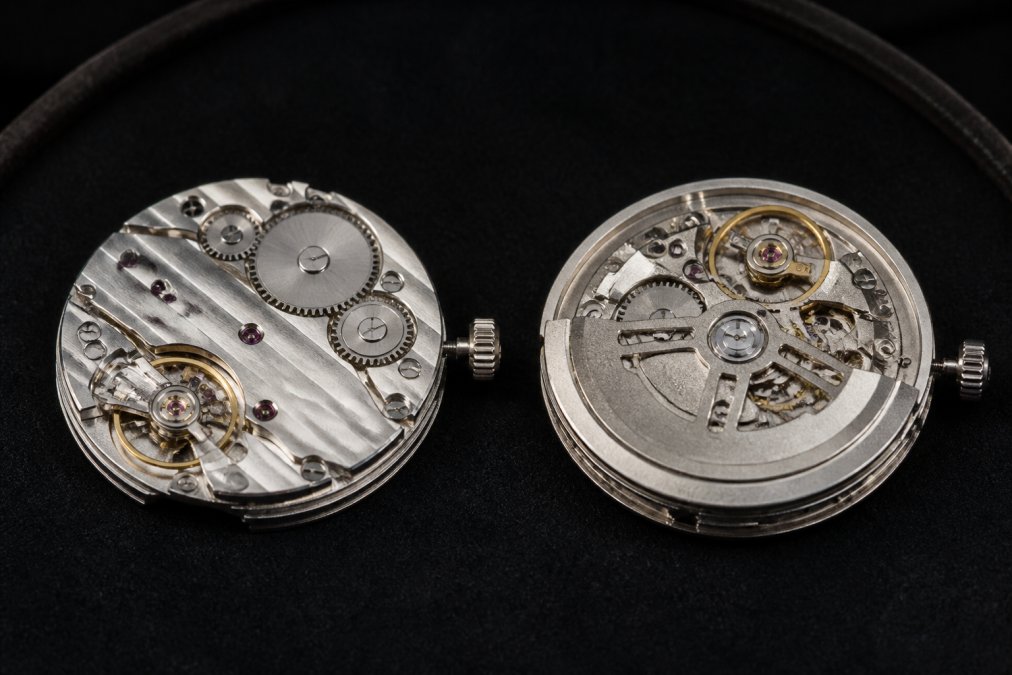
An off-the-shelf caliber from a reputable supplier is not inherently inferior as a timekeeping instrument. Movements from established Swiss and Japanese suppliers are well-documented, widely serviced, and proven over decades of production. The practical serviceability argument actually favors sourced movements in some respects: any competent watchmaker can work on a Sellita SW300 or a Miyota 9015 without proprietary parts.
What you lose with a sourced movement is horological heritage specific to that brand. The movement tells no story about the company that made the watch. For some collectors, that is irrelevant. For others, it is the whole point.
| Movement Type | Technical Control | Serviceability | Design Uniqueness | Price Impact |
|---|---|---|---|---|
| Full in-house (e.g., RGM) | Complete | Requires specialist | Fully proprietary | Highest |
| Custom-designed caliber | Partial | Broader access | Partially proprietary | Moderate-high |
| Sourced, regulated in-house | None | Wide availability | Standard | Moderate |
| Sourced, stock configuration | None | Wide availability | None | Lower |
If you are buying a watch to wear, service locally, and sell in five years, a quality sourced movement from a reputable brand is entirely rational. If you want a piece of American horological heritage with a movement that represents genuine craft, the sourced-movement tier cannot satisfy that goal regardless of dial beauty.
Price Point Comparison and Value Proposition
RGM watches start at around $3,000 and climb significantly for more complex pieces or bespoke commissions. That price reflects in-house movement production, traditional guilloche dials, hand finishing at every stage, and extremely limited production numbers.
The independent microbrand tier covers an enormous range. Entry-level options with Japanese movements can be found below $600. Mid-tier brands with Swiss movements start around $1,500 to $1,850. Haim Watch Company's Legacy Automatic sits at $1,350, with the Legacy Automatic: Azure at $1,349.99, positioning it as a value-forward option for collectors who want custom caliber work and US assembly without crossing into the $3,000-plus tier. The Annum, with calendar and moonphase complication, is priced at $2,149.99. The L2 Chronograph starts at $489.

The direct-to-consumer model used by most microbrands reduces overhead compared to brands selling through retailers, which is why Swiss-made watches from independent brands can be priced below what traditional distribution channels would allow.
RGM Watch Resale Value vs. Microbrand Liquidity
RGM occupies a position where resale value holds reasonably well. The brand has genuine horological credibility, a documented history of in-house production, and a collector base that understands what it is buying. Limited production numbers reduce supply on the secondary market. These factors combine to create a secondary market that, while not liquid, is not illiquid either.
Most independent microbrand watches depreciate significantly on resale. The direct-to-consumer model that makes them accessible at retail creates a secondary market problem: buyers know the retail price is already competitive, so they expect a further discount on used pieces.
The exceptions are microbrands with genuine scarcity and collector followings. Limited editions numbered to 30 pieces, like Haim's L2 Chronograph Anniversary Edition, create secondary market conditions closer to traditional collectible logic. When fewer than 30 of something exist, the liquidity question changes.

According to Chrono24's market data on independent watch brands, watches from brands with documented in-house production and limited runs consistently outperform mass-assembled alternatives on the secondary market over a five-year horizon.
Do not buy a microbrand watch as an investment. Buy it because you want to wear it. If resale value is a primary concern, RGM's manufacturing depth and brand credibility give it a meaningful structural advantage.
Technical Serviceability Over Time
RGM's in-house movements present a specific serviceability consideration. The brand services its own watches and maintains parts inventory, but the movements are proprietary. A watchmaker unfamiliar with the specific caliber will need documentation and potentially proprietary components. This is manageable if you maintain a relationship with the brand or an authorized service center, but it is a real constraint compared to watches with widely-used calibers.
Sourced movements from established suppliers have a clear serviceability advantage. A Sellita SW300 can be serviced by most competent watchmakers in any major city. Parts are available through standard supply chains. This is a genuine practical benefit, particularly for collectors who want to service watches locally.
The hybrid tier introduces nuance. A custom-designed caliber like the one in Haim Watch Company's Legacy Automatic may require brand-specific knowledge for certain service procedures, but the underlying architecture often draws on established components, which broadens the pool of capable service technicians.
Which Category Fits Your Collecting Goals?
RGM is the correct answer if you want a piece of American horological heritage with genuine in-house caliber production, traditional finishing techniques, and watchmaking craftsmanship that can be examined at the movement level. These are not watches you buy because they represent value relative to Swiss luxury; they are watches you buy because nothing else in the American market does what RGM does.
The independent microbrand tier is the correct answer if you prioritize design originality, accessible price points, and the direct relationship with a small brand that the direct-to-consumer model enables. The best microbrands are not compromised versions of something better. They are a different kind of object: design-forward, community-connected, and honest about what they are.
The hybrid tier, where Haim Watch Company's Legacy Automatic sits, addresses a specific collecting goal: wanting meaningful American manufacturing involvement and a custom caliber without the $3,000-plus threshold that full in-house production demands. Worn & Wound described the dial decoration as punching "well above its weight class," with design "reminiscent of galaxies and starlit nights" that catches attention throughout the day.
| Collecting Goal | Best Fit |
|---|---|
| American in-house movement production | RGM |
| Maximum design originality at accessible price | Independent microbrand |
| US assembly with custom caliber, mid-tier price | Haim Watch Company Legacy Automatic |
| Swiss movement with strong finishing | Mid-tier Swiss microbrand |
| Entry-level mechanical with solid build | Japanese-movement microbrand |
| Bespoke or custom commission | RGM |
| Limited edition collectibility | Haim L2 Chronograph Anniversary Edition |
The watch enthusiast community has never had more options across this spectrum. The mistake is treating these categories as a hierarchy where in-house production is always better. For some collectors it is. For others, a beautifully designed watch with a reliable sourced movement and genuine American assembly represents exactly the right trade-off.
Choosing between RGM and the independent microbrand tier ultimately comes down to manufacturing philosophy, not price alone. If you want a watch that bridges custom caliber work, 100% US assembly, and ornate dial decoration at a price point that makes the decision feel rational rather than aspirational, explore the Haim Watch Company collection. The Legacy Automatic and the Annum represent two distinct points on that spectrum, and the L2 Chronograph offers a starting point for collectors building their first serious collection. Shop Now at haimwatchco.com.
Frequently Asked Questions
Are RGM watches good quality?
RGM produces genuinely high-grade mechanical watches with in-house movements, traditional guilloche dials, and hand-finishing techniques including perlage, beveling, and Geneva-style striping. The Pennsylvania-based workshop manufactures calibers entirely on-site, including the Caliber 801 and the first serially produced tourbillon in North America. For collectors prioritizing American horological heritage and deep manufacturing credentials, RGM represents one of the most serious domestic options available, though that level of craft comes with a starting price around $3,000.
Do RGM watches hold their value?
RGM watches hold value better than most independent microbrands because of their genuine in-house movements, limited production numbers, and established collector reputation. Watches with proprietary calibers, traditional finishing, and bespoke options tend to retain secondary market interest over time. That said, RGM is not a mainstream luxury marque, so liquidity on the secondary market is narrower than with major Swiss houses. Expect stronger value retention than typical microbrands, but slower resale compared to broadly recognized names.
What defines an independent watchmaker versus a microbrand?
An independent watchmaker typically manufactures or significantly modifies movements in-house, controls most of the production process, and operates outside corporate conglomerates. A microbrand, by contrast, usually designs watches and sources movements and components from established suppliers, then sells direct-to-consumer at competitive prices. The distinction is manufacturing depth, not size or price. Some microbrands blur this line by developing proprietary components or performing regulated US assembly, creating a hybrid tier that sits between pure assembly and full in-house production.
Is RGM the only American manufacturer of high-end watches?
RGM is the most prominent American manufacturer producing fully in-house mechanical movements at a high-grade level, but it is not the only domestic watchmaking operation. Brands like Haim Watch Company assemble the Legacy Automatic 100% in the US with a custom-designed caliber, representing a serious domestic alternative at $1,350. Other independents design in the US and source Swiss or Japanese movements. The American watchmaking landscape is small but growing, with genuine manufacturing depth varying significantly across brands.
What makes a custom-designed caliber different from a standard ETA or Sellita movement?
A standard ETA or Sellita movement is a proven, widely serviced Swiss ebauche that any watchmaker can work on globally. A custom-designed caliber is developed specifically for one brand, often with proprietary geometry, decoration, or complications. The trade-off is clear: off-the-shelf movements offer easier long-term serviceability and lower replacement cost, while a custom caliber delivers a unique mechanical identity and stronger brand differentiation. For collectors, the custom caliber signals genuine horological investment; for practical daily wear, both perform reliably when properly regulated.
This article was written using GrandRanker