

Table of Contents
- What Defines a Swiss Made Wrist Watch?
- Swiss Watch Movement Types: Which One Suits You?
- How to Spot a Fake Swiss Watch: Key Details
- Best Affordable Swiss Watches for Everyday Wear
- Why the Legacy Automatic Represents Modern Swiss Craftsmanship
- Caring for Your Swiss Made Wrist Watch
- Conclusion: Find Your Swiss Made Timepiece
- Frequently Asked Questions
Last Updated: September 9, 2026
What Defines a Swiss Made Wrist Watch?
A swiss made wrist watch is not just a marketing phrase; it is a legally protected designation of origin with specific, verifiable requirements. The label is governed by the Swiss Federal Act on the Protection of Trade Marks and Indication of Source, and more precisely, by the Swiss Ordinance on the Use of the Swiss Made Indication for Watches. Understanding the letter of this law is the first step to appreciating what you are buying.
The Three Pillars of the Legal Definition
Since January 1, 2017, a watch can legally bear the Swiss Made label only if it meets three strict criteria: (admin.ch)
- The Movement: The movement must be Swiss. This means it was assembled and inspected in Switzerland, and its components (including the jewels, escapement, and mainspring) must be at least 60% Swiss-origin by value.
- The Casing: The watch must be cased up (i.e., the movement placed into the case) in Switzerland.
- The Final Inspection: The final technical inspection of the finished watch must be conducted by the manufacturer in Switzerland.
The 60% Value Rule: More Than Just Assembly
The most misunderstood aspect of the law is the 60% rule. This is not about the weight of the parts or the hours of labor; it is a calculation of manufacturing cost. For the movement itself, at least 60% of its total value must originate from Swiss-based manufacturing steps. For the entire watch, the calculation is different: at least 60% of the total manufacturing cost of the watch (including the case, dial, hands, and assembly) must be generated in Switzerland.
This rule was tightened in 2017 to close a loophole where brands could import cheap cases and dials from Asia, drop in a Swiss movement, and legally stamp “Swiss Made” on the dial. The modern law ensures that the label represents a substantial investment in Swiss industry, not just a final assembly step.
The Regulatory Oversight
The enforcement of this standard falls under the purview of the Swiss Federal Institute of Intellectual Property (IPI). The IPI can initiate criminal proceedings against brands that misuse the label. In practice, the industry also self-regulates through organizations like the Federation of the Swiss Watch Industry (FH), which provides guidance and advocates for strict adherence to the law.
Why This Matters to You
This legal framework is your guarantee. When you see “Swiss Made” on a dial, you are not relying on a brand’s marketing claim; you are relying on a federal law with criminal penalties for violation. This provides a verifiable standard of quality and provenance that separates authentic Swiss horology from mere marketing claims, a distinction that collectors and newcomers alike can trust.
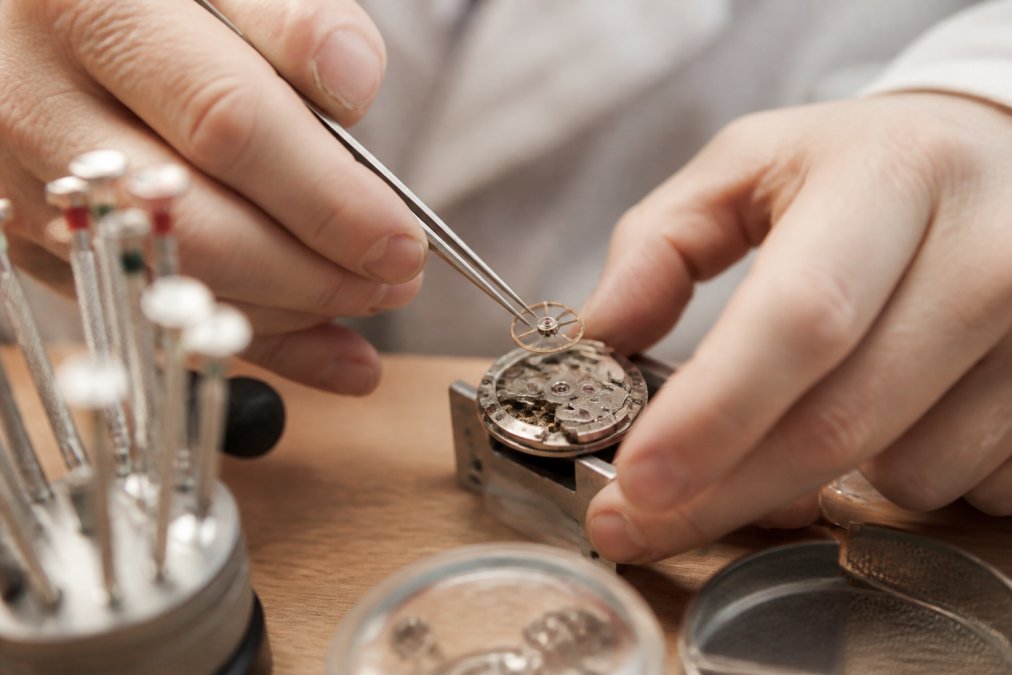
At Haim Watch Company, we understand that a swiss made wrist watch represents more than a country of origin; it represents a tradition of precision and craftsmanship. The heritage of Swiss watchmaking has set a global benchmark for movement accuracy and durability. When you purchase a timepiece bearing this label, you are buying into a legacy of hand-assembled calibers and rigorous quality control.
Swiss Watch Movement Types: Which One Suits You?
When exploring Swiss watch movement types, you will encounter three primary categories: quartz, mechanical, and automatic. While the names are familiar, the underlying mechanics and their real-world implications for accuracy, maintenance, and longevity are often misunderstood. This breakdown focuses on the technical nuances that separate a good purchase from a great one.
Quartz: The Precision Standard
A quartz movement is powered by a battery that sends an electrical current through a tiny quartz crystal. This crystal vibrates at a precise frequency of 32,768 times per second. An integrated circuit counts these vibrations and uses them to drive a stepper motor that moves the gears and, ultimately, the hands.
- Accuracy: Quartz is the most accurate movement type, typically deviating by only 10 to 15 seconds per month. High-end Swiss quartz calibers can achieve accuracy within 10 seconds per year.
- Maintenance: The primary maintenance is a battery change every 2 to 3 years. The movement itself requires minimal servicing, often only every 10 years or more.
- Trade-off: The seconds hand moves in distinct, one-second ticks rather than a smooth sweep. Many enthusiasts find this visually less engaging than a mechanical movement.
Mechanical (Manual-Wind): The Traditional Heart
A mechanical movement is a purely mechanical device. You wind the crown, which tightens a mainspring. As the mainspring slowly unwinds, it releases stored energy through a series of gears. The rate of release is regulated by the escapement, a balance wheel and hairspring that oscillate at a standard frequency of 4 Hz (or 28,800 vibrations per hour).
- Accuracy: A well-regulated mechanical movement is typically accurate to within -4 to +6 seconds per day (en.wikipedia.org).
- Maintenance: Requires daily winding (usually 30-40 turns of the crown). The movement should be serviced every 3 to 5 years to replace dried lubricants and worn parts.
- Trade-off: The daily ritual of winding connects you directly to the watch's mechanism. However, if you forget to wind it, the watch stops after its power reserve (typically 38 to 72 hours) expires.
Automatic (Self-Winding): Convenience Meets Craft
An automatic movement is a mechanical movement with an added self-winding module. A semicircular metal weight, called a rotor, pivots on a central bearing. As you move your wrist throughout the day, the rotor swings, winding the mainspring automatically.
- Accuracy: Identical to manual-wind mechanical movements, as the regulating organs are the same. Expect the same accuracy of -4 to +6 seconds per day.
- Maintenance: No daily winding is required if worn regularly. However, if you rotate watches, you will need to wind it manually or use a watch winder to keep it running. Servicing intervals are the same as manual movements (3-5 years).
- Trade-off: The rotor adds thickness and weight to the watch. A common issue is that many owners do not wear the watch enough to keep it fully wound, leading to timekeeping drift when the mainspring is only partially tensioned.
A Decision Framework for Beginners
A common mistake is assuming quartz is inferior; in practice, many collectors own both, valuing the precision of quartz for sports and the soul of mechanical for dress occasions. Here is a practical guide:
- Choose Quartz if: You prioritize accuracy, want a low-maintenance daily beater, or are buying a watch for a child or someone who will not wear it daily.
- Choose Automatic if: You want the craftsmanship of a mechanical watch without the daily winding ritual. It is the most popular choice for a first serious watch.
- Choose Manual-Wind if: You appreciate the tactile ritual of winding and prefer a thinner case profile (manual movements are often slimmer than their automatic counterparts).
For those new to serious watch collecting, an automatic caliber offers the perfect entry point, providing a tangible connection to watchmaking tradition without the daily ritual of winding. The key is to match the movement to your lifestyle, not just the aesthetic of the dial.
How to Spot a Fake Swiss Watch: Key Details
Learning how to spot a fake Swiss watch begins with understanding what genuine examples look like under scrutiny. The weight of the watch is another indicator; genuine stainless steel cases with quality movements feel substantial, while counterfeit pieces frequently feel hollow and light. Examine the dial closely for crisp, perfectly aligned printing, as any smudging or misalignment is a red flag.
The caseback offers critical evidence when learning how to spot a fake Swiss watch. Genuine watches feature clean, deep engravings with consistent font, while fakes often show shallow, blurry markings. Look for the Swiss Made label at the bottom of the dial, and verify the movement through a display caseback if available. When in doubt, purchase from an authorized dealer or a brand with transparent assembly practices, like the 100% US-assembled Legacy Automatic from Haim Watch Company, which provides verifiable provenance.

Best Affordable Swiss Watches for Everyday Wear
Finding the best affordable Swiss watches requires looking beyond the heritage giants to the microbrands that deliver exceptional value without compromising on movement quality. The modern market offers several routes to Swiss reliability without the five-figure price tags of luxury houses. Entry-level luxury options from established brands provide solid automatic calibers with sapphire crystal and respectable water resistance, making them ideal daily companions.
For the best affordable Swiss watches, consider what features matter most for your lifestyle: water resistance for daily peace of mind, a strong stainless steel case for durability, and a movement with a reasonable power reserve. A notable example in this space is the L2 Chronograph from Haim Watch Company. The watch features a newly designed case that blends brushed and polished surfaces with chamfered edges, offering sophisticated style.

| Watch | Movement | Case Material | Price | Best For |
|---|---|---|---|---|
| Haim L2 Chronograph | Swiss Quartz | Stainless Steel | $489 | Eye-catching design, daily wear |
| Haim Legacy Automatic | Caliber HWC-1 (US assembled) | Hand-finished Titanium | $1,350 | First custom caliber, milestone gifts |
| Haim L2 Chronograph Anniversary | Swiss Chronograph | Stainless Steel | $515 | Limited edition collecting |
Why the Legacy Automatic Represents Modern Swiss Craftsmanship
The Legacy Automatic from Haim Watch Company represents a bridge between Swiss precision and modern American assembly, offering a fresh perspective on what a swiss made wrist watch can be. While the term "Swiss Made" carries centuries of tradition, the Legacy Automatic introduces a custom-designed caliber, Caliber HWC-1, assembled entirely in the United States. This 100% US assembly, including the movement, provides collectors with transparent provenance and a blend of heritage and modern horological progress.
What most guides miss is that the value of a swiss made wrist watch extends beyond its legal label to the artistry of its design. The Legacy Automatic features a hand-finished titanium case with ornate dial decoration, creating a timepiece that feels personal and exclusive. Titanium offers durability and lightness, making it an ideal everyday material. The custom-engineered caliber offers a level of distinction.
Caring for Your Swiss Made Wrist Watch
Proper care ensures your swiss made wrist watch maintains its accuracy and aesthetic appeal for decades. For automatic and mechanical movements, wear your watch regularly to keep the mainspring tensioned; if you rotate watches, invest in a quality watch winder to preserve the lubricants. Avoid exposing your timepiece to strong magnetic fields, which can disrupt the oscillation of the balance wheel and compromise movement accuracy. Extreme temperature changes and sudden shocks also pose risks to the delicate internal components.
Service your swiss made wrist watch every three to five years to maintain optimal performance (nist.gov). A professional service involves disassembling the movement, cleaning each component, replacing worn parts, and re-lubricating the jewels and gears. For daily care, wipe your watch with a soft microfiber cloth to remove sweat and dust, and rinse it under lukewarm water if it offers adequate water resistance. The hand-finished titanium case of the Legacy Automatic is particularly forgiving, resisting corrosion and showing minimal wear over time.
Conclusion: Find Your Swiss Made Timepiece
Choosing a swiss made wrist watch is a personal decision that balances heritage, craftsmanship, and your individual style. The journey from understanding the legal Swiss Made definition to selecting a movement type and identifying authentic pieces equips you to make a confident purchase. Whether you are seeking your first entry-level luxury piece or adding a conversation-starting chronograph to your collection, the market offers exceptional options that respect both tradition and innovation.
At Haim Watch Company, we believe a timepiece should be a part of your journey, marking significant milestones with artisanal craftsmanship and reliable performance. From the ornate dials of the L2 Chronograph to the custom-engineered Legacy Automatic, our collection blends heritage with modern horological progress. Discover a legacy of precision and artistry, and find a watch that speaks to your story. Explore the collection and find your next timepiece today.
Frequently Asked Questions
What criteria must a watch meet to be labeled 'Swiss Made'?
A watch can carry the Swiss Made label if its movement is Swiss, the movement is cased up in Switzerland, and the final inspection happens there. Since 2017, at least 60% of manufacturing costs must also come from Switzerland. This legal definition, enforced by the Swiss government, protects the label's meaning, so you know the watch meets specific standards of quality and craftsmanship.
What is the difference between a Swiss movement and a Swiss made watch?
A Swiss movement refers only to the internal mechanism, which must be assembled and inspected in Switzerland. A Swiss made wrist watch goes further: the case must be assembled in Switzerland and the final product inspected there too. So a watch can have a Swiss movement but not qualify as Swiss Made if assembly happens elsewhere. The label guarantees more than just the engine.
Are there best affordable Swiss watches that don't compromise on quality?
Yes. Entry-level Swiss made wrist watch options from microbrands offer quality finishing without the high price of luxury maisons. Look for models with sapphire crystal, stainless steel cases, and a reliable automatic caliber.
How do I verify the authenticity of a Swiss made wrist watch?
Start by checking the dial and caseback for the Swiss Made label. Research the brand to confirm its provenance. Examine the movement through a display caseback for jewel count and finishing details. Be wary of prices that seem too good to be true. If possible, ask for the original papers and certificate of authenticity.
Your wrist deserves more than a mass-produced accessory. It deserves a timepiece with a story, built with hand-finished cases and custom-designed calibers that reflect true horological passion. Haim Watch Company offers Swiss-made timepieces and the 100% US-assembled Legacy Automatic, each featuring ornate dial designs and reliable precision. Get started with Haim Watch Company and find a watch that will be part of your journey for years to come.