

Table of Contents
- Why Unique Watch Companies Are Worth Discovering in 2026
- How to Choose a Microbrand Watch: A Buyer's Framework
- Microbrand Watch Movements: What Powers the Best Small-Batch Timepieces
- Best Microbrand Watches: Standout Companies and What Sets Them Apart
- Specifications That Separate Unique Watch Companies From the Pack
- Pricing, Availability, and After-Sales Support: What to Verify Before You Commit
- Common Mistakes When Hunting for Unique Watch Companies
- Conclusion: Building a Collection of Unique Watch Companies
- Frequently Asked Questions
Last Updated: October 15, 2026
Why Unique Watch Companies Are Worth Discovering in 2026
The watch world has split in two: giant houses with boutiques and waiting lists, and a growing set of small makers building watches with real character.
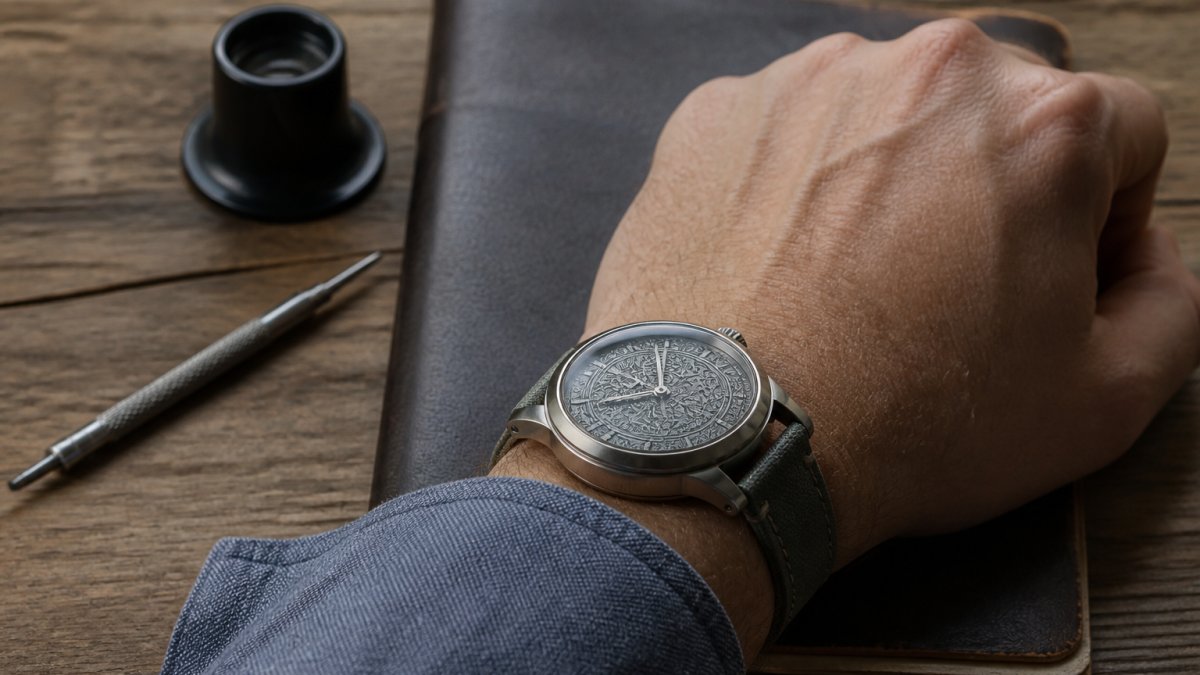
At Haim Watch Company, we build small-batch timepieces with ornate dials and custom-designed calibers.
The short answer: a microbrand watch is produced by a small, independent company in limited runs, usually sold direct online rather than through retail stores.
How to Choose a Microbrand Watch: A Buyer's Framework
Choosing well comes down to five questions, and none of them involve the logo.
Five Questions to Ask Before You Buy
- Who makes the movement, and is it modified? A stock movement is fine. A modified or custom caliber tells you the maker invested in tooling.
- What is the case material and finish? Hand-finished titanium or steel wears differently than a raw machined case.
- Is the size right for your wrist? Check case diameter and lug-to-lug before anything else.
- What does after-sales support look like? Ask about warranty length, service options, and where repairs happen.
- How often do new models drop? Frequent drops can dilute the exclusivity of what you already own.
A common mistake is falling for a dial photo and skipping the specs. The dial sells the watch. The specs decide whether you still wear it in two years.
Microbrand Watch Movements: What Powers the Best Small-Batch Timepieces
Movement choice is the clearest signal of what a small brand values. There are three paths.
Off-the-Shelf, Modified, and Custom Calibers Explained
Off-the-shelf movements are bought complete from a supplier: reliable, easy to service, and cheap.
Modified movements start as stock calibers, then get new finishing, adjusted regulation, or added modules.
Custom calibers are designed or heavily reworked for one brand. They cost more and signal long-term commitment to watchmaking rather than reselling.
The premium for a custom caliber buys exclusivity and better finishing.
Best Microbrand Watches: Standout Companies and What Sets Them Apart
The best microbrand watches share three traits: a clear design point of view, honest specifications, and a maker who stands behind the product.
The Four Tiers of Independent Watchmaking
Sort makers into tiers before you shop, the tier tells you what you are paying for.
- Value microbrands. Off-the-shelf movements, stock cases, strong design. Typical price band: $200-$600. You are buying aesthetics and a direct-to-buyer price, not exclusivity.
- Mid-tier independents. Modified movements, custom dials, better finishing, sometimes in-house case design. Typical price band: $600-$1,500. This is where most collectors find the best ratio of character to cost.
- Serious small-batch makers. Custom or heavily reworked calibers, enamel or guilloché dials, hand-finishing. Typical price band: $1,500-$5,000. Production runs are usually in the dozens to low hundreds.
Haim Watch Company: Custom Calibers and Ornate Dial Artistry
We built Haim Watch Company around one idea: small-batch watches with dials worth staring at. Each piece sits in a different tier.
- The Viajero is our Worldtimer, a travel complication usually reserved for far more expensive watches. It comes in a 38.5mm hand-finished stainless steel case with a 3D relief dial and four travel-themed variants. It starts at $899.99, mid-tier pricing for a complication that typically lives in the serious small-batch tier.
- The Viajero SE is our first Swiss Made piece, with hand-drawn 17th-century maps on Grand Feu enamel dials and a 39.5mm case. It runs $2,495.99, squarely in the serious small-batch band.
- The Annum debuts our custom Caliber HWC-2, a Complete Calendar with Moonphase, in a 38mm case with guilloché dial options. It is priced at $2,149.99.
How to Read a Maker's Tier in Five Minutes
Open the product page and look for four signals:

- Is the caliber named? "Seiko NH35," "Miyota 9039," "Sellita SW200," or a proprietary name like HWC-2 tells you exactly what is inside. "Swiss movement" or "Japanese movement" alone tells you nothing.
- Is the case size stated in all three dimensions? Diameter, lug-to-lug, and thickness.
- Is the production run stated? "Limited to 100 pieces" is a fact. "Limited edition" with no number is marketing.
- Is there a named human behind it? A founder with a public history in watchmaking is a stronger signal than an anonymous brand page.
Where to Actually Find These Makers
Most independent watch companies do not advertise. They are found through a few channels:
- Watch forums and subreddits where owners post real wrist shots and service experiences.
- Independent watch fairs and microbrand meetups, which are the fastest way to handle a watch before buying.
- YouTube reviewers who specialize in microbrands rather than luxury houses, they tend to cover the tiers above in detail.
- Kickstarter and Indiegogo, useful for spotting new makers but risky because you are funding a promise, not buying an in-stock product.
Federal Trade Commission guidance on online shopping and refund rights
Specifications That Separate Unique Watch Companies From the Pack
Specs are where small brands win or lose. Compare these side by side.
| Specification | Why It Matters | What to Look For |
|---|---|---|
| Case diameter | Fit and presence on the wrist | 36-40mm suits most wrists |
| Lug-to-lug | Whether it overhangs your wrist | Under 48mm for comfort |
| Case height | How it sits under a cuff | 10-12mm is versatile |
| Movement type | Service cost and exclusivity | Named caliber, not "Swiss movement" |
| Crystal | Scratch resistance | Sapphire over mineral |
| Water resistance | Daily wear confidence | 50m minimum, 100m better |
| Dial finish | The reason you bought it | Enamel, guilloché, or applied markers |
Take that list to any product page and you will spot serious makers fast.
Pricing, Availability, and After-Sales Support: What to Verify Before You Commit
Price transparency is a good sign, and so is a clear shipping window. But small-brand pricing and support work differently from a mall jeweler, and knowing the mechanics saves money and frustration.
What You Are Actually Paying For at Each Price Band
- Under $500. Expect an off-the-shelf movement (Seiko NH-series, Miyota 9000-series, or a quartz like the VK64), a stock or lightly modified case, and sapphire crystal on the better examples.
- $500-$1,500. Modified movements, custom dials, better bracelets, and often a stated assembly location. This band is where real finishing appears and after-sales support becomes a differentiator.
- $1,500-$5,000. Custom or heavily reworked calibers, enamel or guilloché dials, and hand-finishing. Production runs are small, so lead times of several weeks to several months are normal.
- $5,000 and up. In-house calibers and waitlists. At this level, resale value and service network matter as much as the watch itself.
Availability: Why "In Stock" Rarely Means "Ships Today"
Many small brands sell in limited runs, so "in stock" can mean "ships in about 45 days." Check the product page for a stated timeline rather than assuming next-day delivery.
Three availability models to recognize:
- Made to order. The maker builds after you pay. Longest wait, but you often get dial or strap choices.
- Limited run, in stock. A fixed number of pieces already built. Fastest shipping, but sizes and variants sell out.
- Pre-order or crowdfunded. You are funding production. Highest risk, and the timeline can slip. Only commit money you can afford to have tied up.
After-Sales Support: The Questions That Actually Matter
After-sales support deserves the same scrutiny as the movement. Before buying, confirm:
- Warranty length and what it covers, and what voids it
- Where service and repairs are handled, and whether the watch has to ship internationally
- Return window, condition requirements, and who pays return shipping
- Whether straps and bracelets are sold separately and at what price
A brand that answers these questions clearly is a brand that plans to be around.
The Real Cost of Servicing a Small-Brand Watch
A mechanical watch needs servicing roughly every five to seven years, and the cost is not trivial. An off-the-shelf movement can often be serviced by an independent watchmaker for a few hundred dollars; a custom caliber usually means shipping it back to the maker and waiting.
A custom caliber buys exclusivity and finishing, but may also have a narrower service network. If you plan to own the watch for decades, ask the maker how servicing will work in ten years, and whether they stock parts.
Payment, Duties, and Currency
Most small makers sell in U.S. dollars, but some price in Swiss francs, euros, or British pounds. Paying in a foreign currency usually triggers your card issuer's conversion fee, and the final charge can differ from the listed price. Watches shipped from abroad may also incur U.S. customs duties and import fees, which are the buyer's responsibility unless the maker states otherwise.
Before you check out, confirm:
- The currency you are being charged in
- Whether duties and taxes are included or added at delivery
- Whether the maker accepts returns from your location
Common Mistakes When Hunting for Unique Watch Companies
- Buying the photo, not the watch. A stunning dial can hide a 14mm-thick case.
- Ignoring resale reality. Small brands rarely hold value like established houses. Buy to wear.
- Skipping the movement question. "Swiss movement" without a caliber name tells you nothing.
- Assuming limited means valuable. Scarcity only matters if people want the watch.
Conclusion: Building a Collection of Unique Watch Companies
The hunt for unique watch companies to discover rewards patience and curiosity. Start with the five questions, compare specs honestly, and verify support before you commit, then your collection feels personal rather than assembled from a bestseller list.
Our Swiss-made Viajero SE, our 100% US-assembled Legacy Automatic, and our custom-designed calibers like HWC-2 exist for people who want craftsmanship they can actually wear. Explore the collection and find the piece that marks your next chapter.
Frequently Asked Questions
What makes a watch company a microbrand?
A microbrand is a small, independent watch company that typically produces limited runs, often fewer than a few thousand pieces per year. These brands usually sell direct-to-consumer online rather than through retail stores. What sets them apart is a tight focus on design and specifications rather than mass distribution. Many unique watch companies in this space, such as Haim Watch Company, develop custom-designed calibers and hand-finished cases that rival larger brands at comparable price points.
Are microbrand watches worth buying?
For buyers who value distinctive design and strong specifications per dollar, microbrand watches often deliver compelling value. The trade-off is brand recognition and resale liquidity. If you plan to keep and wear the watch, the value is in the craftsmanship and exclusivity, not the secondary market.
How do I evaluate microbrand watch movements before buying?
Start by identifying whether the movement is off-the-shelf, modified, or fully custom. Off-the-shelf movements like the VK64 are reliable and easy to service. Custom calibers, such as Caliber HWC-2 found in some Haim models, signal deeper investment in horological design. Ask about service intervals, parts availability, and whether the brand publishes accuracy specifications. A brand that answers these questions clearly is one you can trust long-term.
What should I look for when choosing a microbrand watch?
Focus on four areas: movement quality, case finishing, dial execution, and after-sales support. Check whether the brand discloses its movement source and offers a clear return policy. Look for hand-finished details like chamfered edges or guilloché patterns, which indicate care in production. Finally, read independent reviews and owner feedback to gauge real-world satisfaction before committing.