

Table of Contents
- Why a Microbrand Watch Database Beats Scattered Forum Posts
- How to Evaluate Microbrand Watch Quality Before You Buy
- Microbrand vs Independent Watch Brands: What the Database Reveals
- Best Microbrand Watches Under $1000 in the Database
- How to Filter a Microbrand Watch Database Like a Collector
- Secondary Market Value Tracking for Microbrand Watches
- Conclusion
- Frequently Asked Questions
Last Updated: September 30, 2026
Why a Microbrand Watch Database Beats Scattered Forum Posts
A microbrand watch database is a centralized, filterable catalog of independent watchmakers and their specifications, organized by movement type, case size, materials, and price. It replaces the fragmented hunt through forum threads with structured data you can actually compare.
Forum posts surface real owner impressions and expose problems marketing pages hide, but they fail at the one thing buyers need most: comparison. A thread about a single watch tells you nothing about its alternatives.
Here's what changes when you work from a database instead of a forum:
- Specifications are consistent. Every entry lists case diameter, lug width, water resistance, and crystal type in the same format.
- Price-to-value ratio becomes visible. You see what each dollar buys across dozens of options.
- Manufacturing origin is stated, not inferred. "Swiss-made" and "US-assembled" mean specific things, and a database forces brands to declare which applies.
The trade-off is real: databases lag on new releases and rarely capture how a watch wears after six months. Use both, build a shortlist in the database, then search forums for owner reports on those models.
How to Evaluate Microbrand Watch Quality Before You Buy
Quality assessment starts with the movement, then moves outward to case finishing, dial work, and assembly standards. Checking these four elements in order catches most problems before money changes hands.
Watch movement is where the money goes. An automatic from Sellita or Miyota is a safe baseline; a custom-designed caliber signals the brand invested in tooling and intends to stay. Quartz is not inferior by default, the VK64 delivers accurate timekeeping and low maintenance in chronographs.
Case diameter and lug width determine fit. A 38mm case with a 20mm lug width sits well on most wrists; anything above 42mm dominates a smaller wrist.
Sapphire crystal and bezel material tell you about durability. Sapphire resists scratching far better than mineral glass, and a brushed steel rotational bezel outlasts plated finishes.
Dial finishing is the hardest thing to fake. Look for applied hour markers, textured surfaces, and depth. CNC guilloché patterns and aventurine dials require real manufacturing capability.
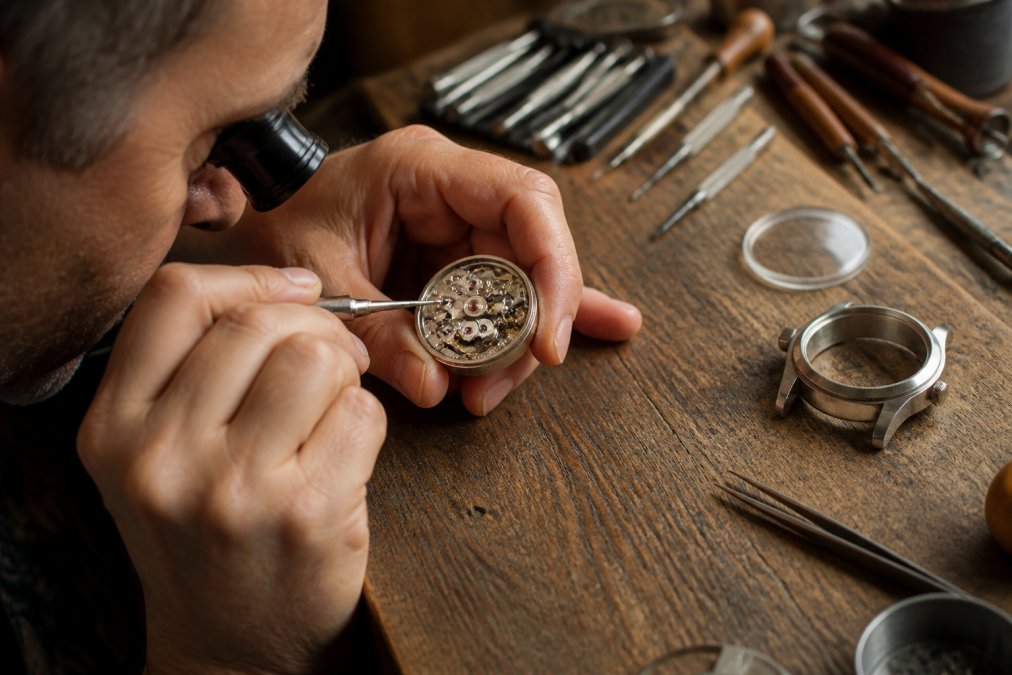
Verification and Authentication Standards
Verification standards are the gap most microbrand watch databases ignore. Ask three questions before you buy.
First, can the brand prove its assembly claims? "100% US assembly" should mean the movement and case come together domestically, not that a foreign-built watch got a domestic strap. Second, does it publish serial numbers or limited-edition counts? A run capped at 50 pieces per dial variant is verifiable; "limited" without a number is not. Third, does it offer an exhibition caseback? Seeing the movement is its own authentication.
Manufacturing Origin Transparency
Manufacturing origin transparency means the brand states which country performs which step: caliber sourcing, case production, assembly, and final regulation. Swiss-made, Japanese movement, and US-assembled are not interchangeable.
The useful comparison is not "which country is best" but "which steps happen where." A Swiss caliber assembled domestically carries different value than one fully produced overseas, and the price should reflect that. Recording origin by step rather than slogan lets buyers weigh what they are paying for.
Microbrand vs Independent Watch Brands: What the Database Reveals
The distinction comes down to scale and independence. A microbrand produces small batches, often under a few hundred pieces per model, and sells direct. An independent watchmaker operates at similar scale but emphasizes in-house calibers, hand finishing, and higher prices.
A database makes the split visible in ways conversation cannot:
| Factor | Microbrand | Independent Watchmaker |
|---|---|---|
| Production volume | Small runs, often under 500 | Very limited, sometimes under 50 |
| Movement | Sourced or customized calibers | Frequently in-house or heavily modified |
| Typical price band | Under $1,000 to about $2,500 | Often above $2,500 |
| Assembly | Mixed origin, often declared | Usually declared in detail |
| Best for | First serious purchase, daily wear | Collectors seeking rarity |
The line blurs. Haim Watch Company offers small-batch direct sales, custom-designed calibers, and hand-finished titanium cases. The Legacy Automatic uses a custom caliber and domestic assembly.

Best Microbrand Watches Under $1000 in the Database
Under $1,000, the database rewards buyers who prioritize movement quality and case finishing over brand recognition. Three picks stand out.
Haim Watch Company L2 Chronograph ($489) is the strongest value in the bracket. The VK64 caliber delivers accurate timekeeping with none of the servicing overhead of a mechanical chronograph, and the case blends brushed and polished surfaces with pronounced chamfered edges. Four dial themes mean you are not stuck with a single look, for a first microbrand purchase, start here.

Haim Watch Company Descent ($625) answers a different need. The proprietary Duo-Bezel combines a 60-minute timer with a GMT function on one brushed steel rotational bezel, and 200m of water resistance handles swimming and daily abuse. It reads as a dress watch and works as a sports watch.
Haim Watch Company Legacy Automatic ($1,350) sits above the $1,000 line but delivers what usually costs more: a custom-designed caliber, a hand-finished titanium case with a coin edge bezel, and full domestic assembly. Each dial variant is capped at 50 pieces.
How to Filter a Microbrand Watch Database Like a Collector
Filtering well means knowing which specifications eliminate the most watches for the least effort. Work the criteria in this order and stop once your list is short enough to read.
Start with case diameter, the least negotiable spec. A 38mm case with a 20mm lug width sits well on most wrists; above 42mm you shrink your resale pool and rule out smaller wrists. Decide your range before browsing anything else.
Filter by movement type next. Automatic, quartz, or hand-wound, this removes more options than any other filter. A VK64 quartz chronograph delivers accurate timekeeping with none of the servicing overhead of a mechanical chronograph, while an automatic from Sellita or Miyota is the safe mechanical baseline. A custom-designed caliber signals the brand invested in tooling and intends to stay.
- Case diameter within your range
- Movement type confirmed (automatic, quartz, or hand-wound)
- Water resistance meets your actual use
- Sapphire crystal present
- Bezel material matches your wear pattern
- Lug width matches straps you already own
- Manufacturing origin stated by the brand
- Limited-edition count published, if applicable
Secondary Market Value Tracking for Microbrand Watches
Secondary market tracking for microbrands works differently than for established luxury brands. With no deep auction history, value holds or falls on three factors: production limits, brand longevity, and original demand. Most microbrand watch databases ignore this, they catalog specs and stop, leaving resale value to scattered forum threads and expired listings.
- Log asking prices for a specific model across several months, not a single snapshot. A trend line shows whether the model is holding or slipping.
- Watch for new versions that undercut the original. A database tracking release dates alongside resale prices surfaces this pattern before you buy.
- Note whether the brand publishes serial numbers or limited-edition counts. A run capped at 50 pieces per dial variant is verifiable; "limited" without a number is not, and unverifiable scarcity does not hold value.
- Check whether the brand offers an exhibition caseback and states its assembly origin. These authentication signals support resale because a buyer can verify what they are getting.
Conclusion
The hard part of buying a microbrand watch is not finding options. It is trusting that the specifications on the page match the watch on your wrist.
Frequently Asked Questions
What defines a microbrand watch?
A microbrand watch comes from a small, independent company that typically produces fewer than a few thousand pieces per year. These brands often sell directly to consumers online and focus on distinctive design, limited runs, and strong price-to-value ratios. Many use third-party movements like the VK64 quartz caliber or customized calibers, and they rely on watch community feedback rather than traditional retail distribution.
How do I find reputable microbrand watch companies?
Start with a microbrand watch database that tracks manufacturing origin, movement sourcing, and verified customer feedback. Look for brands with transparent US assembly claims, limited edition runs, and coverage from trusted outlets. Cross-reference forum discussions on watch forums and check whether the brand publishes detailed watch specifications like case diameter, water resistance, and movement type. A database that filters by these criteria saves hours of scattered research.
Are microbrand watches worth the investment?
Value depends on the brand's execution and scarcity. Limited editions, such as dials capped at 50 pieces, tend to hold value better than mass-produced models. A microbrand watch database that tracks secondary market sales helps you spot which brands retain value. Custom-designed calibers and hand-finished cases add long-term appeal, but always weigh price-to-value ratio against your own collecting goals rather than hype.
What is the difference between a microbrand and an independent watchmaker?
Independent watchmakers typically design and assemble their own movements in-house, often at higher price points and lower volumes. Microbrands may use sourced or customized calibers and focus more on design language, dial finishing, and accessible pricing. A microbrand watch database can clarify these distinctions by listing caliber sourcing, assembly location, and production numbers for each brand, helping you compare them on equal footing.