

Table of Contents
- Defining Accessible Luxury in Watchmaking
- The Core Elements That Define an Accessible Luxury Watch
- Entry Level Luxury Watch Brands and Heritage
- Value Retention and Secondary Market Dynamics
- How to Start a Watch Collection
- Serviceability and Long-Term Investment
- Frequently Asked Questions
Last Updated: September 23, 2026
Defining Accessible Luxury in Watchmaking
What makes a watch an accessible luxury timepiece is the convergence of horological integrity, refined craftsmanship, and a price point that doesn't require a second mortgage. These watches occupy a specific territory: they possess the technical sophistication and aesthetic refinement of high-end horology while remaining attainable for professionals and collectors who value quality over exclusivity.
An accessible luxury watch delivers genuine mechanical engineering, not quartz approximation. It features a movement you can actually understand, materials that age beautifully, and finishing details that reveal themselves over years of wear. The distinction matters because it separates watches that feel expensive from watches that are engineered with the precision and care of luxury timepieces.
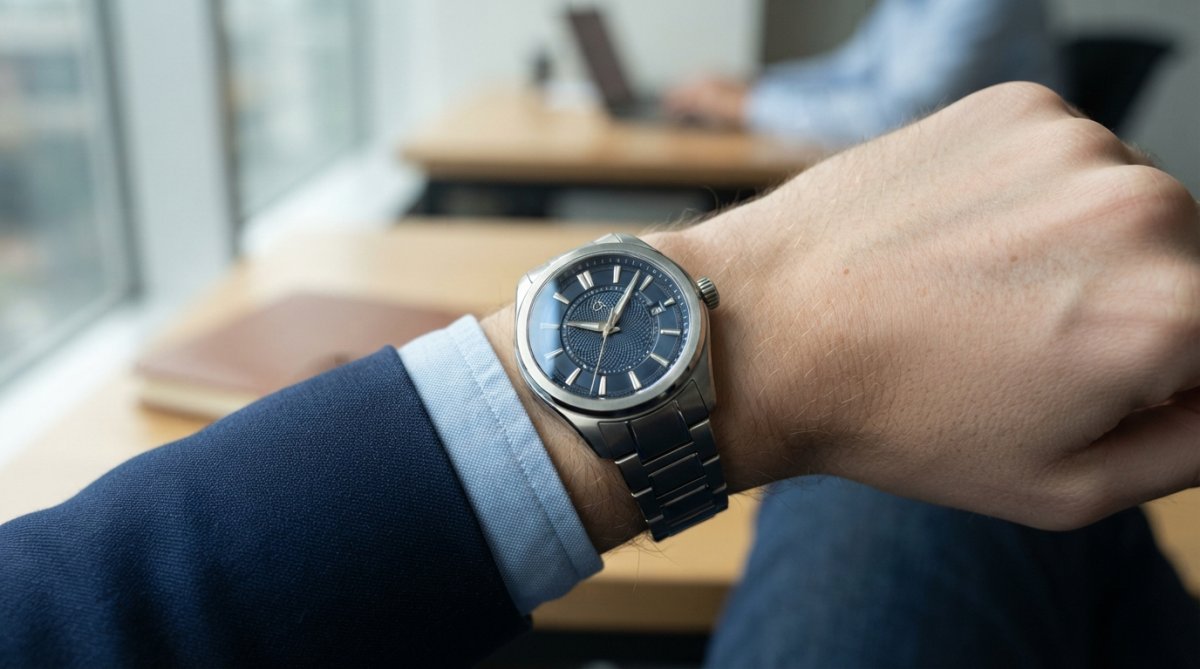
At Haim Watch Company, we've built our entire philosophy around this principle. Our timepieces, from the hand-finished titanium cases of the Legacy Automatic to the custom-designed calibers powering our collection, demonstrate that accessible luxury doesn't mean compromise. It means intelligent choices about where to invest craftsmanship and where efficiency serves the wearer without sacrificing integrity.

The market has shifted. A generation ago, "affordable luxury" meant buying into a brand name and hoping the movement inside justified the cost. Today, it means understanding what actually makes a watch worth wearing for decades.
The Core Elements That Define an Accessible Luxury Watch
Three technical pillars separate accessible luxury watches from mass-produced alternatives: the movement type, the materials used, and the quality of finishing applied to every visible surface.
Movement Type and Horological Significance
The movement, the mechanical heart of a watch, determines whether you own a timepiece or a fashion accessory. An automatic movement represents genuine horological engineering. It's a complete mechanical system: balance wheel oscillating 28,800 times per hour, escapement releasing energy in precise intervals, mainspring storing power for your wrist's motion.
This matters because a mechanical caliber tells a story about craftsmanship. A quartz movement is efficient and accurate, but it's fundamentally a battery and a crystal oscillator. An automatic movement is art translated into function. When you choose a watch with an in-house movement, a caliber designed and finished specifically for that brand, you're choosing a manufacturer that invested in their own horological identity rather than sourcing a generic ETA movement.
The difference between a mass-produced automatic and a custom-engineered one comes down to finishing. Hand-finished movements feature beveled edges, perlage (a circular grain pattern), and polished surfaces visible through an exhibition caseback. These details serve no functional purpose. They exist because the maker cares about the invisible craft inside. A movement that's decorated rather than merely assembled signals that every component received attention.
Luxury Watch Materials and Finishing
The case material defines how a watch ages and how it feels on your wrist. Stainless steel is the workhorse: durable, affordable, and capable of taking a fine polish. Titanium, like the hand-finished cases in Haim Watch Company's Legacy Automatic, offers a different proposition: it's lighter, hypoallergenic, and develops a subtle patina over time that many collectors prefer to the uniformity of steel.
Sapphire crystal is non-negotiable for accessible luxury. It's scratch-resistant (only diamond rates higher on the Mohs hardness scale), optically clear, and signals that the brand invested in protection for the dial (Natural Gemstones). Mineral crystal is cheaper; sapphire is the material choice that separates watches designed for decades of wear.
The finishing applied to the case separates luxury from adequate. A brushed surface hides scratches and is practical for daily wear. A polished surface shows every fingerprint but catches light in ways that make a watch come alive. The best accessible luxury watches combine both: brushed surfaces on the lugs and bracelet, polished surfaces on the bezel and case sides. This hybrid finishing approach is labor-intensive but creates depth and visual interest.
Build Quality and Craftsmanship
Build quality manifests in tolerances, how precisely components fit together, and in assembly methodology. A hand-assembled watch receives individual attention at each stage. The watchmaker inspects each component, adjusts the movement for accuracy, and tests the watch before it ships. A mass-produced watch passes through automated assembly lines where individual variation is minimized but also where individual care is absent.
The case construction matters too. A one-piece case machined from a solid block of material is stronger and more refined than a case assembled from stamped components. The lugs, the attachments that hold the strap, should be solid and well-finished. The caseback should seal precisely, protecting the movement from dust and moisture.
Water resistance is a practical measure of engineering competence. A watch rated for 100 meters of water resistance has been tested and sealed to withstand that pressure. It's not about whether you plan to dive; it's about whether the manufacturer invested in proper case construction and gasket sealing.
Entry Level Luxury Watch Brands and Heritage
Heritage in watchmaking is the accumulated knowledge of how to make watches that last. A brand with 20 years of horological history has solved problems that new makers are still discovering. They understand how materials age, how movements perform under stress, and how to service watches decades after manufacturing.
The challenge for emerging brands is proving that heritage without longevity. A microbrands like Haim Watch Company addresses this through transparency: we publish our movement specifications, we feature our work in respected publications like Worn & Wound, and we build watches designed to be serviced and worn for generations, not discarded when trends shift.
Entry-level luxury brands typically price between $400 and $2,500. This range captures watches with genuine mechanical movements, quality materials, and refined finishing, but without the brand premium that established Swiss manufacturers command. A Haim Watch Company timepiece like the L2 Chronograph at $489 or the Legacy Automatic at $1,350 positions itself here: serious horological credentials without the gatekeeping of heritage houses.

The distinction between entry-level luxury and mass-market sports watches is measurable. Look for custom-designed movements, hand-finished cases, and documentation of assembly standards. Brands that can articulate why their watch costs what it does, specific finishing techniques, movement specifications, material sourcing, are operating with the integrity that defines accessible luxury. Prioritizing these tangible markers of quality provides a reliable foundation for building a luxury collection that retains its significance and value over time.
Value Retention and Secondary Market Dynamics
A watch that holds its value is a watch that was built to last and that the market recognizes as worth owning. Value retention in the secondary market depends on three factors: brand recognition, technical specifications, and rarity.
The secondary market for accessible luxury watches is where these timepieces prove their worth.
Microbrand watches occupy an interesting position in the secondary market. They lack the brand recognition that makes a Rolex hold 80% of its value, but they often appeal to collectors who specifically seek watches with custom movements and limited production runs. A Haim Watch Company piece with a custom-engineered caliber and hand-finished case has different appeal than a mass-produced alternative, it's sought by people who understand what they're looking at.
Rarity affects value retention significantly. Limited production runs, like the Legacy Automatic's 50-piece limit per dial variant, create scarcity that supports prices in the secondary market. A watch that's one of 50 made has collectible appeal that a watch made in 5,000 units never will.
How to Start a Watch Collection
Building a watch collection begins with understanding your own wrist and wearing habits, then selecting pieces that complement rather than duplicate each other.
Start with a single watch that you'll wear daily. This should be versatile enough for both professional and casual contexts. It should have sufficient water resistance for everyday life, 100 meters minimum.
Serviceability and Long-Term Investment
A watch is only as good as its ability to be serviced. A movement that can't be repaired is a movement with a finite lifespan. This is where brand choice matters profoundly for long-term ownership.
Frequently Asked Questions
What defines an accessible luxury watch versus mass-market timepieces?
An accessible luxury watch combines genuine horological craftsmanship with a price point between $400 and $3,000. These timepieces feature custom-engineered calibers, hand-finished cases, and sapphire crystals, materials that improve durability and aesthetics. Unlike mass-produced watches, accessible luxury models prioritize mechanical precision and artisanal finishing. The difference lies in movement quality, case construction, and attention to dial detailing rather than brand prestige alone.
How do entry level luxury watch brands build value compared to established houses?
Entry level luxury watch brands compete through transparency and horological innovation. Many, like Haim Watch Company, invest in custom-designed calibers and hand-assembled movements, the Legacy Automatic features 100% US assembly including the movement. These microbrands build value by proving craftsmanship through technical specifications, limited production runs, and direct customer relationships. Well-executed independent brands can retain significant retail value over five years, comparable to heritage houses in the accessible luxury segment.
What role do materials and finishing play in an accessible luxury watch?
Materials and finishing determine durability, aesthetics, and perceived value. Accessible luxury watches use sapphire crystals for scratch resistance, titanium or stainless steel cases for longevity, and hand-finished bezels and dials for visual depth. Techniques like guilloché patterning, chamfered edges, and polished surfaces catch light differently than mass-produced alternatives. These finishing touches directly impact how a watch ages and its appeal on the secondary market, a well-finished timepiece shows character over time rather than wear.
Should I choose a custom-engineered caliber over a standard ETA movement?
A custom caliber reflects deeper horological commitment and often justifies premium pricing. Standard ETA movements are reliable but shared across hundreds of brands. Custom movements, like the caliber in Haim's Legacy Automatic, offer exclusivity, hand-assembly, and brand identity. The real question is serviceability: independent brands with proprietary movements require factory support. If a brand proves long-term stability and provides transparent service documentation, a custom caliber adds investment potential and emotional connection beyond a standard movement.