

Table of Contents
- What Defines a Microbrand Watch in 2026
- How to Evaluate Watch Build Quality Before You Buy
- Microbrand Watch Resale Value: The Honest Numbers
- Best Microbrand Watches Under $1000 That Deliver Real Value
- RGM Watches vs Independent Microbrands: What $2,000+ Actually Buys
- The Kickstarter Risk: Crowdfunding, Supply Chain, and Long-Term Serviceability
- Frequently Asked Questions
Last Updated: September 21, 2026
What Defines a Microbrand Watch in 2026
A microbrand watch is a timepiece produced by a small, independent company that designs its own watches but typically relies on established suppliers for movements and components, usually selling direct to consumers online. These brands often release limited runs rather than mass-produced lines.
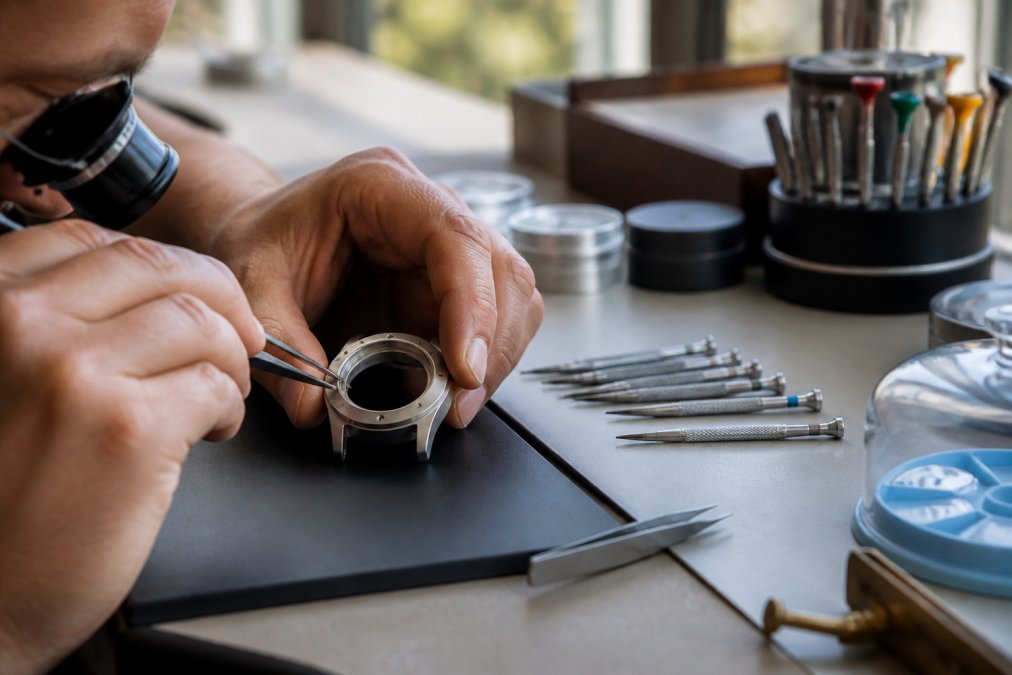
The Spec-to-Price Ratio Advantage
The core appeal of a microbrand is the spec-to-price ratio. With no retail markup, no celebrity ambassadors, and no wholesale distribution, a small brand can pour more of your money into the case, crystal, and movement.
Where Microbrands Cut Corners
Not every corner is worth cutting, and honesty here separates good brands from bad ones. Common trade-offs include:
- Off-the-shelf movements rather than in-house calibers
- Limited customer support infrastructure
- Smaller parts inventories, which affects long-term serviceability
- Shorter warranty terms than luxury tier competitors
How to Evaluate Watch Build Quality Before You Buy
Build quality is the single best predictor of whether a microbrand watch holds up, and you can assess most of it from specifications and macro photography before spending a dollar. Focus on the case, the crystal, and the movement caliber.
Case Finishing, Crystal, and Movement Caliber Checks
Run through this checklist before buying any microbrand watch:
- Case material and finishing method are stated explicitly
- Crystal is sapphire, not mineral glass
- Movement caliber is named, with origin disclosed
- Water resistance matches your intended use
- Lug width and case diameter suit your wrist
- Exhibition caseback shows decorated movement, if claimed
A sapphire crystal resists scratches far better than mineral glass, and it's one of the clearest markers of a brand that respects durability. When a brand names its movement caliber and manufacturing origin, that transparency is a good sign.
Microbrand Watch Resale Value: The Honest Numbers
Microbrand watch resale value is generally weaker than that of established luxury brands, and buyers should plan around that reality rather than against it. Most microbrands depreciate after purchase, much like a new car. The difference is that no one publishes a Blue Book for microbrands, so the honest move is to build your own depreciation estimate before you buy.
A Framework for Estimating Your Expected Loss
You do not need proprietary data to get a defensible number. You need four inputs, all of which you can find on the secondary market yourself:
- Original retail price. What the brand charged at launch, not what a flipper is asking today.
- Current secondary asking prices. Search completed and sold listings on enthusiast forums and general resale marketplaces, not active asking prices, which skew high.
- Liquidity discount. If a listing has sat for months without selling, the real clearing price is below the ask. A common pattern is that asking prices overstate achievable sale prices by a meaningful margin on slow-moving references.
- Transaction costs. Selling fees, shipping, insurance, and payment processing typically take a bite out of your gross proceeds. Factor those in before you call anything a gain.
What Actually Moves the Number
Depreciation is not uniform across the category. The variables that compress or widen the loss:
| Factor | Strong Resale Outlook | Weak Resale Outlook |
|---|---|---|
| Production | Limited, numbered runs | Open, unlimited production |
| Brand following | Established collector base | New or unknown brand |
| Movement | Custom or named caliber | Unnamed stock movement |
| Condition | Unworn, full set | Worn, no box or papers |
| Original price band | Entry tier, easy to re-buy | Premium tier, thin buyer pool |
The Break-Even Reality
Haim Watch Company limits certain dials to small piece counts. But the framework above applies to any brand, including ours. Run the numbers yourself.
Best Microbrand Watches Under $1000 That Deliver Real Value
The best microbrand watches under $1000 combine a sapphire crystal, a reliable mechanical or quartz movement, and honest finishing. At this price point, you're buying design and durability rather than prestige.
When comparing options under $1000, weigh these factors:
- Movement type and accuracy
- Case finishing and material
- Crystal type
- Design originality versus derivative styling
- Warranty and after-sales service
RGM Watches vs Independent Microbrands: What $2,000+ Actually Buys
Above $2,000, the comparison between an established American maker like RGM and independent microbrands comes down to manufacturing origin, movement sourcing, and brand identity. RGM builds on a longer heritage of in-house work.
- Greater vertical integration and in-house movement work
- Established service networks and parts availability
- A longer track record and stronger brand identity
- More elaborate finishing and complications
The Kickstarter Risk: Crowdfunding, Supply Chain, and Long-Term Serviceability
Crowdfunding is where the microbrand category carries its highest risk, and buyers need to assess it deliberately. A Kickstarter watch is a promise, not a product, and supply chain problems can delay or derail delivery entirely. But the risk does not end at delivery. The harder question is what happens in year six, when the watch needs a service and the brand may no longer exist.
How to Vet a Brand Before You Back a Project
Most crowdfunding advice stops at "check if they've delivered before." That is necessary but not sufficient. A more useful screen looks at the brand's operational maturity, not just its past campaigns:
- Prior delivered projects. At least one shipped campaign is the floor. Zero is a hard stop for most buyers.
- Named movement supplier. A specific caliber from a known manufacturer (for example, a Seiko or Miyota mechanical, or a Swiss quartz like the Ronda or ETA families) is verifiable. "Swiss parts" or "Japanese movement" without a caliber number is not.
- Realistic timeline. First-time creators routinely underestimate tooling, assembly, and shipping. A campaign promising delivery in three months on a complex design is a warning sign.
- Refund and recourse terms. Read the platform's terms. On most crowdfunding platforms, backing is not a purchase, and refunds are not guaranteed if the project fails.
- Stated parts commitment. Does the brand say it will stock replacement crystals, gaskets, crowns, and movements for a defined period? A written commitment is worth more than a friendly reply.
- Service path. Who actually services the watch? If the answer is "send it back to us," ask what happens if "us" is gone.
The Serviceability Problem Nobody Prices In
A mechanical watch is not a one-time purchase. It is a maintenance obligation. A typical mechanical movement benefits from a service every several years, and the cost of that service can approach a meaningful fraction of what an entry-tier microbrand cost new. If the brand has vanished, you are relying on a local watchmaker to source parts, and parts availability is the bottleneck.
Three scenarios are common:
- Brand survives and stocks parts. Best case. Service is straightforward, though you may wait on shipping.
- Brand survives but discontinues the model. Parts may still be available through the brand or a supplier, but the specific dial, hands, or case components may not be.
- Brand disappears. Your watchmaker is now sourcing from the open market. If the movement is a widely used stock caliber, this is often solvable. If it is a custom or proprietary module, it may not be.
The Lower-Risk Alternative
For buyers who want the microbrand experience without crowdfunding exposure, purchasing from an established brand with in-stock inventory removes the delivery gamble entirely. It does not remove the serviceability question, but it does mean you can ask the brand directly about its parts policy before you pay, rather than hoping the answer holds for a decade. Ask the question. A brand that has thought about it will have a clear answer.
Frequently Asked Questions
Do microbrand watches hold their value over time?
Most microbrand watches depreciate 30-50% from retail within the first two years, similar to mass-market brands. Exceptions exist for limited editions from brands with strong collector communities. Models capped at 30-50 pieces per dial, like the Haim Legacy Automatic, tend to retain value better because supply stays fixed. Resale value depends on brand reputation, production limits, and whether the brand remains active. Buy for enjoyment first, not as a financial asset.
What should I look for when buying a microbrand watch?
Start with the movement: is it a standard off-the-shelf caliber or a custom design? Check the case material and finishing quality, sapphire crystal versus mineral glass, and water resistance rating. Research the brand's warranty terms and whether they stock replacement parts. A 38mm titanium case with a custom caliber and exhibition caseback signals serious engineering. Also verify assembly claims, since 'American-made' labels vary widely in what they actually mean.
Are microbrand watches reliable enough for daily wear?
Yes, when they use proven movements. Many microbrands power their watches with Swiss or Japanese calibers known for accuracy and durability. The Haim L2 Chronograph uses the VK64 caliber, a quartz movement valued for precise timekeeping and low maintenance. Mechanical options like the Legacy Automatic use custom-designed calibers built for daily use. The bigger reliability question is after-sales support: can the brand service your watch in five years?
How do microbrand watches compare to established heritage brands?
Heritage brands offer decades of brand recognition, established service networks, and stronger resale values. Microbrands counter with higher spec-to-price ratios, original design language, and limited production runs. The trade-off is long-term certainty: heritage brands will almost certainly exist in 20 years, while microbrand longevity depends on the founders' commitment and business model.