

Table of Contents
- What Makes a Watch Exclusive
- Luxury Watch Craftsmanship Standards
- Mechanical Movement Complexity and Innovation
- Limited Production and Scarcity
- Limited Edition Watch Investment Potential
- Heritage, Materials, and Aesthetic Signature
- The Psychological Value of Exclusivity
- Frequently Asked Questions
Last Updated: August 31, 2026
What Makes a Watch Exclusive
A luxury watch becomes exclusive through a combination of mechanical precision, material mastery, and deliberate scarcity. But what makes a watch exclusive goes far beyond the price tag or brand name. It's the convergence of hand-finished movements, limited production runs, heritage craftsmanship, and design choices that elevate a timepiece from functional to collectible.
At Haim Watch Company, we understand that exclusivity isn't manufactured through marketing alone. It emerges from the intersection of horological significance and uncompromising quality control. Each watch tells a story of precision adjustment, custom-designed calibers, and aesthetic signatures that distinguish it from mass-produced alternatives.
The watches that command attention and hold value share specific characteristics. They're built by brands committed to in-house movement finishing, heritage-rooted design language, and production limits that preserve scarcity. Understanding these elements helps you recognize genuine exclusivity when evaluating a timepiece for your collection.
Luxury Watch Craftsmanship Standards
Luxury watchmaking separates itself from commodity production through standards that demand precision at levels invisible to the naked eye. Movement finishing, hand-assembly protocols, and quality control procedures define whether a watch qualifies as a serious horological instrument or merely a branded accessory.
Movement Finishing and Hand-Assembly
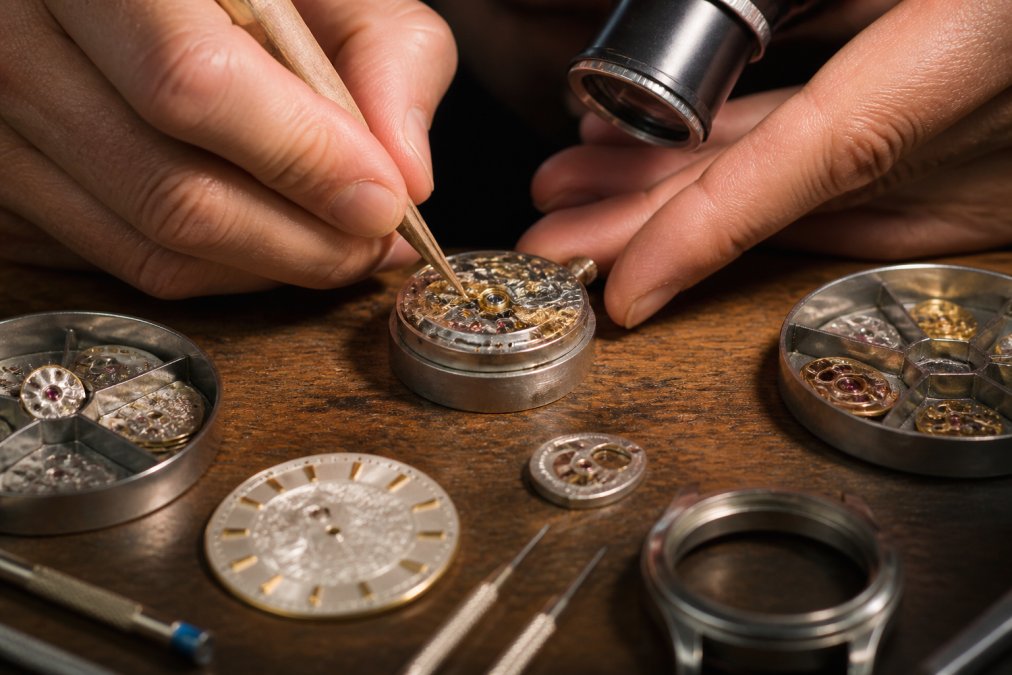
The movement, the mechanical heart of a watch, separates luxury from ordinary. Hand-finished movements feature visible evidence of human craftsmanship: beveled edges on bridges, anglage (angled finishing) on components, and mirror-polished surfaces that reflect light with intention.
This finishing serves no functional purpose. A polished bridge performs identically to an unpolished one. Yet finishing becomes the hallmark of a brand that respects its craft. Brands like Haim Watch Company employ finishing techniques that echo Swiss watchmaking traditions, where every visible surface receives attention. The Legacy Automatic series showcases this commitment through hand-finished titanium cases and meticulously decorated dials featuring guilloche patterns and applied Breguet numerals.

Hand-assembly means human hands position each component into the movement. Machines can assemble watches faster, but hand-assembly allows for micro-adjustments and quality verification at each stage. This tactile knowledge transfer, from experienced assembler to finished movement, creates mechanical integrity that automated processes struggle to replicate.
Precision Adjustment and Quality Control
Every luxury watch undergoes precision adjustment after assembly. The movement must achieve chronometer standards: accuracy within -4 to +6 seconds per day, verified through testing (peer-reviewed research). This adjustment requires expertise. A watchmaker must regulate the balance wheel, adjust the hairspring, and fine-tune the escapement until the movement performs within specification.
Quality control in luxury manufacture means testing, not just inspecting. Each movement runs through timing machines that measure rate, amplitude, and beat error. Movements that don't meet standards return for adjustment rather than shipping as-is. This rejection rate, the percentage of movements that fail initial testing, separates brands committed to excellence from those chasing volume.
Haim Watch Company's custom-designed calibers undergo rigorous testing protocols. The Caliber HWC-1, powering the Legacy Automatic series, and the Caliber HWC-2, featured in the Annum with its complete calendar and moonphase complication, both reflect this commitment to precision adjustment and uncompromising quality control standards.
Mechanical Movement Complexity and Innovation
The movement determines a watch's horological significance. Standard movements, like ETA calibers used across the industry, offer reliability and cost efficiency. Custom-designed movements represent a different commitment: engineering innovation tailored to a brand's aesthetic and functional vision.
Custom-Designed Calibers vs. Standard Movements
Standard movements ship to dozens of brands. They're proven, cost-effective, and reliable. But they're also generic. A custom-designed caliber belongs to one brand. It reflects specific design choices: the layout of components, the finishing approach, the complications integrated into the movement's architecture.
Designing a custom caliber requires horological expertise, capital investment, and years of development. A brand doesn't undertake this investment lightly. When Haim Watch Company developed Caliber HWC-1 for the Legacy Automatic, it wasn't to match competitors, it was to express a specific vision of what a modern American-made timepiece should be. The movement's architecture, finishing, and performance characteristics become inseparable from the brand's identity.
This distinction matters for exclusivity. A watch powered by a custom caliber cannot be replicated by another brand using the same movement. The mechanical DNA belongs exclusively to that manufacture.
Complications and Horological Significance
A complication is any function beyond basic timekeeping. A date window is a complication. A chronograph is a complication. A perpetual calendar or tourbillon represents serious horological complexity.
Complications demand engineering sophistication. A simple date mechanism requires a cam, a wheel train, and precise timing. A moonphase complication requires a cam with 59 teeth (representing the lunar cycle's near-59.5-day period) and mechanisms to advance it once daily (nasa.gov). A complete calendar combines day, date, month, and moonphase, layers of mechanical interaction that must function flawlessly for years.
The Annum represents this approach. Its complete calendar with moonphase complication and Caliber HWC-2 demonstrate horological significance beyond decoration. The complication serves no purpose except to showcase mechanical mastery and engineering vision. That's precisely why it elevates exclusivity: a watch with a meaningful complication signals that the brand possesses the expertise to engineer complexity, not merely assemble existing parts.
Limited Production and Scarcity
Exclusivity fundamentally depends on scarcity. A watch produced in unlimited quantities cannot be exclusive, regardless of craftsmanship quality. Limited production creates the psychological and practical foundation for exclusivity.
Brands establish production limits for several reasons. Manufacturing constraints, limited workshop capacity, hand-finishing bottlenecks, or custom movement availability, naturally restrict output. Strategic scarcity preserves brand positioning and prevents market saturation. A watch that remains available indefinitely loses its appeal; a watch that sells out builds desirability.
The L2 Chronograph Anniversary Edition exemplifies this approach. Limited to 30 pieces per dial, individually numbered on the caseback, the Anniversary Edition creates hard scarcity. Once 30 pieces sell, that specific dial configuration ends production. This limitation transforms a watch from a product into a collectible with defined scarcity.

Limited production affects every aspect of exclusivity. It supports resale value by preventing the market from flooding. It justifies premium pricing because supply cannot expand to meet demand. It creates urgency for collectors, knowing that missing a release means waiting years for secondary market availability, often at higher prices.
Limited Edition Watch Investment Potential
A luxury watch can function as an investment if it maintains or appreciates in value. Limited edition watches, those produced in deliberately restricted quantities, develop stronger investment characteristics than unlimited production models.
Resale Value and Provenance
Resale value depends on several factors: brand reputation, movement quality, materials, condition, and provenance. Provenance, the documented history of ownership, becomes crucial for investment-grade watches. A watch with complete documentation, original box, and service records commands premium resale prices.
Limited editions with strong provenance appreciate because supply is fixed. If 30 pieces were made and 25 remain in collector hands, the remaining five pieces become increasingly valuable as demand grows. Watches with uncertain provenance or missing documentation see depressed resale values despite identical craftsmanship.
The L2 Chronograph Anniversary Edition's individual numbering on the caseback serves this purpose. Collectors can verify authenticity and production run position. A numbered piece with documentation becomes an investment asset; an unnumbered watch becomes a tool.
Authentication and Long-Term Ownership
Counterfeiting affects luxury watches, particularly established brands with high resale values (fbi.gov). Authentication becomes essential for investment protection. A watch with clear authentication markers, numbered caseback, specific movement characteristics, documented serial numbers, retains investment credibility across decades.
Long-term ownership requires confidence in the brand's longevity and service support. A brand with consistent production, growing reputation, and established service infrastructure becomes a safer investment.
Haim Watch Company's commitment to custom-engineered movements and limited production runs creates the conditions for investment-grade watches. The Viajero SE, our Swiss-made offering, and the Legacy Automatic series demonstrate the brand's ability to sustain production while maintaining exclusivity standards.

Heritage, Materials, and Aesthetic Signature
A watch's exclusivity depends partly on intangible qualities: the brand's story, the design philosophy, and the visual language that makes a timepiece instantly recognizable.
Precious Metals and Case Construction
Material choice communicates quality and exclusivity. Gold, platinum, and steel each carry different implications. Gold signals tradition and luxury. Platinum signals rarity and expense. Steel signals accessibility without compromising quality.
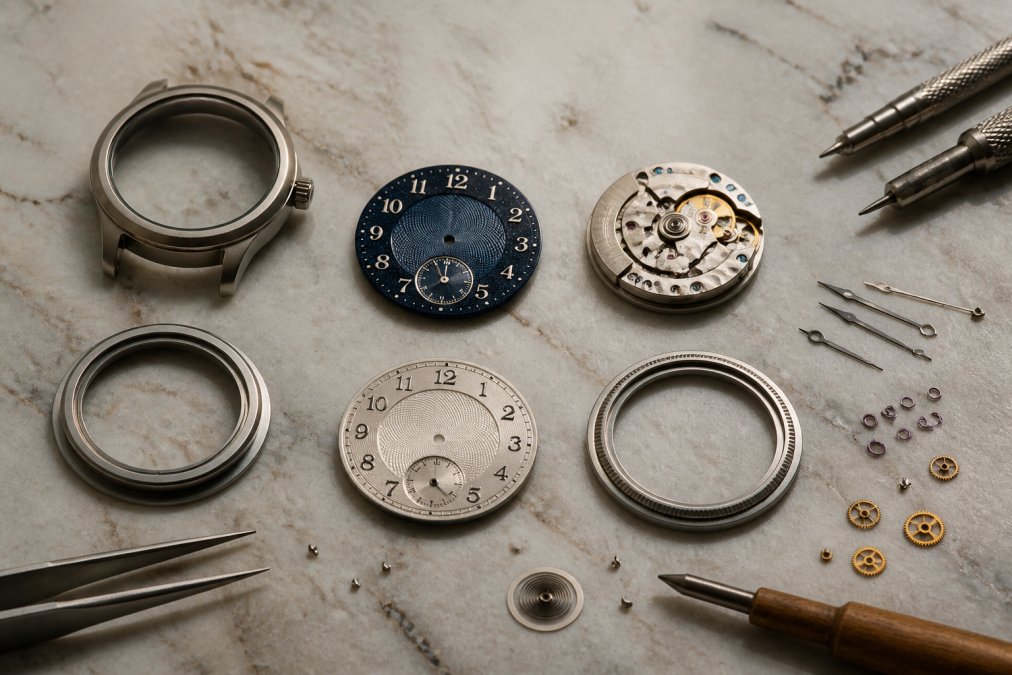
Hand-finished titanium represents a modern approach to case construction. Titanium offers exceptional strength-to-weight ratio, hypoallergenic properties, and distinctive aesthetic characteristics. Hand-finishing titanium requires skill: the metal resists traditional polishing techniques, and each finishing approach creates unique surface characteristics.
The Legacy Automatic series employs hand-finished titanium cases, a deliberate choice reflecting the brand's philosophy. Titanium isn't precious in the traditional sense, but hand-finishing elevates it to a material that demands respect. The case construction, the thickness, the bezel design, the lug geometry, becomes part of the watch's horological signature.
Design Language and Dial Finishing
An aesthetic signature makes a watch instantly recognizable. Patek Philippe's Calatrava, Rolex's Submariner, and Omega's Seamaster each possess distinctive design languages that collectors recognize immediately. This visual consistency, maintained across decades, builds brand exclusivity through design recognition.
Dial finishing techniques contribute significantly to aesthetic signature. Guilloche patterns, geometric designs applied through specialized machinery, create light-catching surfaces that distinguish a dial from simple printing. Applied numerals, whether Arabic or Breguet style, signal hand-assembly and quality. Sunburst finishes, lacquered surfaces, and enamel work each communicate different design philosophies.
Haim Watch Company's ornate dial designs reflect this commitment. The Azure iteration of the Legacy Automatic features a baby blue dial with applied Breguet numerals, updated date window with color-matched disc, and captivating guilloche center. This combination creates an aesthetic signature: when you see this dial, you recognize Haim Watch Company's design language.
The Viajero SE, our Swiss-made timepiece, showcases refined hand-finished stainless steel case construction paired with complementary dial finishing. The design language remains consistent with brand identity while reflecting Swiss watchmaking traditions.
The Psychological Value of Exclusivity
Exclusivity carries psychological weight beyond mechanical function. A watch you know only 30 others own feels fundamentally different from a watch available in unlimited quantities. This psychological dimension drives collectibility, resale value, and the personal satisfaction of ownership.
Exclusivity creates identity. Wearing a limited-edition watch signals membership in a defined group of collectors. You're not simply telling time; you're displaying knowledge of horological craftsmanship and commitment to quality. This identity dimension explains why collectors pursue specific limited editions despite owning numerous watches that perform identical functions.
The psychological value also reflects confidence in brand direction. When a brand releases limited editions consistently, collectors develop trust in the brand's vision. Each release becomes anticipated rather than surprising. This anticipation builds community among collectors, creating social value alongside mechanical value.
Scarcity psychology compounds over time. A watch released five years ago in a limited run becomes rarer as pieces are lost, damaged, or permanently removed from the market. The remaining pieces appreciate in perceived value, creating a feedback loop where scarcity becomes self-reinforcing.
Understanding this psychological dimension helps explain why certain watches command premium resale prices while technically superior alternatives languish. Exclusivity, genuine, documented, and deliberately maintained, drives value in ways that specifications alone cannot capture.
Choosing a luxury watch means committing to more than mechanics and materials. It means selecting a brand whose vision aligns with your values and whose commitment to exclusivity and craftsmanship will sustain your investment over decades.
Haim Watch Company's approach to exclusivity, custom-designed calibers, hand-finished cases, limited production runs, and ornate dial designs, reflects a philosophy that rejects mass production in favor of horological integrity. Whether you choose the L2 Chronograph Anniversary Edition with its 30-piece limitation, the Legacy Automatic series with its 100% US assembly and custom Caliber HWC-1, or the Viajero SE with its Swiss-made heritage, you're selecting a timepiece designed for collectors who understand what exclusivity truly means. Explore our collection and discover the watch that becomes part of your personal journey.
Frequently Asked Questions
Q: What factors contribute to the exclusivity of a timepiece?
A: Exclusivity stems from multiple factors: limited production runs (often numbered), custom-designed movements that differentiate a brand, precision hand-finishing techniques, and documented provenance. Brands like Haim Watch Company build exclusivity through limited runs, the L2 Chronograph Anniversary Edition is restricted to just 30 pieces per dial, combined with custom calibers like the HWC-1 movement found in the Legacy Automatic: Azure.
Q: How do limited production runs impact watch value and exclusivity?
A: Limited production directly affects both exclusivity and resale value. Watches produced in small quantities become harder to find as collectors hold them. This scarcity drives demand, stabilizes or increases resale prices, and creates a sense of ownership that mass-produced alternatives cannot match. Numbered pieces with documented provenance tend to appreciate better over time. Each Haim Watch Company piece carries individual numbering, establishing clear provenance and supporting long-term investment potential.
Q: Does Swiss-made certification guarantee exclusivity?
A: Swiss-made certification ensures movement finishing standards and heritage but doesn't automatically guarantee exclusivity. Many Swiss manufacturers produce high volumes. True exclusivity requires the combination of Swiss precision with limited production, custom movement design, and hand-finished craftsmanship. Haim's Viajero SE exemplifies this blend: it's Swiss-made with hand-finished stainless steel construction, but exclusivity comes from the limited production and custom caliber, not the certification alone.
Q: What's the real difference between a custom-engineered caliber and a standard ETA movement?
A: A custom-engineered caliber is designed and finished specifically for a brand, reflecting its aesthetic and mechanical philosophy. Standard ETA movements are mass-produced base movements available to many brands. Custom calibers involve in-house design, unique finishing (polishing, engraving, perlage), and often complications like moonphase or calendar modules. Haim's Caliber HWC-1 and HWC-2 movements are custom-designed, meaning they carry the brand's horological signature and cannot be replicated by competitors, this is a core driver of exclusivity and justifies premium pricing.
This article was written using GrandRanker