

Table of Contents
- What Defines a Hand-Finished Watch Dial
- Guilloché Dial Patterns and Engine Turning
- Watch Dial Enamel Techniques and Grand Feu Methods
- Hand-Painted Watch Dials and Micro-Painting
- Hand-Engraving and Burin Work
- Matte, Frosted, and Sandblasted Textures
- Tooling, Equipment, and Quality Control
- Why Hand-Finished Dials Command Premium Value
Last Updated: August 21, 2026
What Defines a Hand-Finished Watch Dial
A hand-finished watch dial is created entirely by artisans using traditional techniques, where each mark reflects the individual skill of the craftsperson rather than algorithmic consistency. Unlike mass-produced dials, hand-finished work commands premium value because it represents genuine artisanal craftsmanship. The term encompasses multiple techniques: guilloché patterns created with rose engines, enamel applications, micro-painted details, hand-engraved lines, and textured surfaces like frosted or sandblasted finishes. What unites them is intentionality, every element exists because a master craftsperson decided it should be there.
At Haim Watch Company, we understand that hand-finished dials represent the intersection of art and precision engineering. Our timepieces feature ornate dial designs that showcase these techniques, allowing collectors to experience the depth and sophistication that only genuine hand finishing can deliver.
Guilloché Dial Patterns and Engine Turning
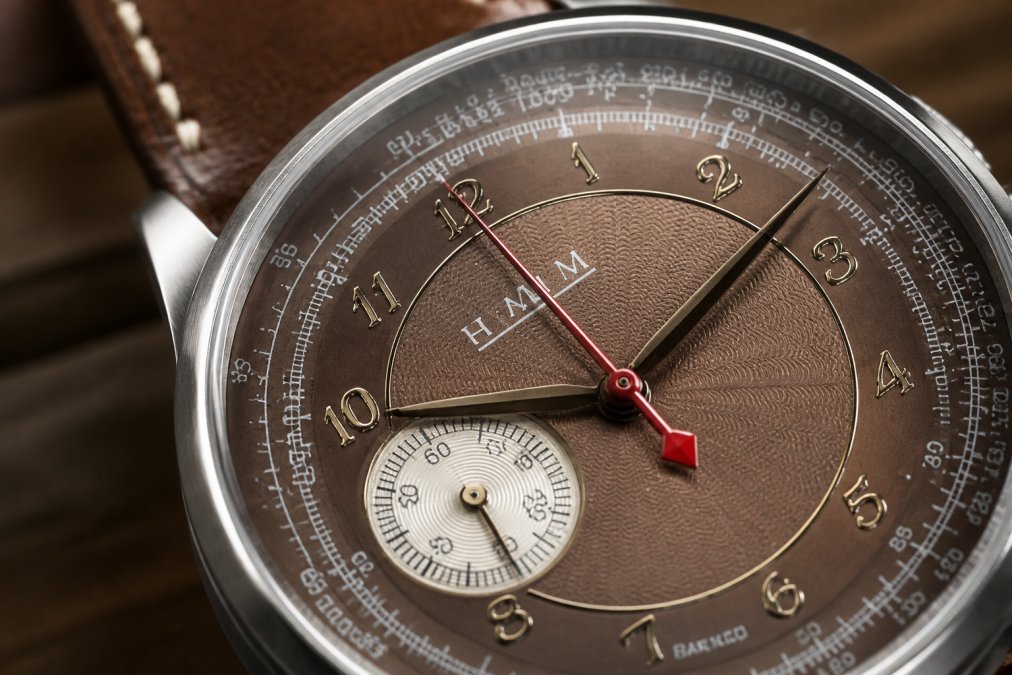
Guilloché patterns are mesmerizing geometric designs, sunburst rays, wavy lines, concentric circles, and intricate lattice work, created using a rose engine, guided entirely by the operator's hand and eye. The result is a dial surface that catches light differently depending on viewing angle, creating depth that photographs cannot capture.
The Rose Engine and Precision Tools
The rose engine is a mechanical lathe fitted with a cutting tool that traces patterns across the dial plate while the operator controls both tool position and rotation speed. No two rose engine sessions produce identical results; subtle variations in pressure, speed, and hand positioning create unique characteristics that collectors recognize and value.
Cutting tools are equally specialized. Burins and gravers of different profiles create varying line widths and depths. A master operator might use dozens of different tools throughout a single dial. Training to operate a rose engine typically requires years of apprenticeship, developing an intuitive feel for the machine's behavior and learning to compensate for vibrations, tool wear, and material variations (edu). Many contemporary watchmakers consider rose engine operation a dying skill, with fewer than a handful of master operators existing globally.
Sunburst and Radial Finishing
Sunburst patterns feature radiating lines emanating from the dial's center, resembling rays of light. This pattern is technically demanding because lines must maintain consistent spacing and depth while radiating outward, requiring the operator to adjust tool pressure and movement speed continuously. The effect creates an optical illusion of motion.
Radial finishing encompasses broader textural approaches beyond strict geometric patterns, including radial brushing and radial sanding that create subtle directional texture influencing light reflection. A craftsperson might spend 8-12 hours on a single radial sunburst dial, making thousands of individual tool movements. Fatigue, temperature changes, and tool wear all threaten consistency, yet the finished product must appear effortless and uniform.
Watch Dial Enamel Techniques and Grand Feu Methods
Enamel is a glass-like material that fuses to metal at high temperatures, creating a permanent, lustrous surface. Grand Feu enamel, French for "high fire," involves firing at temperatures between 750-850 degrees Celsius, creating exceptionally durable, brilliant finishes (peer-reviewed research). This high-temperature process demands precision; too hot and the enamel flows excessively or discolors; too cool and it fails to fuse properly.
The process begins with preparing the dial base by cleaning and applying counter-enamel to the reverse side to prevent warping. The artisan then applies successive layers of colored enamel powder, often mixing custom colors. Each layer must be fired separately, cooled carefully, and inspected before the next layer is applied. Subtle variations in powder consistency, application thickness, and firing duration all influence the final appearance.
Cloisonné and Champlevé Applications
Cloisonné uses thin metal wires soldered to the dial base to create compartments filled with enamel powder and fired. The metal wire outlines remain visible, creating defined color boundaries and adding structural integrity. This technique allows for intricate, multi-colored designs with sharp color separation.
Champlevé works in reverse: the artisan removes material from the dial base using engraving to create recessed areas, then fills these with enamel and fires. Champlevé allows for more flowing, organic designs but requires exceptional engraving skill to ensure consistent depth. Uneven bottoms create weak spots where enamel may crack during firing.
Kiln-Firing and Color Development
The kiln itself is critical, and master enamelers spend years understanding their specific kilns' behavior. Temperature distribution within the kiln is rarely uniform; experienced craftspeople know hot spots and cool zones, positioning dials accordingly. They also understand how individual firings affect color development, sometimes requiring powder mixture adjustments.
Cooling after firing is equally critical. Controlled cooling, sometimes taking hours, allows the enamel and metal base to contract at compatible rates. Quality control is ruthless; a dial that passes through weeks of preparation can be rejected if a single flaw appears during final inspection. Hairline cracks, color inconsistencies, or surface imperfections mean the dial must be stripped and started over.
Hand-Painted Watch Dials and Micro-Painting
Hand-painted dials represent the most direct form of artistic expression in dial finishing. Artisans use fine brushes and specialized pigments to paint details directly onto the dial surface, often after other finishing techniques have been applied. The scale is extraordinarily small; painting details that must remain visible at 1-2 millimeters requires exceptional skill and magnification equipment.

Micro-painting uses oils or acrylics formulated to adhere to metal or enamel surfaces. Pigments must be stable under UV light and resist fading over decades. A single painted detail might require multiple thin layers with drying time between applications. Common subjects include miniature landscapes, celestial scenes, and portraits. A painted sunset might use dozens of individual brush strokes to create atmospheric perspective.
The technical challenge extends beyond artistic skill. Paint must cure properly without cracking or peeling. Temperature and humidity in the workshop influence drying times and paint behavior. A dial that looks perfect immediately after painting might develop issues days or weeks later if the paint wasn't formulated correctly.
Hand-Engraving and Burin Work
Hand-engraving transforms a dial surface through controlled removal of metal, creating lines, textures, and designs that catch light. The primary tool is the burin, a hardened steel rod with a precisely shaped cutting edge. The engraver holds the burin at specific angles and applies controlled pressure while moving it across the dial surface.
Different burin profiles, round, square, lozenge, knife-edge, create different line characteristics. A master engraver might use 20-30 different burins throughout a single dial. Burins must be kept razor-sharp; even slight dulling dramatically increases required force, making fine control impossible.
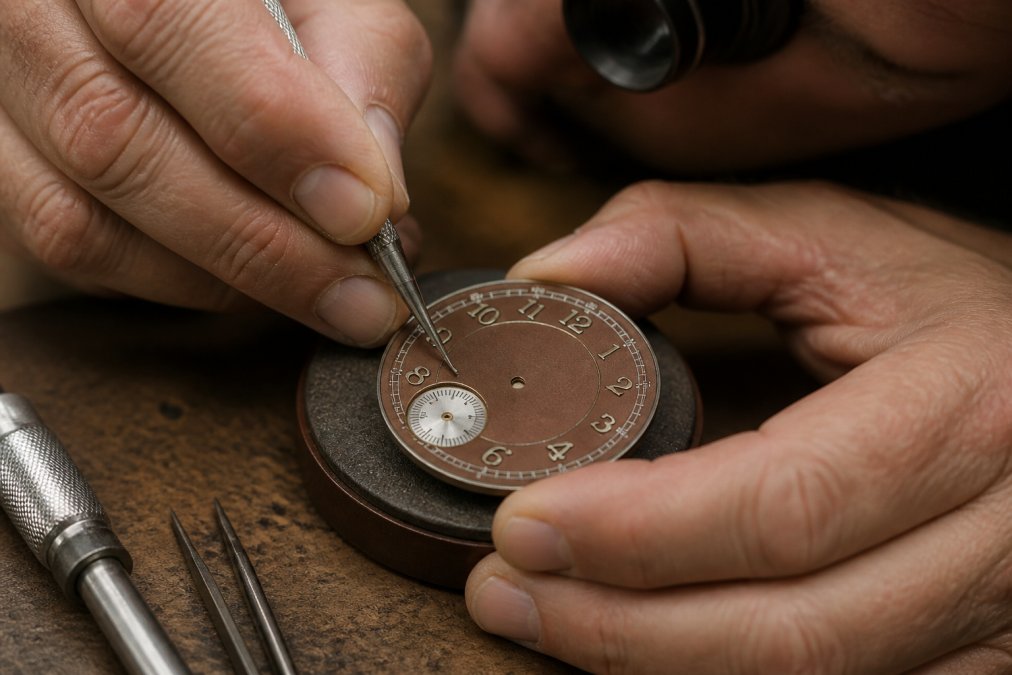
Engraving demands extraordinary hand-eye coordination. The engraver works at magnification, creating fine lines that must be perfectly consistent in depth and width across the entire dial. A single slip creates a visible flaw that cannot be erased. Common patterns include fine parallel lines, crosshatching, and floral motifs. The finest engravers create illusions of shading and perspective using nothing but lines of varying depth and spacing.
The physical demands are often underestimated. Repetitive motions cause fatigue in hands and forearms. Intense concentration creates mental fatigue. Experienced engravers work in short sessions, taking breaks to rest. A complex dial might require 40-60 hours of active engraving time.
Matte, Frosted, and Sandblasted Textures
Matte finishing creates a non-reflective surface through controlled material removal using fine abrasive materials, sandpaper, or specialized polishing compounds applied with manual tools. The craftsperson must work methodically across the entire dial surface, maintaining consistent pressure to achieve uniform appearance.
Frosted finishes create a crystalline, icy appearance through careful application of fine abrasive materials, often combined with chemical treatments. The frosted surface scatters light diffusely, creating a sophisticated aesthetic that contrasts beautifully with polished indices.
Sandblasted textures are created using compressed air to propel fine sand against the dial surface. Masking protects areas that should remain polished. The sandblasting process is surprisingly difficult to control; pressure, distance, nozzle angle, and abrasive particle size all influence the final texture. Professional work shows uniform texture across the entire masked area.
The appeal of these finishes lies in their visual sophistication and practicality. These textures are less prone to showing fingerprints and dust than polished surfaces and age gracefully. For collectors who wear their watches actively, matte and frosted finishes often prove more practical while maintaining genuine hand-finished aesthetic.
Tooling, Equipment, and Quality Control
The specialized equipment required for hand-finished dial work represents significant capital investment and requires expert knowledge to maintain and operate. A properly equipped dial finishing workshop contains multiple specialized stations: rose engine station with vibration isolation, enamel station with kilns and temperature control, engraving station with magnification and proper lighting, and finishing station with ventilation systems.
Quality control is rigorous and unforgiving. Master craftspeople inspect their work continuously throughout the finishing process, examining dials under magnification and various lighting conditions. Common rejection reasons include inconsistent pattern depth in guilloché work, color variations in enamel, paint cracking in hand-painted details, uneven line quality in engraving, and inconsistent texture in matte finishes.
The rejection rate for complex hand-finished dials can reach 10-15% of production, representing significant loss. This quality control rigor is precisely why hand-finished dials command premium pricing.
Training craftspeople in these techniques requires years of apprenticeship under master artisans. Knowledge cannot be fully conveyed through documentation; it must be learned through hands-on practice, developing intuitive understanding that separates competent work from exceptional work. As traditional watchmaking skills face pressure from industrial automation, the apprenticeship pipeline has narrowed significantly.
Why Hand-Finished Dials Command Premium Value
Hand-finished watch dials represent genuine scarcity. The techniques require years of training, and each master craftsperson's output is limited by hours required per dial. A single guilloché dial might require 12-20 hours of rose engine work. A complex enamel dial might require 40-60 hours across multiple firing sessions. This scarcity alone justifies premium pricing.
Hand-finished dials carry authenticity that resonates with collectors who understand watchmaking. Each dial represents the individual skill and aesthetic vision of a specific craftsperson. Subtle variations between dials reflect the human element that makes each watch unique. This authenticity cannot be replicated by industrial processes.
According to horological research on collector preferences, hand-finished dials consistently outperform mass-produced alternatives in secondary market value. Watches featuring hand-finished dials retain higher resale value, command premium pricing at auction, and demonstrate stronger collector demand.
The technical superiority of hand-finished dials extends beyond aesthetics. Properly executed hand finishing creates surfaces that age beautifully. Minor scratches on a frosted dial integrate naturally into existing texture. Enamel surfaces develop subtle patina over decades that many collectors find more appealing than the original finish.
At Haim Watch Company, our commitment to hand-finished dials reflects our understanding that true horological value lies in genuine craftsmanship. Our timepieces feature ornate dial designs that showcase these traditional techniques. The L2 Chronograph Anniversary Edition showcases meticulous dial finishing that transforms the dial into a miniature work of art; each of the 30 pieces is individually numbered, reflecting the limited production inherent to genuine hand finishing.
The investment in hand-finished dials is an investment in preserving traditional watchmaking skills. As fewer craftspeople master these techniques, the value of watches featuring genuine hand finishing becomes increasingly significant. Collectors who appreciate the intersection of art and precision engineering understand that hand-finished dials represent not just aesthetic beauty, but a tangible connection to centuries of horological tradition.
Hand-finished watch dial techniques represent the pinnacle of watchmaking artistry, requiring years of specialized training and commanding respect from collectors worldwide. Haim Watch Company recognizes this artisanal value and incorporates genuine hand-finished dial techniques into our timepieces, ensuring that each watch represents authentic craftsmanship and sophisticated design. Explore our collection to experience how hand-finished dials transform a functional timepiece into a genuine work of horological art.
Frequently Asked Questions
What defines a hand-finished watch dial?
A hand-finished watch dial is created entirely or predominantly by artisanal methods rather than mass production. Master artisans use hand tools, rose engines, and traditional techniques to create unique surface textures, patterns, and finishes. Each dial becomes a one-of-a-kind work of art, with variations in depth, light reflection, and character that machine processes cannot replicate. Hand-finished dials demand months of training and precision to perfect.
How does guilloché differ from other dial finishing techniques?
Guilloché uses a rose engine, a specialized lathe with cam-driven cutting patterns, to create symmetrical, repeating geometric designs across the dial surface. Unlike hand-engraving, which relies on the artisan's direct control, guilloché produces precise, mathematically consistent patterns. The technique creates visual depth through light play on the textured surface. Other methods like sunburst or sandblasting create different aesthetic effects but lack guilloché's distinctive mechanical precision and historical prestige in horology.
Why do hand-finished dials increase the value of a timepiece?
Hand-finished dials signal artisanal craftsmanship, rarity, and technical mastery. Each dial requires hours of skilled labor, limiting production and creating exclusivity. Collectors value the visible evidence of human skill, the depth of finish that changes with light, and the heritage connection to traditional watchmaking métiers d'art. A hand-finished dial transforms a watch from a functional instrument into a wearable art piece, justifying premium pricing and stronger resale value in the collector market.
What are the most common artisanal dial finishing methods?
The primary techniques include guilloché (rose engine patterns), hand-engraving with burins, sunburst and radial finishing, cloisonné and champlevé enameling, hand-painted micro-painting, and sandblasted or frosted textures. Many high-end watches combine multiple methods on a single dial. Grand feu enamel firing is particularly prized for its depth and color saturation. The choice depends on the watchmaker's vision, the dial material, and the desired aesthetic effect. Haim Watch Company's ornate dial designs showcase these techniques in their Swiss-made and US-assembled collections.
How can you distinguish between machine-made and hand-finished dials?
Hand-finished dials show subtle irregularities, depth variation, and light-catching characteristics that reveal human touch. Machine-made dials appear uniform and flat under magnification. Look for inconsistencies in pattern spacing, slight variations in engraving depth, and the way light reflects differently across the surface, these imperfections prove artisanal work. Hand-painted elements show brushwork variation, and enamel surfaces display natural color gradations from kiln-firing. Examining the dial under magnification or bright light reveals the craftsmanship immediately.
What role does enamel play in traditional watch dial finishing?
Enamel creates a hard, glass-like surface that protects the dial while adding color, depth, and luminosity. Grand feu enamel, fired at high temperatures in a kiln, develops rich colors and a mirror-like finish impossible to achieve with paint. Cloisonné and champlevé techniques use enamel to fill compartments or depressions, creating multi-colored designs with exceptional durability. Properly kiln-fired enamel can last centuries without fading, making it the gold standard for heirloom timepieces. The varnishing and layering process adds complexity and visual richness to the finished dial.
What is the training timeline for mastering hand-finished dial techniques?
Most artisans require 5-10 years of apprenticeship under a master craftsman to develop competency in a single technique. Guilloché mastery demands understanding mechanical precision, pattern design, and tool control. Hand-engraving requires steady hands, spatial reasoning, and thousands of hours of practice. Enamel specialists must understand chemistry, kiln behavior, and color theory. Few watchmakers master multiple techniques; those who do represent the pinnacle of horological craftsmanship. This lengthy training period is why hand-finished dials remain rare and valuable.
How do failure rates and quality control affect hand-finished dial production?
Hand-finished dials carry significant failure risk, a single mistake during enamel firing, engraving, or finishing can ruin weeks of work. Master artisans reject pieces that fall below their standards, resulting in yield rates often below 80%. Quality control involves multiple inspection stages under magnification. Some pieces develop micro-cracks during kiln-firing or show uneven color. This inherent variability, combined with the time investment, explains why hand-finished dials command premium prices and why limited editions like the L2 Chronograph Anniversary Edition are restricted to 30 individually numbered pieces.
This article was written using GrandRanker