

Table of Contents
- Understanding Movement Types for Your First Luxury Watch
- Setting a Realistic Budget for Your First Luxury Watch
- How to Buy Mechanical Watches Online Safely
- Best Entry-Level Luxury Watches 2026
- Versatility: Choosing a Watch for Casual and Formal Wear
- Luxury Watch Maintenance and Service Costs
- Resale Value and Long-Term Investment Potential
- Conclusion
- Frequently Asked Questions
Last Updated: September 26, 2026
Understanding Movement Types for Your First Luxury Watch
The movement is the engine of your watch. Understanding the differences between automatic, quartz, and manual movements will fundamentally change how you evaluate your options.
Automatic movements are self-winding mechanical calibers that harness your wrist's natural motion to keep the mainspring wound. They're the most popular choice for entry-level luxury watches because they combine mechanical sophistication with everyday practicality, no batteries, no winding required. The Haim Watch Company Legacy Automatic features a custom-designed caliber that powers a time and date display with the elegance of true horology.

Quartz movements use battery power and electronic oscillation for extreme accuracy, typically losing or gaining only a few seconds per month. They're simpler and more affordable, but lack the mechanical craftsmanship that defines luxury watchmaking. For collectors, quartz often feels like a compromise: precise but soulless.
Manual movements require hand-winding every 24-48 hours. They're intimate and ritualistic, offering a connection to traditional watchmaking, but demand active participation.
For your first luxury watch, automatic movements strike the best balance: mechanical authenticity without daily maintenance, plus the widest selection in the entry-level segment.
Setting a Realistic Budget for Your First Luxury Watch
Budget determines which brands you can access, what complications you get, and your long-term satisfaction.
Entry-level luxury typically spans $1,000-$5,000. Below $1,000 is microbrand territory with limited resale markets; above $5,000, brand heritage commands a premium.
Within that $1,000-$5,000 range, consider these spending tiers:
$1,000-$2,000: Microbrands like Haim Watch Company offer custom-engineered movements, hand-finished cases, and ornate dials that punch above the price point. The tradeoff is brand recognition and resale premium, but craftsmanship is exceptional. The Legacy Automatic ($1,350) features 100% US assembly and a custom caliber in hand-finished titanium.
$2,000-$3,500: Established microbrands and heritage entry-level pieces appear here, with complications like chronographs or moonphase calendars. Resale value improves. The Haim Watch Company Annum ($2,149.99) features a complete calendar with moonphase complication, making genuine mechanical innovation accessible.

$3,500-$5,000: You're approaching mid-tier luxury. Brand heritage becomes a significant value driver. Resale markets are more liquid, and you're starting to see pieces that hold value more predictably.
Don't stretch beyond your comfort zone chasing prestige. A watch you wear daily delivers more value than an unworn piece gathering dust.
How to Buy Mechanical Watches Online Safely
Buying a mechanical watch online without trying it first feels risky, and it should. You're committing significant money to an object you can't inspect in person. Here's how to minimize that risk.
Verify the seller's credentials. Check for physical business information, multi-year customer reviews, and clear return policies. For microbrands like Haim Watch Company, look for third-party validation, features in respected publications like Worn & Wound signal editorial credibility.
Understand the return window. Most legitimate sellers offer 14-30 day returns for unworn watches, giving you time to verify fit, photos, and movement performance. Read the policy carefully for restocking fees or condition requirements.
Request detailed photos and specifications. Ask for high-resolution images of the dial, case, caseback, and movement. Compare against the product listing; mismatches are red flags. For custom-assembled watches like the Haim Watch Company Legacy Automatic, confirm your specific dial variant is in stock before ordering.
Check for authentication documentation. Reputable sellers provide certificates of authenticity, movement documentation, or warranty cards. This protects your investment and proves authenticity for resale.
Confirm shipping and insurance. Insured, tracked shipping is non-negotiable for fragile mechanical watches. Ask whether the seller covers shipping damage or if you need additional insurance.
Best Entry-Level Luxury Watches 2026
The entry-level luxury watch market offers genuine alternatives to established brands at a fraction of the price, delivering mechanical sophistication without the heritage premium.
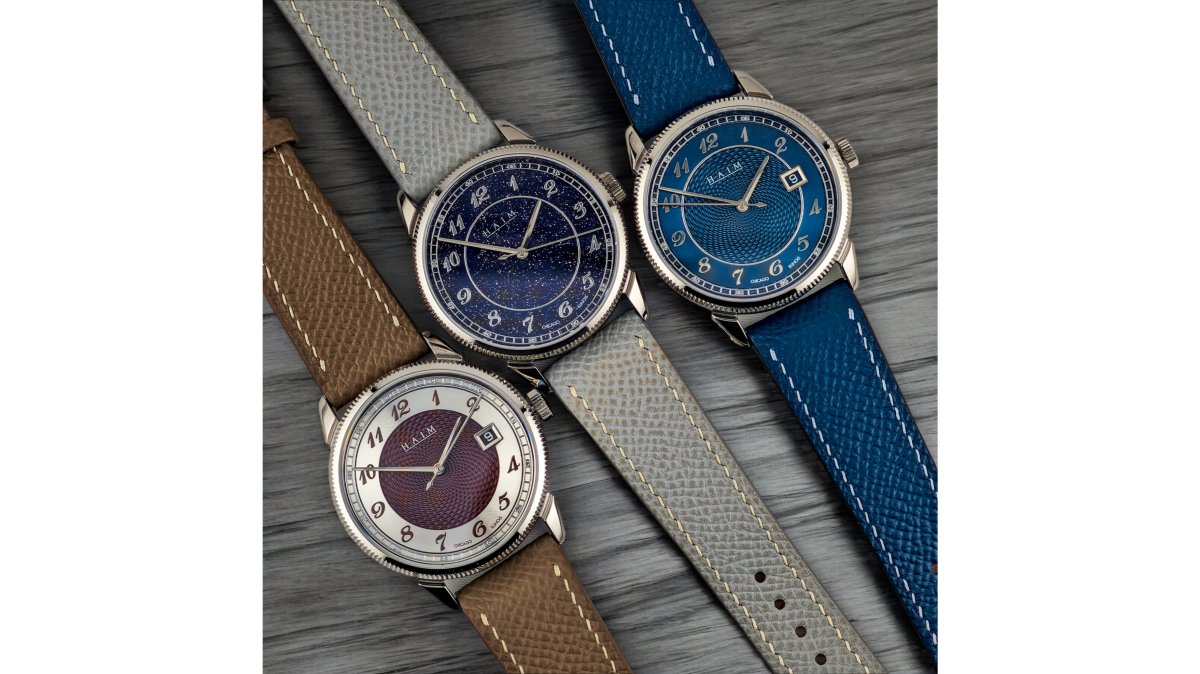
Haim Watch Company Legacy Automatic ($1,350) represents the modern microbrand approach: custom-engineered caliber, hand-finished titanium case, and three limited dial variants (Dark Cobalt, Burgundy Tux, Stargazer). The 38mm case fits most wrists and slides under shirt cuffs. Each dial is limited to 50 pieces, creating genuine scarcity. The exhibition caseback lets you appreciate the custom movement, justifying the premium over mass-produced alternatives.
Haim Watch Company L2 Chronograph ($489) offers chronograph functionality at an accessible price point. The VK64 caliber provides reliable timekeeping with stopwatch precision. Four dial themes deliver visual impact without overdesign, making this the entry point for a first complication.
Haim Watch Company Annum ($2,150) introduces genuine mechanical complexity: a complete calendar with moonphase powered by a custom mechanical module. The 38mm stainless steel case and three colorways (Dark Cobalt, Stone White, Fumée) offer versatility. This is where horology becomes genuinely interesting, the complication serves a purpose beyond decoration, and the custom caliber represents a brand's technical ambition.
| Watch | Price | Movement | Complications | Best For |
|---|---|---|---|---|
| Legacy Automatic | $1,350 | Custom caliber | Time, date | First luxury watch, wrist presence |
| L2 Chronograph | $489 | VK64 quartz | Chronograph | Accessible complication, daily wear |
| Annum | $2,150 | Custom caliber | Calendar, moonphase | Mechanical complexity, investment |
Prioritize movement quality and case finishing over brand recognition. A well-finished titanium case with a custom caliber delivers more horological satisfaction than mass-produced alternatives.
Versatility: Choosing a Watch for Casual and Formal Wear
Your first luxury watch must transition from office to weekend without looking out of place, balancing presence with restraint.
Case size matters. A 38mm case is the sweet spot for versatility, large enough for wrist presence, small enough to slide under dress shirt cuffs. Above 42mm looks sporty; below 36mm disappears on larger wrists. Haim Watch Company pieces stick to 38mm for wearability across dress codes.
Dial color and finish determine formality. Deep, solid colors pair with formal wear; lighter shades and textured dials work casual or dressed up. Avoid novelty dials or bright colors, your first watch should be a neutral foundation.
Bracelet versus leather strap changes everything. A metal bracelet is dressier and practical for daily wear; a leather strap is more formal but offers elegance metal can't match. Many premium watches come on leather with quick-release spring bars for later swaps. The Annum pairs with French Epsom leather for immediate formal versatility.
Bezel type affects dress-ability. A simple, polished bezel works anywhere. A rotating bezel (common on dive watches) reads sporty and limits formal applications.
Luxury Watch Maintenance and Service Costs
A mechanical watch is an asset that requires maintenance. Understanding service costs prevents sticker shock and helps you budget for long-term ownership.
Resale Value and Long-Term Investment Potential
Most luxury watches depreciate. A $3,000 watch typically sells for $1,500-$2,000 used, a 40-50% loss. Accepting this reality is crucial, you're buying a watch to wear, not a financial investment.
Factors that improve resale value:
- Limited production numbers (50 pieces per dial variant matters)
- Custom or proprietary movement (harder to replace, more desirable to collectors)
- Complete documentation and service history
- Original condition and minimal wear
- Brand momentum and editorial coverage
Factors that hurt resale value:
- Generic movements available in dozens of watches
- High production volumes (no scarcity premium)
- Significant wear or damage
- Missing original documentation
- Brand obscurity or negative publicity
Conclusion
Choosing your first luxury watch means balancing mechanical sophistication with wearability, budget with value retention, and brand prestige with personal preference. The best entry-level luxury watches deliver genuine horological craftsmanship without the five-figure premium of established heritage brands.
Frequently Asked Questions
What's the difference between automatic, mechanical, and quartz movements in a luxury watch?
Automatic movements wind themselves through wrist motion, eliminating the need for manual winding. Mechanical watches require manual winding daily but offer pure horological craftsmanship. Quartz movements use battery power for accuracy but lack the mechanical artistry. For your first luxury watch, automatic movements balance reliability with the mechanical heritage that defines high horology. Haim Watch Company's Legacy Automatic features a custom-designed caliber with 100% US assembly, delivering both precision and the satisfaction of owning a true mechanical timepiece.
How much should I spend on my first luxury watch?
Entry-level luxury watches typically range from $500 to $2,500. Your budget should account not just for the purchase price but also for future service costs, which average $200-$500 every 3-5 years. Consider what the watch means to you: a milestone piece justifies higher investment than a casual collector's piece. Haim Watch Company offers options across this range, from the L2 Chronograph at $489 to the Legacy Automatic at $1,350.00, allowing you to find a piece that matches both your budget and horological ambitions.
Should I buy a new or pre-owned luxury watch?
New watches offer full warranties, authenticity guarantees, and the emotional significance of owning something built for you. Pre-owned watches cost less but carry depreciation already absorbed. For your first luxury watch, buying new from a reputable maker ensures you understand its provenance and can establish a relationship with the brand for future service. Haim Watch Company builds each watch to order, creating a personal connection from the moment you place your order, a meaningful way to mark your entry into watch collecting.
What should I look for in a luxury watch's dial and case design?
The dial is the watch's personality. Look for hand-finished details, applied markers, and sophisticated color choices that reflect your aesthetic. Case materials matter: titanium is lightweight and durable; stainless steel offers classic durability; precious metals signal investment-grade pieces. Case diameter (typically 36-42mm) and thickness affect wrist presence and comfort. Haim Watch Company's Legacy Automatic features hand-finished titanium cases in 38mm with ornate dial decoration, including Dark Cobalt, Burgundy Tux, and Stargazer aventurine options, delivering visual depth and refined craftsmanship at an entry-level price point.