

Table of Contents
- The Real Cost of Automatic Movement Ownership
- Automatic vs Quartz Watch Accuracy: What the Numbers Say
- Mechanical Watch Maintenance Costs: The Hidden Expense
- Benefits of Swiss Made Movements and Custom Calibers
- Durability, Craftsmanship, and Heirloom Quality
- Lifestyle Compatibility: Does an Automatic Fit Your Daily Wear?
- Total Cost of Ownership: A 10-Year Calculator
- Resale Value and Environmental Impact
- Frequently Asked Questions
Last Updated: September 13, 2026
The Real Cost of Automatic Movement Ownership
Is automatic movement worth the price? For most buyers, the honest answer is yes, provided you understand what you're actually paying for. An automatic movement is a mechanical caliber wound by the motion of your wrist, and it carries costs a quartz watch never will. This guide from Haim Watch Company breaks down purchase price, service intervals, accuracy, and resale so you can decide with numbers instead of marketing.

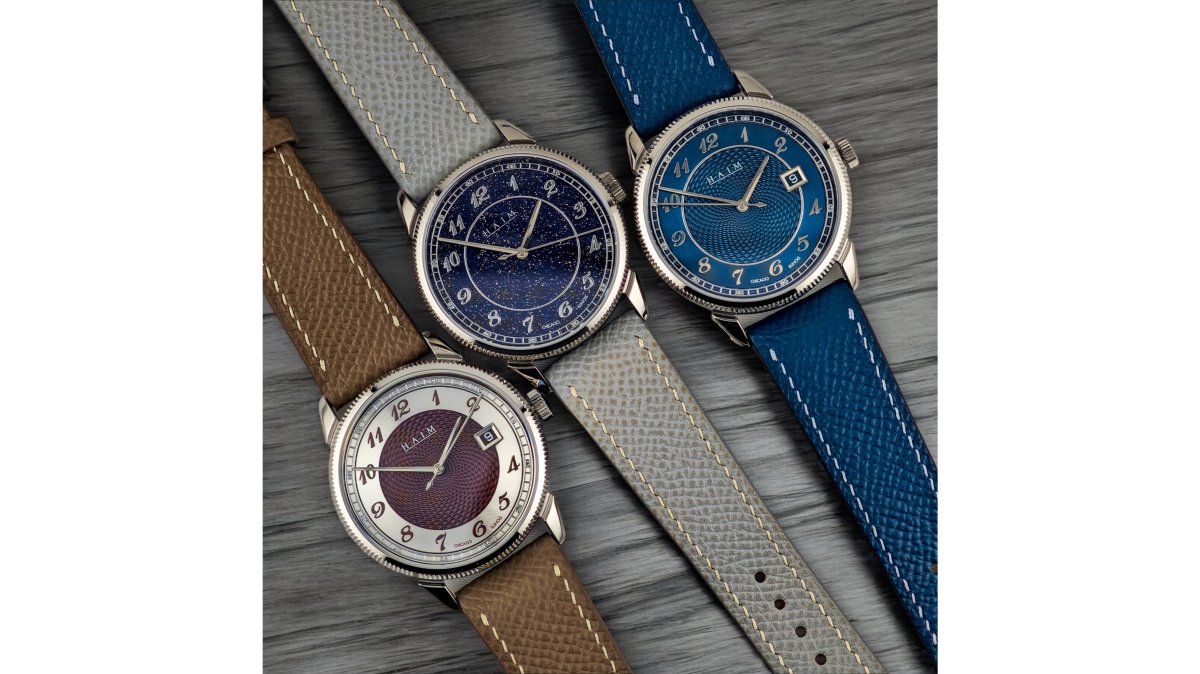
Purchase Price vs. Long-Term Value
The sticker price is only the entry fee. A mechanical watch is a small machine with hundreds of parts, and those parts wear. Buyers who plan for servicing from day one rarely regret the purchase; buyers who assume a mechanical watch is maintenance-free often do.
A common mistake is comparing a mechanical watch to a quartz watch on purchase price alone. The fair comparison spans a decade.
Automatic vs Quartz Watch Accuracy: What the Numbers Say
Quartz wins on raw accuracy. A quartz movement typically deviates by a few seconds per month, while a mechanical caliber is generally rated within a handful of seconds per day under normal conditions (nist.gov). That gap is real, and no amount of finishing closes it.
What mechanical watches offer instead is character. The sweep of a seconds hand driven by a balance wheel, the feel of a winding crown, the knowledge that a mainspring is releasing stored energy through a gear train. Precision and horology are not the same pursuit, and conflating them is where most buying decisions go wrong.
Mechanical Watch Maintenance Costs: The Hidden Expense
Mechanical watch maintenance costs are the single most underestimated part of ownership. A mechanical movement needs periodic cleaning, lubrication, and regulation because oils dry out, migrate, and oxidize, and because pivot points and gear teeth wear against each other every second the watch runs. Ignore it and accuracy drifts, amplitude drops, then parts start to fail.
What a Full Service Actually Involves
A proper service is not a tune-up. It is a teardown. A watchmaker:
- Removes the movement from the case and separates the dial, hands, and calendar works
- Fully disassembles the caliber down to the mainplate, bridges, gear train, escapement, and balance
- Ultrasonically cleans each component in staged baths
- Inspects pivots, jewels, and the mainspring under magnification, replacing anything worn
- Reassembles with fresh lubricants applied in specific quantities at specific points
- Replaces gaskets and seals, then pressure-tests the case
- Regulates the movement on a timing machine across multiple positions
That is why the watch disappears for weeks, not days.
Service Intervals and What Drives Them
Most watchmakers recommend a full service every five to seven years, though the interval is not fixed (awci.com). A common pattern is that daily wear, humidity, temperature swings, and shock shorten it, while a watch worn occasionally and stored dry can stretch it. A watch running fast, losing amplitude, or stopping overnight is telling you the lubricants are gone.
Expect a meaningful bill, often a noticeable fraction of the original purchase price, and expect the watch to be gone for weeks. On a watch in the low four figures, a full service commonly lands in the low-to-mid hundreds of dollars; on a complicated caliber with a calendar module, expect more (awci.com). Parts availability matters too, a movement still in production is cheaper to service than a discontinued one where a watchmaker has to source or fabricate components.
The Wear Items Nobody Budgets For
Servicing is not the only recurring cost. Leather straps typically last one to two years of daily wear before they crack, stretch, or smell, and a quality replacement runs from tens to low hundreds of dollars. Gaskets, spring bars, and crowns are inexpensive but should be refreshed at service. Crystal scratches and case refinishing are optional but common. None of these are large individually; together they are the reason a decade of ownership costs more than the sticker price.
Why Quartz Changes the Math
A quartz watch has no oiled gear train to service. Its recurring cost is a battery, typically every two to three years, plus a gasket check when the case is opened. When the module eventually fails, it is usually replaced rather than repaired. That is cheaper to own, and it is also why a quartz watch is not the same object. You are trading long-term cost for a disposable module, and the automatic's service bill is the price of keeping a repairable machine alive.
Benefits of Swiss Made Movements and Custom Calibers
Swiss made movements carry a reputation built on tight tolerances, established supply chains, and regulated labeling standards that govern what "Swiss made" actually means. The benefits of swiss made movements come down to consistency: predictable accuracy, widely available parts, and watchmakers who know the architecture.
Custom calibers go further. A brand that designs its own movement controls the finishing, the decoration, and the specification rather than accepting whatever an off-the-shelf ébauche provides. You are paying for a story, yes, but also for a caliber tuned to that specific case and dial.
Haim Watch Company builds its Legacy Automatic around Caliber HWC-1, a custom-designed caliber assembled entirely in the US, and the Annum debuts Caliber HWC-2 with a custom mechanical calendar module.

Durability, Craftsmanship, and Heirloom Quality
Craftsmanship shows up in places you cannot see until the caseback comes off. Hand-finished titanium cases, chamfered edges, decorated bridges, and blued screws are not decoration for its own sake; they signal how much hand work went into the object. Durability follows from materials and tolerances, and titanium brings a favorable strength-to-weight ratio that keeps a 38mm case comfortable for daily wear.
Heirloom quality is the payoff. A well-maintained mechanical watch can outlive its first owner, which is precisely why service records and original parts matter at resale.
Lifestyle Compatibility: Does an Automatic Fit Your Daily Wear?
An automatic fits most lifestyles, with two caveats: you need to wear it, and you need to accept it as a responsibility. The rotor winds the mainspring through wrist motion, so a watch that sits in a drawer for a week will stop. A power reserve of roughly a day and a half to two days is typical, which covers a weekend off the wrist but not a fortnight.
Consider how you actually live before you buy:
- Desk-based professional: Excellent fit. Natural wrist motion keeps the mainspring charged all day.
- Active or manual work: Good fit, but choose a strong case and accept that shock and vibration accelerate wear.
- Frequent traveler: Fine, though a watch winder or a quick reset on arrival helps.
- Someone who rotates many watches: Poor fit unless you own a winder; each watch will need resetting.
Total Cost of Ownership: A 10-Year Calculator
Total cost of ownership is purchase price plus servicing, straps, and any repairs, minus resale value at the end. Run the arithmetic before you buy, not after. This is the calculation most buyers skip, and it is the one that actually answers whether an automatic is worth the price.
| Cost Component | What to Estimate | Notes |
|---|---|---|
| Purchase price | Exact retail price | Paid once, up front |
| Servicing | One full service every 5-7 years | Two services across a decade is typical |
| Straps and wear items | Leather straps, gaskets, spring bars | Leather wears fastest |
| Repairs | Contingency for shock or water damage | Skip if the watch is cared for |
| Resale value | Current market value at year 10 | Subtract from the total |
Worked Example: A $1,350 Automatic Over 10 Years
Take a watch at $1,350. Assume two full services across the decade, a couple of replacement straps, and a small repair contingency, then subtract what the watch would fetch used. The result is your true annual cost, and it is usually far lower than the sticker price suggests when spread across a decade.
| Line Item | 5-Year Total | 10-Year Total |
|---|---|---|
| Purchase price | $1,350 | $1,350 |
| Full service (1x / 2x) | ~$250 | ~$500 |
| Straps (2x / 4x) | ~$120 | ~$240 |
| Repair contingency | $0 | ~$150 |
| Gross outlay | ~$1,720 | ~$2,240 |
| Less resale value | , | (~$700) |
| Net cost of ownership | ~$1,720 | ~$1,540 |
| Cost per year | ~$344 | ~$154 |
Read that bottom row carefully. The 5-year cost per year is roughly double the 10-year figure, because the purchase price is amortized over half as many years and the resale value has not yet been realized. The longer you keep a well-maintained automatic, the cheaper each year of ownership becomes. That is the opposite of how a quartz watch behaves, where the module is eventually discarded rather than resold.
The Quartz Comparison Over the Same Decade
A comparable quartz watch might cost $250 up front, with a battery every two to three years at roughly $15 to $40 per swap depending on whether the case is opened by a jeweler or a watchmaker. Over ten years that is roughly $100 to $150 in batteries, plus a gasket refresh. Gross outlay lands near $400. Resale value on a used quartz watch in this range is typically minimal, often a fraction of the original price, sometimes nothing.
So the automatic costs more in absolute dollars, but it also holds a recoverable asset at the end. The quartz is cheaper to run and worth less to sell. Whether that trade is worth it depends entirely on whether you value the object or the function.
How to Adjust the Numbers for Your Watch
- Higher purchase price: Service cost scales roughly with movement complexity, not case price. A $5,000 watch does not cost five times as much to service as a $1,000 watch, so the cost-per-year math improves at higher price points.
- More complications: A calendar module, chronograph, or GMT adds parts and labor. Budget more per service.
- Heavier wear: Active lifestyles shorten service intervals. Assume the 5-year end of the range, not the 7-year end.
- Better documentation: Original box, papers, and service records measurably protect resale value. Keep them.
Resale Value and Environmental Impact
Resale value in this segment is driven by scarcity, condition, and documentation. Limited runs hold value better than open production, which is why individually numbered casebacks and small batch sizes matter to collectors. Full service records and the original box and papers protect value at sale.
Environmental impact is the angle most buyers never consider. A mechanical watch is repairable by design: a skilled watchmaker can replace a single worn jewel or gear rather than discarding the whole unit. That repairability, plus the absence of a disposable battery, makes a mechanical caliber a genuinely longer-lived object than a sealed quartz module.
Frequently Asked Questions
What is the downside of an automatic watch?
Automatic watches require regular wear or a watch winder to maintain power reserve, typically 38-42 hours. They are less accurate than quartz, with deviations of -10 to +30 seconds per day. Maintenance costs are higher, with service intervals every 5-7 years costing $200-$500. They are also more susceptible to damage from shocks and magnetic fields. However, many owners accept these trade-offs for the craftsmanship and emotional connection an automatic provides.
How does the craftsmanship of a Swiss-made movement justify its cost?
Swiss-made movements undergo rigorous testing and finishing, including Geneva stripes, blued screws, and precise regulation. This craftsmanship translates to better timekeeping stability and longevity. Brands like Haim Watch Company use custom calibers such as the HWC-1 and HWC-2, which offer unique features and hand-finished details. The higher cost reflects the labor, materials, and expertise involved, plus the heritage and prestige associated with Swiss watchmaking.
Are automatic watches worth the price for a first-time buyer?
It depends on your priorities. If you value mechanical artistry, don't mind occasional time adjustments, and plan to keep the watch long-term, an automatic can be worth it. Entry-level options like the Haim Legacy Automatic at $1,350 offer custom design and US assembly. However, if you want grab-and-go accuracy and low maintenance, a quartz watch may be more practical. Consider your lifestyle and budget before deciding.
Do automatic watches require more maintenance than battery-powered movements?
Yes. Automatic watches need servicing every 5-7 years to lubricate moving parts, replace gaskets, and regulate the movement. This costs $200-$500. Battery-powered quartz watches only need a battery replacement every 2-3 years, costing $10-$50. However, automatic watches can last generations with proper care, while quartz movements may become obsolete or unrepairable after 20-30 years.
Which lasts longer: a high-quality automatic or a quartz watch?
A high-quality automatic watch can last decades or even centuries with regular servicing, becoming an heirloom. Quartz watches typically last 20-30 years before the movement fails and becomes difficult to repair. The key is maintenance: automatic watches require periodic servicing, but their mechanical components are often repairable or replaceable. Quartz watches are more disposable. For longevity, automatic wins if you're committed to care.
Deciding whether an automatic movement is worth the price comes down to how you weigh precision against permanence. If you want an object built to be serviced, worn daily, and handed down, Haim Watch Company builds exactly that: the Legacy Automatic at $1,350 with a hand-finished titanium case, a custom Caliber HWC-1, and 100% US assembly, plus the Annum at $2,149.99 with a complete calendar and moonphase module. Both are produced in numbered limited runs. Shop now and start your own legacy.