

Table of Contents
- What Defines a Sophisticated Design Aesthetic in Horology
- Watch Finishing Techniques That Signal True Craftsmanship
- What a Hand-Finished Watch Actually Means for Collectors
- Case Geometry and Architectural Details in Modern Watchmaking
- The Role of Independent Watchmakers in Contemporary Horology
- Mechanical Watch Movement: Precision, Innovation, and Value
- How to Assess Value Beyond Branding in Watch Collecting
- Conclusion: Building a Collection with Lasting Sophistication
- Frequently Asked Questions
Last Updated: October 8, 2026
What Defines a Sophisticated Design Aesthetic in Horology
A sophisticated aesthetic in horology is a disciplined visual language built on proportion, restraint, and finishing that rewards close inspection.
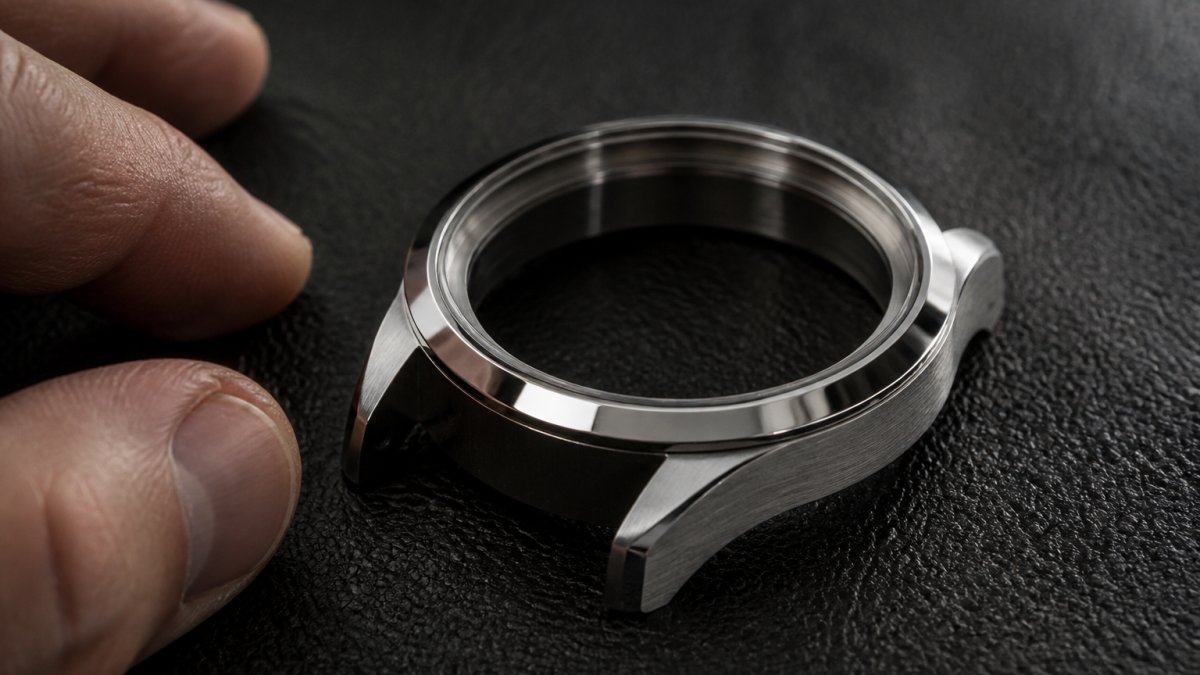
Most buyers confuse complexity with sophistication; they are opposites more often than not. A dial crowded with subdials reads as loud, while a clean dial with one beautifully executed texture reads as confident.
Refined Minimalism and Understated Luxury
Understated luxury means the watch earns attention through proportion and surface quality, not logos or gold plating. A minimalist dial forces the maker to get the fundamentals right, because there is nowhere to hide a misaligned marker or clumsy handset.
With fewer elements, every millimeter of spacing matters. Brands committed to this approach share three traits: restrained color, balanced negative space, and hands that are shaped rather than stamped.
Dial Design, Texture, and Visual Depth
Dial texture is where a sophisticated aesthetic becomes tangible. Surface treatment creates light and shadow that shift as your wrist moves, which is why a flat dial feels lifeless while a textured one feels alive.
The Annum demonstrates this clearly. Its dials draw on vintage watchmaking through a neo-vintage lens, with two variants carrying CNC guilloché patterns that produce a textured interplay of light and depth.

Watch Finishing Techniques That Signal True Craftsmanship
Watch finishing techniques are the surface treatments applied to a case and movement: brushing, polishing, chamfering, and decorative work on components you may only see through an exhibition caseback. They signal craftsmanship because they cannot be faked at scale without cost.
Here is what each technique tells you:
- Brushed surfaces: Fine, consistent grain with no stray scratches. Inconsistent direction between adjacent surfaces suggests rushed production.
- Polished surfaces: A mirror finish with no waviness. Wavy reflections mean the surface was polished by machine without a final hand pass.
- Chamfers and bevels: Crisp edges where brushed and polished planes meet. A soft or rounded chamfer is the clearest sign of automation.
- Movement decoration: Côtes de Genève, perlage, and blued screws visible through the caseback. Decoration here is a statement about how seriously the maker treats parts you rarely see.
A case that blends brushed and polished surfaces with plenty of chamfered edges, as the L2 Chronograph does, shows this discipline in practice.

Federation of the Swiss Watch Industry overview of watchmaking
How to Identify Hand-Finishing in Practice
Hand-finishing shows up in deliberate inconsistency rather than sloppiness. Bring a loupe or phone macro lens and check three things:
- Follow one chamfer around the case. On a hand-finished edge, the width stays consistent while the reflection shifts slightly. On a machine edge, it is uniform to the point of looking flat.
- Tilt the dial under a lamp. Hand-applied texture reveals depth and irregularity; printed texture looks like a sticker.
- Open the caseback. Look at the rotor and bridges. Decoration that continues onto surfaces you would never see is the strongest signal of an artisan's priorities.
What a Hand-Finished Watch Actually Means for Collectors
A hand-finished watch means the visible and hidden surfaces received individual attention from a person, not just a machine pass. For collectors, that means better long-term serviceability, more visual interest over years of ownership, and stronger value retention.
Serviceability matters more than most buyers realize.
There is also an emotional dimension spec sheets miss. A dial with hand-drawn detail, like the 17th-century maps on the Viajero SE's Grand Feu enamel dials, gives you something to notice on day 400 that you missed on day one.

Case Geometry and Architectural Details in Modern Watchmaking
Case geometry is the study of how a watch's proportions, angles, and transitions create presence on the wrist. It is architecture at 38 to 40 millimeters, and it determines whether a watch wears elegantly or clumsily.
Sharp angles and defined facets catch light in ways a rounded case cannot, and alternating brushed and polished planes create contrast without color. Case and dial design must be developed together: the case frames the dial, and the dial justifies the case.
Reading the Numbers: Lug-to-Lug, Thickness, and Wrist Size
The spec that matters most for wearability is not case diameter but lug-to-lug length, the distance from the tip of one lug to the other.
Thickness drives how the watch interacts with a cuff: a 10mm case slides under a shirt sleeve, a 13mm case catches on it.
Lug width and curvature matter too. A 20mm lug width on a 38mm case produces a balanced strap-to-case ratio.
Matching Geometry to Wardrobe and Occasion
| Wearer Profile | Recommended Case Size | Lug-to-Lug Target | Thickness | Occasion Fit |
|---|---|---|---|---|
| Smaller wrist (under 6.5 in) | 36-38mm | Under 46mm | Under 10mm | Dress, business |
| Average wrist (6.5-7.25 in) | 38-40mm | 46-48mm | 10-11mm | Versatile |
| Larger wrist (over 7.25 in) | 40-42mm | 48-50mm | 11-13mm | Casual, sport |
A watch worn with a tailored suit benefits from a thinner case, smaller diameter, and a dial that reads clearly at a glance.
The Role of Independent Watchmakers in Contemporary Horology
Independent watchmakers are the studios and small brands that design, finish, and often assemble watches outside the large conglomerates.
The trade-off is real: independents cannot match the service networks or marketing budgets of the giants, and buyers are right to ask whether a smaller brand will still be around in five years.
L2 Chronograph (Anniversary Edition) →
Where an independent earns trust is in the details they spend money on.
Mechanical Watch Movement: Precision, Innovation, and Value
A mechanical watch movement is the engine that drives the hands, and its design quality determines precision, serviceability, and how much of your money went into engineering rather than branding. Two watches can look identical outside and differ enormously inside.
Movement Architecture: What You Are Actually Paying For
A movement has four layers of value: the base caliber, the module or complication, the finishing, and the regulation. A custom-designed caliber, like the Annum's Caliber HWC-2, is built around a specific case and dial, letting the maker optimize hand height, date window placement, and power reserve for that model alone.
Complications add mechanical complexity. A complete calendar with moonphase, as in the Annum, requires a module tracking the date, day, month, and lunar cycle, plus correctors safe to use without damaging the movement, a real technical capability, not just assembly.
Precision, Tolerances, and What to Ask
Precision is separate from exclusivity: a custom caliber is not automatically more accurate than a well-regulated standard movement. What matters is the stated tolerance and regulation process.
Power reserve is another practical spec. A 40-hour reserve means the watch stops if you leave it off for a weekend; a 60- to 70-hour reserve lets you rotate it without resetting. For a daily wearer, 50 hours is a reasonable minimum.
Serviceability, Repairability, and Long-Term Ownership
Serviceability is where movement design meets ownership cost. A watch with a custom caliber and a stated service path, where the brand can supply parts and perform maintenance, is an object you keep. One with an undisclosed catalog movement and no service information is an object you replace.
Ask three questions before buying:
- Who services this movement, and where? A clear answer means the brand has a plan for year five, not just year one.
- Are spare parts available? Custom components can become unavailable if the brand disappears. A standard base caliber is easier to repair independently.
- What is the recommended service interval? Most mechanical movements need service every 5 to 7 years, or when timekeeping drifts beyond the rated tolerance.
How to Assess Value Beyond Branding
When comparing two watches at similar prices, weigh movement provenance against finishing and case construction. A custom caliber with decorated bridges and a stated service path justifies a premium over an off-the-shelf movement with no decoration and no service information.
The honest framework: value is the sum of finishing quality, movement provenance, case construction, and serviceability, not the logo on the dial.
National Institute of Standards and Technology time and frequency standards
How to Assess Value Beyond Branding in Watch Collecting
Value beyond branding comes down to four verifiable factors: finishing quality, movement provenance, case construction, and long-term serviceability. Brand recognition is a resale shortcut, not a measure of craftsmanship.
Use this framework when comparing two watches at similar prices:
| What to Check | Strong Signal | Weak Signal |
|---|---|---|
| Case finishing | Crisp chamfers, consistent brushing | Rounded edges, uneven grain |
| Dial execution | Applied markers, real texture | Printed markers, flat surface |
| Movement | Custom caliber, decorated bridges | Undisclosed catalog movement |
| Serviceability | Stated service path, spare parts | No service information |
| Wearability | Proportionate lug-to-lug, low profile | Bulky case, awkward lugs |
Two more things to weigh. First, limited production runs, like the L2 Chronograph Anniversary Edition's 30 pieces per dial, individually numbered on the caseback, protect exclusivity in a way open-ended production cannot.
National Institute of Standards and Technology time and frequency standards
Conclusion: Building a Collection with Lasting Sophistication
Building a collection with lasting sophistication is harder than buying one impressive watch. It requires resisting trends, understanding finishing, and choosing pieces whose value you can explain without mentioning the logo.
That is the standard we hold ourselves to at Haim Watch Company. Our Viajero SE pairs Swiss-made construction with hand-finished stainless steel and Grand Feu enamel dials, our Annum brings a custom complete calendar module and Caliber HWC-2 to a 38mm neo-vintage case, and our L2 Chronograph shows what a blended brushed-and-polished case with chamfered edges looks like at an accessible price.
Frequently Asked Questions
What makes a watch design sophisticated?
A sophisticated aesthetic combines restraint with depth. It shows in a flat dial that uses texture rather than clutter, case geometry with sharp angles and chamfered edges, and a monochromatic palette that lets light and shadow do the work. Brands that practice design restraint often create more timeless pieces than those chasing trends. The Viajero SE from Haim Watch Company, with its Grand Feu Enamel dial and minimalist bezel, demonstrates how a sophisticated aesthetic directs attention to the dial as the focal point.
What does hand-finished mean in watchmaking?
Hand-finishing refers to decorative techniques applied by an artisan rather than a machine. This includes beveling, polishing, brushing, and anglage on case components and movement parts. The result is subtle irregularities that signal human skill and labor. A hand-finished watch often shows a deeper interplay of light and shadow across its surfaces. Haim Watch Company's hand-finished titanium cases and decorated movements, like the Caliber HWC-2 in the Annum, illustrate how hand-finishing adds visual texture and craftsmanship value.
Which watch finishing techniques should collectors look for?
Collectors should examine anglage (chamfered edges), perlage (circular graining), and Côtes de Genève ( Geneva stripes) on movements. On cases, look for a mix of brushed and polished surfaces with clean transitions. A flat dial with applied markers and sculpted hands also signals attention to detail. The L2 Chronograph from Haim Watch Company uses a newly designed case that blends brushed and polished surfaces with plenty of chamfered edges, showing how finishing techniques create architectural depth.
How can you evaluate craftsmanship when buying a watch?
Start by examining the dial under different lighting. A well-finished dial shows depth through texture, applied markers, and precise printing. Check the case for smooth transitions between brushed and polished areas. Look at the movement through an exhibition caseback if available, noting decoration and finishing. Ask about assembly origin and movement type. A mechanical watch movement with custom design, like Haim Watch Company's Caliber HWC-2, often indicates greater craftsmanship than a stock caliber, though both can be reliable.