

Table of Contents
- Swiss vs Japanese Watch Movements: Core Differences
- Mechanical Movement Philosophy and Heritage
- Automatic Watch Movement Accuracy Standards
- Swiss vs Japanese Quartz Movements: Precision and Performance
- Watch Movement Maintenance Costs and Service Intervals
- Manufacturing, Craftsmanship, and Build Quality
- Which Movement Type Deserves Your Investment
- Frequently Asked Questions
Last Updated: September 28, 2026
Swiss vs Japanese Watch Movements: Core Differences
Understanding Swiss vs Japanese watch movements goes far deeper than marketing heritage. It reflects fundamentally different philosophies about timekeeping, craftsmanship, and what a mechanical device should accomplish. Understanding these differences helps you choose a timepiece that aligns with how you actually use and value watches.
Swiss movements prioritize heritage, hand-finished aesthetics, and traditional horology. Japanese movements emphasize precision engineering, reliability through innovation, and cost-effectiveness without compromising accuracy. Neither approach is objectively superior, they're optimized for different priorities.
At Haim Watch Company, we work with both traditions. Our Swiss-made Viajero SE embodies the classical approach, while our 100% US-assembled Legacy Automatic demonstrates that exceptional timekeeping transcends geography. The real question isn't which country makes better watches. It's which philosophy matches your expectations.
Mechanical Movement Philosophy and Heritage
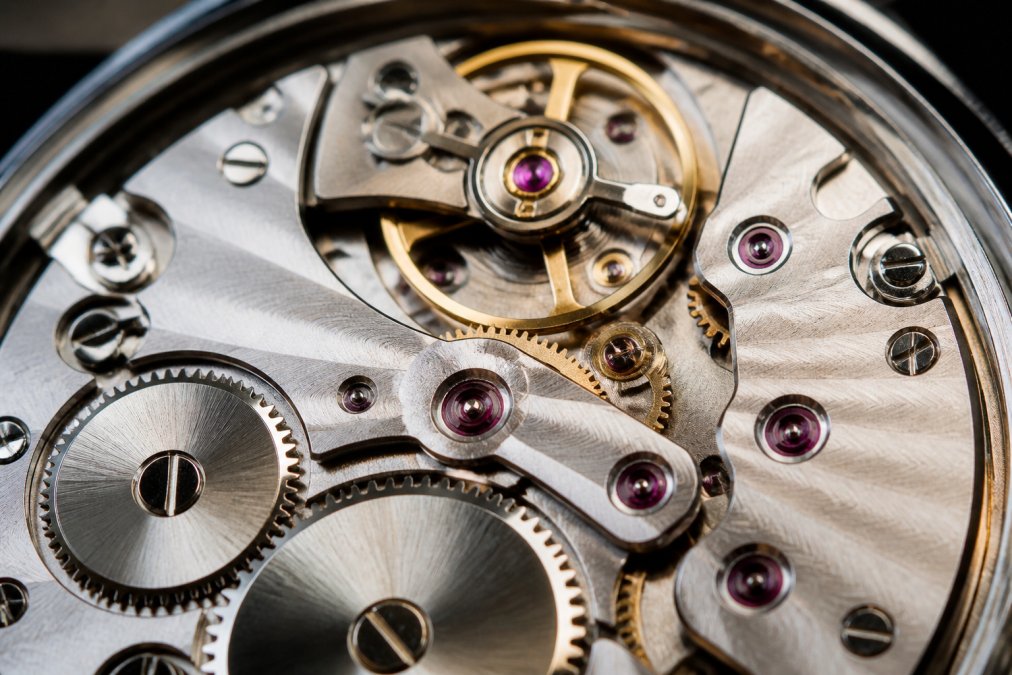
Swiss watchmaking was built on a foundation of visible craftsmanship. The philosophy assumes that a watch movement is as important as its dial, something worth finishing by hand, decorating with Perlage or Côtes de Genève patterns, and displaying through a caseback.
This approach emerged from necessity. Before the quartz crisis of the 1970s, mechanical movements were the only option. Swiss manufacturers developed techniques to make their movements beautiful because they had to justify their price against cheaper alternatives. Hand-finishing became a mark of quality and tradition.
Japanese manufacturers inherited a different legacy. They viewed the movement as a functional component. If it kept accurate time and lasted decades, the engineering succeeded. Seiko and other Japanese makers refined automatic calibers for precision and durability rather than decoration. A Japanese movement might be entirely functional under the dial, and that's intentional.
This philosophical split persists today. A Swiss movement often features visible finishing: hand-polished bevels, engraved balance cocks, decorated plates. A Japanese movement focuses on tolerances, materials, and mechanical efficiency. Both approaches produce reliable watches. They just ask different questions about what matters.
Automatic Watch Movement Accuracy Standards
Accuracy in mechanical watches is measured in seconds per day of deviation. A watch that gains or loses 10 seconds daily is considered acceptable. A watch that stays within 5 seconds is excellent. Chronometer certification, the highest standard, requires a watch to maintain accuracy within -4 to +6 seconds per day.
Swiss movements traditionally aimed for accuracy through careful assembly and hand-regulation. A watchmaker would adjust the hairspring and balance wheel by hand until the watch met specifications. This method works, but it's labor-intensive and depends on the skill of the individual technician.
Japanese manufacturers approached accuracy through precision manufacturing tolerances. If every component is manufactured to exact specifications, assembly becomes more consistent. Less hand-regulation is needed because the movement is engineered to be accurate from the start. This method scales better and reduces human error.
In practice, both approaches achieve similar accuracy levels. A well-made Swiss automatic and a Japanese automatic from a reputable maker will perform comparably. The difference lies in how they get there: one through artisanal adjustment, the other through engineering precision.
Swiss vs Japanese Quartz Movements: Precision and Performance
Quartz movements changed everything. A quartz watch oscillates at 32,768 Hz, a frequency so precise that quartz timekeeping became the standard against which all other methods are measured. Both Swiss and Japanese manufacturers produce excellent quartz movements.
Swiss quartz watches often feature the same finishing philosophy as mechanical movements. A Swatch or ETA quartz caliber might have decorated plates or hand-finished components, even though the timekeeping is electronic. This reflects the Swiss commitment to visible craftsmanship.
Japanese quartz movements prioritize efficiency and reliability. A Seiko or Citizen quartz caliber is engineered for accuracy, power efficiency, and durability. The movement itself is functional and unadorned. Japanese manufacturers were early innovators in quartz technology and remain leaders in accuracy and battery life.
For pure timekeeping performance, quartz movements from either tradition are superior to mechanical movements. A quartz watch will keep better time than any mechanical automatic. The choice between Swiss and Japanese quartz comes down to design, finishing, and brand positioning rather than performance differences.
Watch Movement Maintenance Costs and Service Intervals
A mechanical movement requires regular maintenance. Most watchmakers recommend a complete service every 5-10 years, depending on how often you wear the watch and how it's treated. A service involves disassembly, cleaning, lubrication, adjustment of the escapement, and replacement of worn jewels or gaskets. The total cost and availability of service, however, diverges significantly between Swiss and Japanese movements over a watch's lifetime.
Swiss Movement Servicing
Swiss movements often command higher service costs because the finishing requires specialized expertise. A watchmaker must understand how to maintain Perlage (circular grain) and Côtes de Genève (striped) patterns without damaging them during cleaning. Additionally, many Swiss brand movements use proprietary calibers, Rolex's 3135, Omega's 8500 series, or Patek Philippe's custom designs, that require factory-trained technicians or authorized service centers. This creates a two-tier service market: independent watchmakers may charge $400-$800 for a basic service, while authorized dealers often charge $1,200-$2,500 or more. Parts for vintage Swiss movements can be difficult to source; a replacement balance wheel or hairspring for a 1960s Omega may require waiting months or paying premium prices to specialty suppliers.
Japanese Movement Servicing
Japanese movements typically cost less to service because the straightforward design and standardized components reduce specialized labor. A Seiko 6R15 or NH35 automatic can be serviced by most competent independent watchmakers for $300-$600. Parts are widely available through established suppliers; a replacement mainspring or balance wheel for a Seiko caliber is usually in stock or available within weeks at reasonable cost. Citizen and Orient movements follow similar patterns. The modular design of many Japanese calibers also means that individual components can be replaced without a full movement overhaul, reducing costs further.
Long-Term Serviceability and Parts Availability
Over 20 years of ownership, this difference compounds. A Swiss watch requiring service every 7 years at $1,500 per service costs $4,500 in maintenance alone. A Japanese watch serviced at the same interval for $500 costs $1,500 over the same period. Parts availability also affects resale value: a watch with readily available service parts and affordable maintenance attracts more buyers than one requiring expensive authorized service.
Quartz movements require almost no maintenance beyond battery replacement every 2-3 years (cost: $10-$50 at most retailers). This is one reason quartz watches dominate the mass market. The low maintenance cost appeals to casual wearers who don't want to think about service intervals or long-term repair expenses.
The Practical Takeaway
When budgeting for a mechanical watch, factor in the full cost of ownership. A $3,000 Swiss automatic may require $4,500-$6,000 in service over 20 years. A $1,500 Japanese automatic may require $1,500-$2,000 in service over the same period. Neither is objectively wrong; the choice depends on whether you value the Swiss movement's heritage and finishing enough to justify the higher long-term cost, or prefer the Japanese approach of lower total cost of ownership.
Manufacturing, Craftsmanship, and Build Quality
The manufacturing philosophy shapes the final product, but the distinction between Swiss and Japanese approaches has blurred significantly in the past 15 years. Both traditions now blend hand-finishing with precision automation, and both have adopted advanced materials and technologies that transcend geography.
Traditional Manufacturing Models
Swiss manufacturers historically used smaller production runs and hand-assembly techniques. A watch might spend weeks on a bench being assembled, regulated, and finished by a single technician. Rolex and Patek Philippe still employ this method for high-end pieces. This approach produces exceptional quality but limits production volume and increases labor costs.
Japanese manufacturers pioneered automated assembly without sacrificing quality. A Seiko movement is assembled by machines calibrated to exact tolerances, then inspected by humans. This method produces millions of watches annually while maintaining consistency.
Modern Material Innovation
Environmental and Sustainability Considerations
Build Quality and Finishing Standards
Which Movement Type Deserves Your Investment
The choice between Swiss and Japanese movements depends on what you value in a watch. If you appreciate visible craftsmanship, heritage, and the tradition of hand-finishing, a Swiss movement aligns with those priorities. If you prioritize reliability, precision engineering, and cost-effectiveness, a Japanese movement makes sense.
Frequently Asked Questions
What's the main difference between Swiss and Japanese watch movements?
Swiss movements historically emphasize hand-finished craftsmanship, ornate decoration, and heritage caliber design, while Japanese movements prioritize precision engineering, manufacturing efficiency, and reliability through automation. Swiss watches often feature jeweled bearings and visible finishing touches; Japanese movements focus on consistent performance and cost-effectiveness. Both can deliver excellent timekeeping, but they reflect different manufacturing philosophies shaped by each region's horological tradition.
Are Japanese automatic movements as reliable as Swiss movements?
Japanese automatic movements match or exceed Swiss reliability in most cases. Brands like Seiko and Orient use rigorous manufacturing tolerances and quality control that produce highly dependable calibers. Reliability depends more on the specific movement quality and maintenance than geography. A well-maintained Japanese automatic can outperform a neglected Swiss movement. The key difference is philosophy: Japanese movements emphasize consistent mass-production reliability, while Swiss movements combine reliability with aesthetic finishing.
How do maintenance costs compare between Swiss and Japanese calibers?
Japanese movements typically cost less to service, while Swiss movements often run higher due to hand-finished components and specialized labor. Japanese parts availability is generally broader and more affordable. However, costs vary by watchmaker expertise and movement complexity.
Does 'Swiss Made' guarantee better quality than Japanese engineering?
No. 'Swiss Made' indicates origin and heritage, not inherent superiority. Both regions produce exceptional and mediocre movements. Japanese engineering excels at precision tolerances and reliability; Swiss craftsmanship excels at hand-finishing and aesthetic detail. Quality depends on the specific brand, caliber design, and manufacturing standards, not the label. A respected Japanese movement often outperforms a budget Swiss caliber. Choose based on the watchmaker's reputation, movement specifications, and your priorities: durability, accuracy, or aesthetic finishing.
Choosing between Swiss and Japanese watch movements ultimately reflects your priorities. If craftsmanship and heritage matter most, explore Swiss-made options. If precision and reliability drive your decision, Japanese movements excel. Haim Watch Company offers both approaches, letting you choose based on what you actually value in a timepiece. Discover which philosophy resonates with you, visit our collection and find the watch that matches your vision of quality.