

Table of Contents
- What Defines American-Made Watches
- The History and Resurgence of American Watchmaking
- US-Assembled vs. Swiss-Made Watches: Understanding the Difference
- Craftsmanship, Precision, and Manufacturing Standards
- Best American Watch Brands and Microbrands
- Collecting American Timepieces: Investment and Legacy
- Why American-Made Watches Deserve Your Consideration
Last Updated: August 24, 2026
What Defines American-Made Watches
American-made watches embody a commitment to domestic manufacturing, precision horology, and transparent sourcing. The Federal Trade Commission defines "Made in USA" as manufacturing and processing in the United States with all or virtually all components sourced domestically (the FTC). However, the watch industry operates in a more nuanced space. Many brands claim "American assembly" while importing movements, cases, or dials from abroad. Understanding these distinctions matters because they directly affect quality, repairability, and the economic impact of your purchase.
At Haim Watch Company, the distinction becomes concrete through their Legacy Automatic, a timepiece with 100% US assembly and a custom-designed movement. This level of commitment separates watches that genuinely support local manufacturing from those using "American-made" as marketing language. The Legacy Automatic's custom caliber and hand-finished titanium case demonstrate what becomes possible when a brand commits to building the entire watch domestically.

A watch labeled "assembled in the USA" tells you where final construction occurred. A watch that's "100% US-made" signals that sourcing, movement production, case manufacturing, and assembly all happened domestically. Neither is inherently superior; each represents a different business model and value proposition for the collector.
The History and Resurgence of American Watchmaking
American watchmaking predates Swiss dominance. In the 19th and early 20th centuries, brands like Elgin, Hamilton, and Waltham established the United States as a center of horological innovation, pioneering mass production techniques that made mechanical watches accessible to working people (si.edu). That era ended gradually as Swiss manufacturers consolidated their market position and Japanese quartz technology disrupted mechanical watchmaking. By the 1970s and 1980s, American watch production had largely disappeared.
Contemporary American watchmakers operate in a market where quartz and smartwatches dominate, yet they've chosen to build mechanical timepieces anyway. This represents a deliberate aesthetic and philosophical choice. Modern microbrands, including Haim Watch Company, have rebuilt the capability to design custom movements, finish cases by hand, and assemble complete watches domestically.
The resurgence reflects converging factors: collectors increasingly value transparency and traceability, the maker movement has gained cultural cachet, digital manufacturing tools like CNC machines have made small-batch production economically viable, and younger consumers show willingness to invest in quality objects that tell a story.
US-Assembled vs. Swiss-Made Watches: Understanding the Difference
Swiss-made carries legal definition through the Swiss Ordinance Against Unfair Competition. A watch qualifies as Swiss-made only when the movement is Swiss, the case is assembled in Switzerland, and manufacturer inspection occurs in Switzerland (europa.eu). Swiss movements benefit from centuries of refinement and established supply chains.
US-assembled watches typically source movements and sometimes cases from various origins, often pairing Swiss movements with American case manufacturing and finishing. This pragmatic model allows brands to offer sophisticated timepieces without rebuilding movement production from scratch.
Watches with custom-engineered American movements, like Haim Watch Company's Legacy Automatic, represent something distinct from both traditional Swiss watches and typical US-assembled pieces. These watches commit to designing and producing movements domestically, requiring substantial investment in expertise, tooling, and manufacturing capability.
What matters most depends on your priorities. If you value heritage and proven movement designs, Swiss-made offers security. If you prioritize supporting domestic manufacturing and custom engineering, US-made with domestic movements represents that commitment. If you seek balance, US-assembled offers proven movement technology with American finishing.
Craftsmanship, Precision, and Manufacturing Standards
Craftsmanship in watchmaking means the ability to finish surfaces to precise tolerances, hand-assemble complex mechanisms, and troubleshoot problems machines cannot solve. It's functional skill that directly affects performance and longevity.
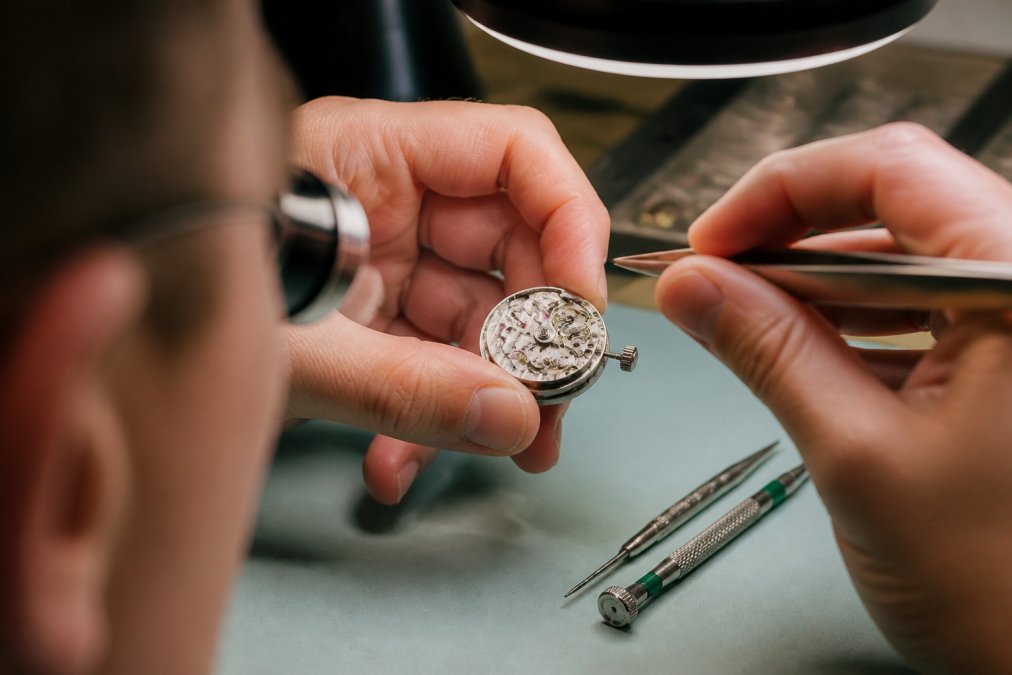
Hand-finishing of movement components serves both aesthetic and functional purposes. Beveled edges reduce stress concentration points. Polished surfaces allow easier inspection for defects. These techniques are labor-intensive, distinguishing higher-end watches from mass-produced alternatives.
Movement assembly demands tolerances measured in fractions of millimeters. A main spring that's slightly too stiff affects the entire watch's rate. A balance wheel misaligned by thousandths of an inch introduces compounding error. Domestic manufacturers who maintain in-house assembly control the entire quality chain and address problems immediately.
Regulation, the process of adjusting a movement to achieve accurate timekeeping, represents another distinction. Fine regulation performed by skilled technicians can achieve accuracy within seconds per day. Domestic manufacturers who perform regulation in-house offer watches meeting tighter specifications than standard production allows.
Hand-finished titanium cases, like those in Haim Watch Company's designs, require specialized tooling and different finishing approaches than mass-produced steel cases. These choices prioritize aesthetics and mechanical interest over production efficiency, decisions that only make sense at lower production volumes and higher margins per piece.
Best American Watch Brands and Microbrands
Haim Watch Company stands out for its commitment to complete domestic production. The Legacy Automatic represents the brand's flagship achievement: a watch with 100% US assembly and custom-designed caliber, priced at $1,350. The L2 Chronograph series, starting at $489, offers accessible entry into the brand's aesthetic philosophy with hand-finished cases and carefully designed complications. The Anniversary Edition of the L2, limited to 30 pieces per dial at $515, demonstrates how limited production and custom finishing create collector appeal.

The Annum, priced at $2,149.99, represents Haim's most ambitious undertaking: a complete calendar with moonphase complication powered by Caliber HWC-2. This watch demonstrates that American microbrands can compete with established Swiss manufacturers in mechanical complexity and finishing quality.
What distinguishes successful American microbrands is transparency about sourcing and manufacturing. Brands that clearly state whether movements are custom-designed, imported, or assembled domestically build credibility with informed collectors. value of artisanal goods.
Collecting American Timepieces: Investment and Legacy
American-made watches occupy an interesting position in the collector market. They lack the established provenance of vintage Swiss watches but offer advantages that appeal to serious collectors: scarcity, mechanical interest, and direct connection to the maker.
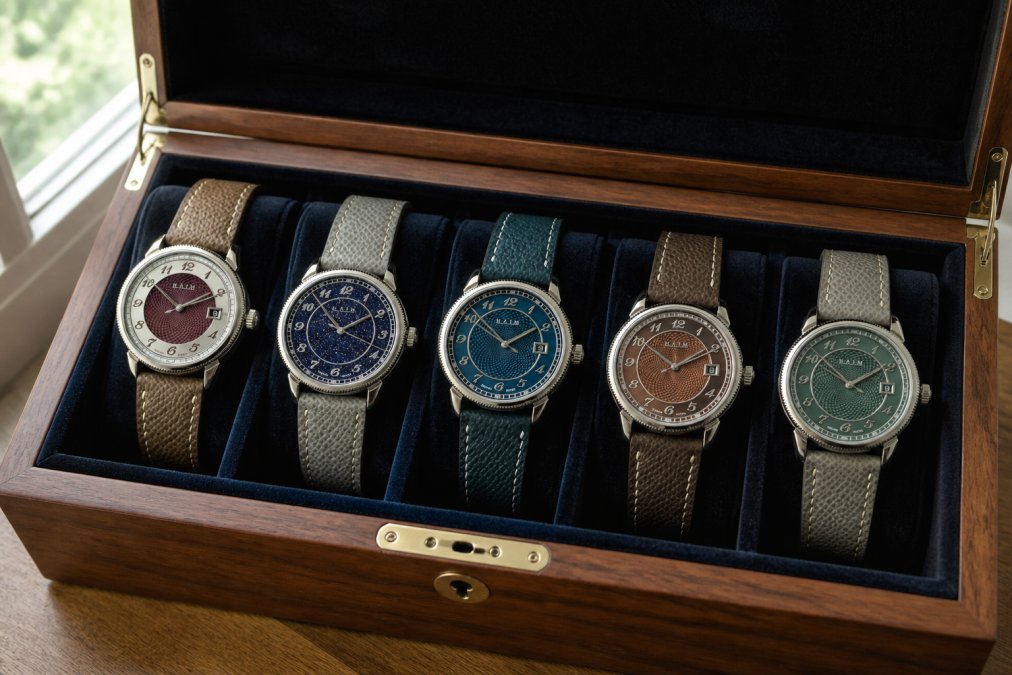
Investment potential depends less on brand name than on the specific watch's qualities. A limited-edition piece from a respected maker, like the L2 Chronograph Anniversary Edition at 30 pieces per dial, holds value because scarcity is genuine.
Custom-engineered movements increase collectibility because they cannot be serviced by generic watchmakers. This dependency on the maker creates a relationship between collector and brand that transcends typical consumer transactions.
Hand-finished cases and ornate dial designs appeal to collectors who value craftsmanship as tangible quality. When you examine an ornate dial under magnification and see deliberate hand-applied decoration, the aesthetic quality becomes undeniable.
Serviceability affects long-term value significantly. Watches that can be serviced indefinitely retain utility and collectibility. American manufacturers who maintain service capability and document their designs ensure their watches remain functional across decades.
When you buy a watch from Haim Watch Company, you're participating in the rebuilding of American watchmaking. Your purchase directly supports the infrastructure, expertise, and manufacturing capability required to keep domestic horology viable.
Why American-Made Watches Deserve Your Consideration
Choosing American-made watches means accepting certain trade-offs in exchange for specific values. These watches typically cost more because labor costs are higher domestically and production volumes are lower. They may have longer lead times because they're often made to order.
What you gain justifies these trade-offs for collectors prioritizing certain qualities. You gain transparency: American makers typically disclose exactly where components come from and what happens at each manufacturing stage. You gain repairability: watches with accessible servicing and documented designs remain functional across generations. You gain mechanical interest: American microbrands often design complications and finishing details that reward close examination.
You support manufacturing infrastructure that wouldn't exist without collector demand. Each watch purchased directly sustains the work of watchmakers, engineers, and specialists and makes the next watch possible.
You gain aesthetic coherence: American-made watches from serious manufacturers reflect deliberate design philosophy rather than trend-chasing. These choices may not appeal to everyone, but they appeal intensely to people who share that philosophy.
You gain a story worth telling. A watch from Haim Watch Company comes with genuine history: the decision to design a custom movement, the choice to hand-finish titanium cases, the commitment to assembling domestically.
The decision to choose American-made watches ultimately reflects values about manufacturing, quality, and what you want your purchases to support. These watches aren't objectively superior to Swiss alternatives; they're different, representing a particular approach to horology that emphasizes domestic production, mechanical sophistication, and maker transparency.
American-made watches offer something increasingly rare: the ability to buy a mechanical timepiece while directly supporting domestic manufacturing capability. Haim Watch Company addresses this by offering a range from the L2 Chronograph at $489 to the Annum's sophisticated complications at $2,149.99, each with documented domestic assembly and custom-engineered movements. The Legacy Automatic at $1,350 represents the sweet spot for collectors seeking genuine US-made movements without complications pricing. Explore Haim Watch Company's collection and discover how American watchmaking translates heritage into wearable precision.

Frequently Asked Questions
Q: What legally defines an American-made watch?
A: The Federal Trade Commission (FTC) enforces the 'Made in USA' standard, which requires that all significant parts and processing originate in the United States and final assembly occurs domestically. Some brands use 'Assembled in USA' when components are sourced internationally but final assembly happens domestically, a legally distinct claim that requires FTC compliance labeling.
Q: How do American-made watches compare to Swiss-made in terms of precision and reliability?
A: American watchmakers today produce movements with high precision standards through custom-engineered calibers and rigorous finishing techniques. Brands like Haim Watch Company produce movements with regulation and accuracy comparable to many Swiss counterparts. The difference lies in philosophy: American microbrands often emphasize individual craftsmanship and custom design, while Swiss production prioritizes mass-production efficiency. Both deliver reliable timekeeping; the choice depends on whether you value heritage manufacturing or artisanal finishing.
Q: Why should I collect American timepieces instead of established Swiss brands?
A: American timepieces offer exclusivity, transparency, and direct connection to the watchmaker. Limited production runs mean your watch remains rare. You gain access to custom-engineered movements unavailable elsewhere, hand-finished cases, and ornate dial designs that reflect individual artistry. You're also supporting domestic manufacturing and supply chains, which appeals to collectors who value sustainability and local economies.
Q: What's the difference between a custom-engineered caliber and a standard movement?
A: A standard movement (like ETA) is mass-produced and used across many brands, offering reliability but no uniqueness. Custom-engineered calibers are designed specifically for a brand, featuring proprietary finishing, regulation, and mechanical innovations. Haim Watch Company's custom calibers, for example, include hand-finished components and specialized complications like complete calendar modules with moonphase. This precision engineering justifies the premium because you're purchasing a movement engineered for your specific watch's aesthetic and performance requirements, not a generic part adapted to fit.
This article was written using GrandRanker