

Table of Contents
- What Defines an Artisanal Automatic Watch
- US-Assembled Mechanical Watches: Craftsmanship at Home
- Understanding Custom Watch Calibers and Movement Design
- Authentication and Provenance Verification Online
- How to Maintain an Automatic Watch for Lasting Performance
- Evaluating Value: Movement Servicing Costs and Long-Term Investment
- Finding Your Perfect Artisanal Timepiece
What Defines an Artisanal Automatic Watch
An artisanal automatic watch is a timepiece powered by a self-winding mechanical movement, crafted by independent watchmakers or small manufacturers who prioritize hand-finished details and custom caliber design. Unlike mass-produced watches, these pieces emphasize horological craftsmanship, with each movement assembly receiving meticulous attention to finishing, decoration, and precision. When you buy artisanal automatic watches online, you're investing in a mechanical philosophy that values heritage, individual artistry, and the intricate dance between engineering and design.
The distinction matters because artisanal pieces typically feature custom-designed calibers rather than off-the-shelf movements, hand-applied dial decoration like Guilloche or applied numerals, and case finishing that reflects the watchmaker's personal aesthetic. A standard automatic watch uses a rotor to wind the mainspring as you move your wrist, storing energy in a power reserve that typically lasts 40-48 hours (peer-reviewed research). An artisanal version executes this mechanically with hand-finished movement bridges, hand-assembly processes, and material choices that separate it from industrial production.
Haim Watch Company exemplifies this approach. Their Legacy Automatic features a custom-designed caliber (Caliber HWC-1) and 100% US assembly, including the movement itself. The hand-finished titanium case and ornate dial decoration create a timepiece that catches light differently depending on angle and lighting, a hallmark of artisanal work that photographs alone cannot convey.

US-Assembled Mechanical Watches: Craftsmanship at Home
Building a complete mechanical watch in the United States requires sourcing or manufacturing nearly every component domestically, a constraint that few brands embrace. Most watchmakers rely on Swiss or Japanese movements as their foundation, then assemble cases and dials locally. True US-assembled watches, where both movement and case originate domestically, remain exceptionally rare.
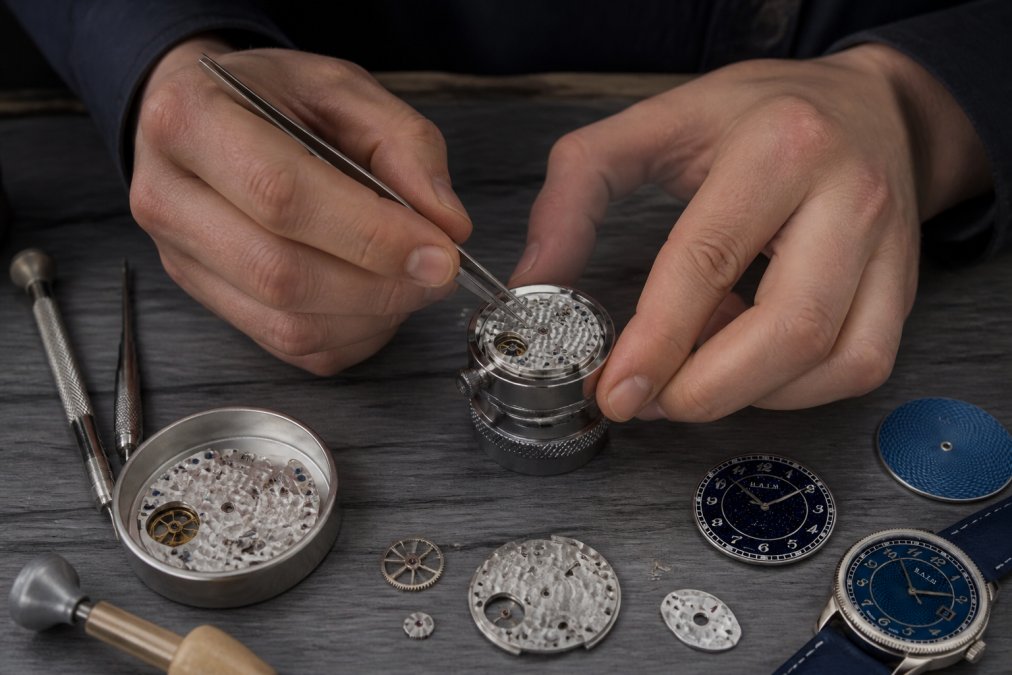
Domestic production allows for closer quality control, faster iteration on design, and the ability to source materials that align with specific brand values. When a watchmaker assembles a movement in-house, they can inspect each component, hand-finish the bridges and balance cock, and ensure that the caliber meets their personal standards rather than relying on batch consistency from a distant supplier.
Haim Watch Company's Legacy Automatic stands as a notable example of this commitment. The movement, Caliber HWC-1, is custom-designed and assembled entirely in the US alongside the hand-finished titanium case. Every Legacy Automatic passes through multiple hands during assembly, a labor-intensive process that directly influences the final price but ensures each watch reflects the brand's horological philosophy.
US-assembled mechanical watches cost more upfront because labor is more expensive domestically. However, this also means you're supporting a manufacturing ecosystem that values precision over volume. When you buy artisanal automatic watches online from a brand committed to domestic assembly, you're funding the continuation of that craft within your own market.
Understanding Custom Watch Calibers and Movement Design
A custom watch caliber is a mechanical movement designed specifically for a brand rather than licensed from a movement manufacturer like ETA or Miyota. Custom calibers allow watchmakers to define the movement's layout, complications, finishing specifications, and overall character, but developing one requires significant investment in tooling, prototyping, and regulatory testing.
Most independent watchmakers use existing calibers as their foundation, modifying or decorating them to suit their aesthetic. A true custom caliber begins with a blank slate: the watchmaker designs the gear train, escape wheel geometry, and overall architecture from first principles. This is why custom calibers command premium pricing, they represent years of development and the watchmaker's unique interpretation of how a mechanical watch should function.
The difference between a standard and custom caliber becomes apparent when examining movement finishing. Standard movements typically feature basic perlage (circular brushing) on the plates. Custom calibers often include hand-applied Côtes de Genève (Geneva stripes), beveled edges on bridges, hand-engraved balance cocks, and individually finished components. These details serve no functional purpose; they're purely aesthetic expressions of the watchmaker's craftsmanship.
Haim Watch Company introduced Caliber HWC-1 with the Legacy Automatic and later expanded to Caliber HWC-2 with the Annum, which adds a custom mechanical calendar module and moonphase complication. This approach allows Haim to differentiate their timepieces through movement design and finishing rather than simply sourcing and assembling existing components.
When evaluating custom calibers, understand that the premium reflects both the engineering work and the hand-finishing labor. A custom caliber with extensive hand-applied decoration costs significantly more to produce than an off-the-shelf movement, but it becomes a signature element that defines the brand's horological identity.
Authentication and Provenance Verification Online
Buying a high-value artisanal watch online without the ability to inspect it in person creates legitimate concerns about authenticity. The market for mechanical watches, particularly limited editions and discontinued models, attracts counterfeiters who replicate cases and dials convincingly.
Authentic verification requires understanding several markers:
- Movement finishing consistency: Hand-finished movements display subtle variations in perlage patterns, beveling angles, and polishing. Mass-produced counterfeits typically show uniform, machine-applied finishes lacking the organic irregularities of hand work.
- Case construction details: Genuine artisanal watches exhibit tight tolerances between case components, consistent surface finishing, and proper weight distribution. Counterfeit cases often show visible gaps or inconsistent brushing patterns.
- Dial decoration authenticity: Applied numerals should sit flush with the dial surface, hand-painted elements should show minor imperfections, and Guilloche patterns should reflect light with the characteristic shimmer of engine-turned work.
- Documentation and provenance: Legitimate brands provide detailed documentation including movement photos, assembly records, and serial number verification.
When buying artisanal automatic watches online, insist on detailed high-resolution photography of both the movement and case. Many reputable brands now provide video documentation of their watches being assembled and tested, which serves as both a provenance marker and a guarantee of authenticity. Ask the seller directly about their return policy if the watch doesn't meet your expectations upon arrival.
Haim Watch Company includes detailed documentation with each watch and features customer testimonials from publications like Worn & Wound, which provides third-party verification of product quality.
How to Maintain an Automatic Watch for Lasting Performance
An automatic watch requires minimal daily maintenance compared to a manual-wind timepiece, but neglect accelerates wear on the movement and compromises timekeeping accuracy. The self-winding mechanism depends on the rotor moving freely within the case, which means dust, moisture, and debris compromise function over time.
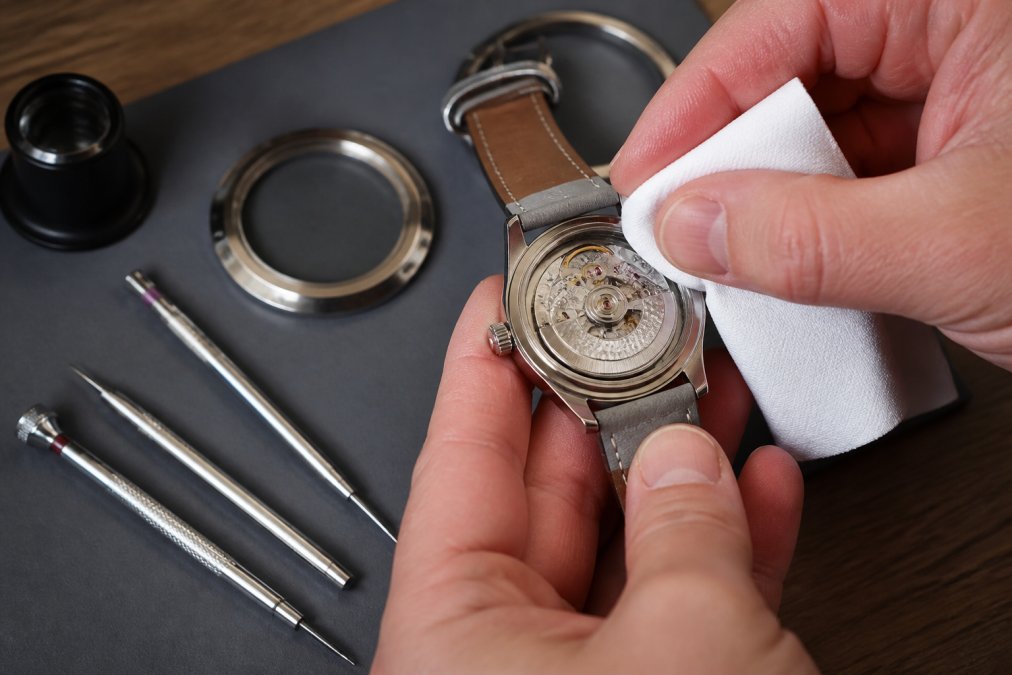
Daily care involves simple practices:
- Avoid extreme temperature exposure: Mechanical movements expand and contract with temperature changes. Avoid leaving your watch in direct sunlight for extended periods or exposing it to sudden temperature swings.
- Keep it away from magnetic fields: Strong magnets can magnetize the balance wheel and hairspring, causing timekeeping errors. Avoid placing your watch near speakers, power tools, or electronic devices that generate magnetic fields.
- Maintain water resistance: If your watch features water resistance, have the gaskets inspected every 2-3 years. Water ingress damages the movement irreversibly.
- Wind it regularly if you don't wear it daily: If you remove your automatic watch for more than a few days, the rotor stops winding and the mainspring depletes.
Professional servicing should occur every 5-10 years, depending on wear patterns and environmental exposure (the American Academy of Dermatology). During service, a qualified watchmaker disassembles the movement, cleans each component in specialized solvents, inspects for wear, replaces gaskets and seals, and reassembles the movement with proper lubrication. This process restores the watch to factory specifications and extends its lifespan significantly.
The cost of professional service varies based on movement complexity and the watchmaker's expertise. A simple three-hand automatic typically costs $300-600 for complete servicing, while complications like calendar mechanisms command higher fees due to the additional labor required.
Evaluating Value: Movement Servicing Costs and Long-Term Investment
The true cost of ownership for an artisanal automatic watch extends well beyond the initial purchase price. Unlike quartz watches, which require battery replacement every few years, mechanical watches demand periodic professional servicing that can represent a significant ongoing expense.
A complete movement service typically costs between $300 and $1,200 depending on movement complexity and the watchmaker's location and reputation (peer-reviewed research). A simple three-hand automatic falls toward the lower end of this range, while a watch featuring complications commands premium service rates. If you own your watch for 30 years and service it every 7 years, you'll invest $1,200-4,800 in maintenance alone.
This calculation matters when evaluating value. A $1,350 watch like Haim Watch Company's Legacy Automatic requires periodic servicing to maintain function. Over a 30-year ownership period, the total cost of ownership approaches $2,550-6,150 when you factor in professional maintenance.
However, the value proposition shifts when considering resale potential and personal satisfaction. A well-maintained artisanal automatic watch often retains 60-80% of its original value after 10 years, particularly if the brand has established collector appeal. A quartz watch typically depreciates to 20-30% of its original value in the same timeframe. For collectors and enthusiasts, the mechanical watch's superior retention, combined with the satisfaction of owning a hand-crafted timepiece, justifies the higher ownership costs.
The key evaluation metric is your intended relationship with the watch. If you view it as a functional tool to be worn daily and eventually replaced, a quality quartz watch offers better economics. If you see it as a long-term companion piece that you'll service, maintain, and potentially pass to the next generation, the artisanal automatic watch becomes a more compelling investment.
Finding Your Perfect Artisanal Timepiece
Selecting an artisanal automatic watch requires balancing aesthetic preference, movement complexity, case material, and budget. The process differs significantly from choosing a mass-produced watch because each piece carries the watchmaker's individual perspective and often features limited production runs.
Start with movement philosophy: Do you prefer the simplicity and reliability of a three-hand automatic with date, or does the added complexity of a complication (calendar, moonphase, chronograph) appeal to you? Simpler movements cost less, require simpler servicing, and offer more predictable long-term ownership costs.
Consider case material and finishing: Stainless steel offers durability and lower maintenance requirements. Titanium provides lighter weight and superior corrosion resistance but costs more. Hand-finished cases require occasional polishing to maintain their appearance, while brushed finishes hide wear more effectively than polished ones.
Evaluate dial design: Artisanal watches distinguish themselves through dial decoration. Applied numerals, hand-painted elements, and engine-turned Guilloche patterns create visual depth that changes with lighting conditions. Prefer dials that appeal to you personally; you'll wear this watch for years.
Test the brand's transparency: Request high-resolution movement photos, ask about assembly location and sourcing, and review third-party coverage. Brands confident in their work provide detailed documentation and accommodate reasonable questions about authenticity and provenance.
Understand the return policy: Since you cannot try the watch in person before purchase, confirm that the brand allows a reasonable inspection period (typically 14-30 days) with full refund if the watch doesn't meet expectations.
Haim Watch Company offers several entry points into artisanal ownership. The Descent at $625 provides accessible entry with distinctive design and a proprietary "Duo-Bezel" combining timer and rotating bezel functions. The Legacy Automatic at $1,349.99 represents their flagship three-hand automatic with custom Caliber HWC-1 and US assembly. The Annum at $2,149.99 introduces their custom calendar complication with Caliber HWC-2 for collectors seeking additional complexity.
| Watch Model | Price | Movement | Key Feature | Best For |
|---|---|---|---|---|
| Descent | $625 | Automatic | Duo-Bezel timer/rotating bezel | Accessible entry, sports aesthetic |
| Legacy Automatic | $1,349.99 | Custom HWC-1 | 100% US assembly and movement | Collectors seeking domestic craftsmanship |
| Annum | $2,149.99 | Custom HWC-2 | Calendar and moonphase complication | Enthusiasts wanting functional complexity |
Buying an artisanal automatic watch online requires accepting that you cannot inspect the piece in person before committing financially. This risk diminishes significantly when you choose a brand demonstrating transparency through detailed documentation, third-party verification, and reasonable return policies. Haim Watch Company's commitment to hand-finished cases, custom-designed calibers, and 100% US assembly for their Legacy line positions them as a compelling choice for collectors seeking genuine artisanal craftsmanship backed by verifiable manufacturing practices. Explore their collection at Haim Watch Company's curated timepieces, review the detailed movement photography and assembly documentation they provide, and select a piece that resonates with your personal aesthetic and horological values.
Frequently Asked Questions
What defines an artisanal automatic watch?
An artisanal automatic watch combines hand-finished components with custom-engineered movements created by independent watchmakers. Unlike mass-produced timepieces, artisanal watches feature bespoke calibers, ornate dial designs, and meticulous movement finishing. They emphasize horology and craftsmanship. Each piece reflects the watchmaker's heritage and precision, making it a limited edition or bespoke creation rather than a factory-standard timepiece.
How can I verify the authenticity of a luxury watch purchased online?
Request detailed provenance documentation, including movement photos, case serial numbers, and caliber specifications. Reputable artisanal watchmakers provide certificates of authenticity and movement finishing details. Check for hand-finished components like guilloche patterns on the dial and movement plates. Ask about the watchmaker's heritage and featured press coverage, Haim Watch Company, for example, has been featured in Worn & Wound. Verify the movement assembly location and request high-resolution images of the caliber before purchase.
What are the benefits of buying US-assembled mechanical watches?
US-assembled mechanical watches offer transparent manufacturing, shorter supply chains, and direct accountability from the maker. Brands like Haim Watch Company assemble 100% of their Legacy Automatic movement and case domestically, ensuring quality control and supporting local craftsmanship. You gain access to the watchmaker directly for servicing and warranty support. These timepieces often feature custom-designed calibers unavailable in imported alternatives, and you can verify assembly authenticity more easily than with overseas production.
How do custom calibers affect the value and performance of an automatic watch?
Custom calibers increase both horological value and long-term investment potential. A bespoke movement like Caliber HWC-1 or HWC-2 offers proprietary features, such as custom calendar modules, that distinguish the watch from standard ETA-based alternatives. Custom calibers require specialized servicing, which affects maintenance costs but also supports the watchmaker's ecosystem. They directly impact resale value among collectors who prize unique mechanical specifications. The movement's finishing quality, oscillation rate, and complication design determine precision and reliability over decades of wear.
This article was written using GrandRanker