

Table of Contents
- Understanding Quality Finishing in Watches
- Hand-Finished vs Machine-Finished Watches
- Inspecting the Case and Hardware
- The Dial: Where Finishing Truly Shines
- Watch Movement Finishing Techniques
- The Hand-Feel Test and Tactile Quality
- Lifecycle Cost and Repairability
- Red Flags That Signal Poor Finishing
Last Updated: August 26, 2026
Understanding Quality Finishing in Watches
The difference between a mass-produced watch and a hand-finished timepiece lies in details most people never examine closely. Quality finishing transforms a functional instrument into an object worthy of admiration. It's the distinction between a watch that merely tells time and one that tells a story of craftsmanship.
Finishing encompasses everything from how a case is polished to how movement components are decorated. These aren't cosmetic flourishes added after the fact, they're integral to how a watch is constructed and perceived. When you understand what separates quality finishing from shortcuts, you gain insight into what makes certain timepieces command respect among collectors and enthusiasts.
At Haim Watch Company, finishing quality determines whether a watch becomes a treasured companion or a forgotten drawer ornament. The ornate dial designs and hand-finished titanium cases represent a commitment to finishing. This guide walks you through the specific techniques and inspection methods that reveal true craftsmanship.
Hand-Finished vs Machine-Finished Watches
Hand-finished watches require artisans to complete finishing work by hand, often using traditional techniques passed down through generations. Machine-finished watches rely on automated processes that prioritize speed and consistency over individual attention to detail.
The practical difference emerges in how surfaces respond to light. Hand-finished cases display subtle variations in texture and polish that catch the eye differently depending on angle and lighting. Machine-finished cases tend toward uniform, predictable surfaces that can feel sterile by comparison.
Hand-finishing introduces what horologists call "character", small imperfections that prove human involvement. A perfectly uniform surface, while technically precise, often signals automated production. This doesn't mean machine finishing is inferior; it means the two approaches serve different purposes and price points.
The labor intensity of hand-finishing makes it incompatible with high-volume production. A single artisan might complete just a handful of watch cases per day, compared to machines processing dozens per hour (the American Academy of Dermatology). This reality explains why hand-finished watches command premium prices and why collectors seek them out.
When examining a watch, look for evidence of intentional hand work: slight irregularities in polishing patterns, variations in surface texture, and signs that finishing was applied with purpose rather than programmed precision. These marks authenticate the craftsmanship investment.
Inspecting the Case and Hardware
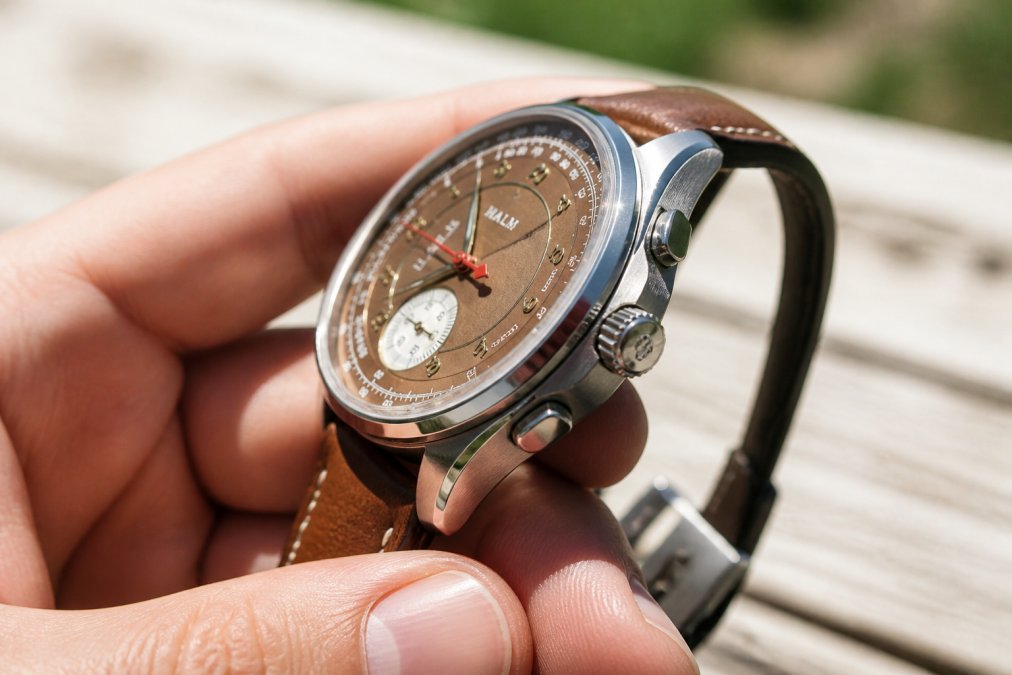
The case is your first opportunity to assess finishing quality. Hold the watch under bright, direct light and examine every surface methodically. Rotate it slowly, watching how light plays across polished and brushed areas.
Evaluating Surface Finish and Polishing
Polished surfaces should display mirror-like reflectivity with sharp, defined edges where they meet brushed areas. Quality polishing creates depth, the surface feels like it recedes rather than sitting flat. Run your finger across a polished surface; it should feel smooth without being slippery, indicating proper technique rather than aggressive buffing that removes material too quickly.
Brushed surfaces deserve equal scrutiny. The grain pattern should run consistently in one direction, creating linear texture rather than random scratches. Poor brushing looks chaotic, with grain running multiple directions or showing evidence of correction attempts. Quality brushed finishes display meditative consistency, proof of careful hand application.
The transition between polished and brushed areas reveals finishing precision. Quality watches show clean boundaries where different finishes meet. Sloppy finishing bleeds one finish into another, creating muddy transition zones. Look for sharp demarcation lines, these indicate masking was applied carefully before polishing or brushing began.
Checking Edges and Chamfering
Chamfering, the beveling of edges, transforms a watch from industrial to refined. Examine the case edges under magnification. Quality chamfering creates consistent, angled surfaces that catch light uniformly. The angle should be deliberate and purposeful, not varying randomly around the case.
Poor chamfering appears as uneven bevels or edges that weren't chamfered at all. Some budget watches skip this step entirely, leaving sharp edges that feel cheap and look unfinished. Quality chamfering requires time and skill, which is why it serves as a reliable quality indicator.
Run your fingertip along case edges carefully. Quality chamfering feels smooth and intentional. Rough edges, inconsistent beveling, or sharp points signal corners cut during finishing. The lugs, the protrusions that hold the watch band, deserve particular attention, as they're visible from multiple angles and reveal whether finishing was thorough or rushed.
Assessing Hardware Durability
Buttons, crowns, and bezels are functional elements that also communicate finishing quality. Press the crown (the knob used to wind the watch) and feel for smooth operation without play or looseness. Quality finishing extends to internal tolerances; a well-finished crown operates with precision.
Examine the crown's surface texture. Quality finishing should be consistent with the case, if the case is polished, the crown should match. Mismatched finishes between case and crown suggest components from different suppliers weren't integrated carefully. Look for sharp transitions and clean edges where the crown meets the case.
Bezels, the rotating ring on sports watches, should turn smoothly with audible clicks if it's a timing bezel. Quality finishing means the bezel mechanism operates without grinding or catching. The bezel's surface should match the case in finishing style and quality.
The Dial: Where Finishing Truly Shines
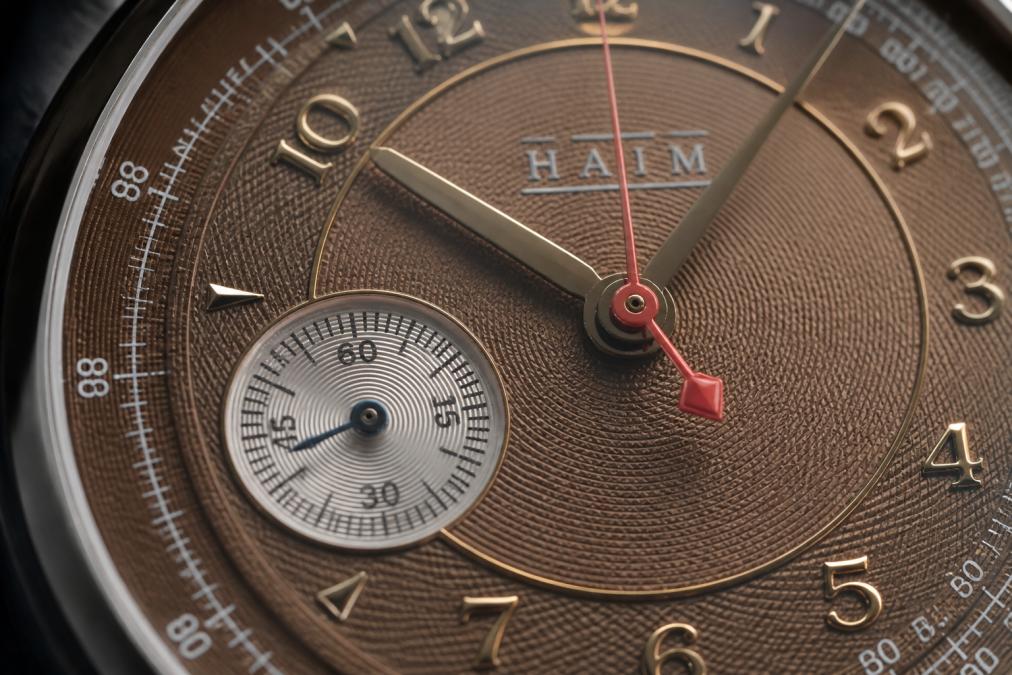
The dial is where finishing transcends function and becomes art. This is where a watch brand expresses its design philosophy and technical capability. Quality dial finishing separates watches that inspire from those that merely inform.
Guilloche and Decorative Techniques
Guilloche is a pattern created by rotating an object against a cutting tool, producing hypnotic, repetitive geometric designs. Quality guilloche appears in watch dials as either sunburst or wave patterns. Examine the pattern under magnification, lines should be perfectly parallel and evenly spaced. Inconsistent spacing or wandering lines indicate the guilloche was applied hastily or with worn tooling.
Sunburst guilloche radiates from the center, creating the illusion of light emanating from the dial. Wave guilloche creates concentric patterns. Both require precision tooling and careful execution. The depth of the guilloche matters; shallow patterns look printed rather than mechanically cut. Quality guilloche creates visible shadows that enhance the three-dimensional effect.
Applied elements, numerals, indices, and logos affixed to the dial surface, must align perfectly with the dial's design. Look for consistent spacing and proper orientation. Misaligned applied elements signal quality control failures. These elements should sit flush against the dial without gaps or tilting.
Applied Elements and Alignment
Applied numerals and hour markers are luxury watch hallmarks. Quality application means each element sits perfectly perpendicular to the dial surface with no tilting or lifting. Examine them from multiple angles; they should look identical from any viewing position.
The adhesive used to secure applied elements should be invisible. Any visible glue residue indicates sloppy finishing. Quality watches conceal the mechanical aspects of assembly, making the dial appear as one unified composition rather than assembled components.
The contrast between applied elements and the dial background should be sharp and intentional. If a dial features applied Breguet numerals, a classic design element, the numerals should display the same finishing quality as the dial itself. Cheap applied elements look obviously affixed; quality elements appear integral to the dial design.
Watch Movement Finishing Techniques
The movement, the internal mechanism that powers the watch, deserves finishing attention equal to the case and dial. Many watch buyers never see the movement, yet movement finishing represents a commitment to quality that extends beyond visibility.
Anglage and Beveling
Anglage refers to the beveling of movement plates and bridges, the metal components that hold the watch's internal parts. Quality anglage creates sharp, consistent bevels along component edges. These bevels serve both aesthetic and functional purposes; they reduce stress concentration at sharp edges and create visual interest when the case back is transparent.
Examine movement anglage under magnification if possible. Quality bevels should be uniform in angle and depth. Inconsistent beveling signals rushed finishing. The bevels should catch light uniformly, creating a sense of order and precision.
Polishing of movement components should match the finishing philosophy established by the case and dial. Some watches feature bright-polished movements; others feature brushed components. The key is consistency, all polished surfaces should match, and all brushed surfaces should display the same grain pattern.
Perlage and Grain Finishing
Perlage is a decorative technique that creates a pearl-like texture on movement components (peer-reviewed research). It's applied using a specialized tool that creates overlapping circular patterns. Quality perlage appears as uniform, evenly-spaced circles creating a mesmerizing texture. Poor perlage looks random or incomplete, with circles of varying sizes or spacing.
Grain finishing creates linear texture similar to brushed case surfaces. The grain should run consistently across components, indicating careful hand application. Inconsistent grain patterns suggest the finishing was rushed or applied by someone lacking skill.
These decorative techniques serve no mechanical function, they exist purely to demonstrate craftsmanship. Their presence indicates the manufacturer values finishing enough to invest in decorative elements visible only to enthusiasts who open the case back. This commitment to invisible quality often correlates with quality in visible areas.
The Hand-Feel Test and Tactile Quality
Beyond visual inspection, quality finishing reveals itself through touch. Hold the watch and notice how it feels. Quality finishing creates surfaces that feel intentional and refined rather than rough or unfinished.
Run your fingertip across the case. Quality polishing creates a smooth surface without being slippery. The transition between polished and brushed areas should be sharp and distinct. Poorly finished watches feel inconsistent, with rough spots or areas that weren't finished completely.
Press the crown and buttons. Quality finishing means these elements operate smoothly without grinding or resistance. Loose, rattling buttons signal poor finishing and quality control. The crown should wind smoothly and screw down (if it's a screw-down crown) without binding.
Feel the bezel rotation if the watch has one. Quality finishing means smooth operation with satisfying clicks at each hour marker. Grinding, catching, or loose movement indicates corners were cut during finishing and assembly.
The weight and balance of the watch communicate finishing quality. A well-finished watch feels substantial and balanced on the wrist. Cheap watches often feel hollow or unbalanced, suggesting internal finishing was neglected.
Lifecycle Cost and Repairability
Quality finishing extends a watch's lifespan and influences repair costs. A well-finished watch ages gracefully, developing a patina that enhances rather than detracts from its appearance. Poor finishing deteriorates visibly, with polishing wearing unevenly and brushed surfaces showing damage easily.
Consider the cost-per-wear calculation over a watch's lifetime. A well-finished watch from Haim Watch Company, like the Legacy Automatic at $1,350, might be worn for decades. That cost amortizes to mere dollars per year, making the initial investment reasonable for a piece that maintains its appearance and function.

Repairability matters for long-term value. Quality finishing means replacement components are available and repairs can be completed without compromising the watch's integrity. Watches with poor finishing often become unrepairable once components fail, as replacements won't match the original finishing quality.
The L2 Chronograph at $489 demonstrates that quality finishing isn't exclusive to premium price points. This watch delivers finishing quality that justifies its cost through durability and aesthetic appeal. The newly designed case seamlessly blends brushed and polished surfaces with chamfered edges, exemplifying finishing techniques that extend the watch's lifespan.
Red Flags That Signal Poor Finishing
Certain finishing flaws immediately reveal quality compromises. Sharp, unchampfered edges indicate the manufacturer skipped finishing steps. Inconsistent polishing or brushing patterns suggest rushed work or inadequate quality control. Misaligned applied dial elements prove finishing oversight.
Visible glue residue on the dial or case signals sloppy assembly. Quality watches conceal mechanical aspects completely. Gaps between case components or between the case back and case indicate poor finishing tolerances.
Rattling internal components audible when shaking the watch suggest loose screws or poor finishing tolerances. Quality watches operate silently, with all internal components secured precisely. Grinding sounds when operating the crown or bezel indicate finishing problems with mechanical tolerances.
Uneven aging is a red flag for poor finishing. A watch that polishes unevenly after a year of wear likely had shallow polishing applied initially. Quality polishing penetrates deeply enough to resist wear and maintain its appearance long-term (the American Academy of Dermatology).
The most reliable red flag is inconsistency. Quality watches display unified finishing philosophy across all components. Mismatched finishes between case and crown, or inconsistent dial element alignment, prove the manufacturer didn't maintain finishing standards throughout production.
Quality finishing separates watches that become heirlooms from those destined for the drawer. It demands investment in time, skill, and precision, elements that can't be rushed or automated without compromise. When you examine a watch systematically using these techniques, you develop the ability to recognize genuine craftsmanship. Haim Watch Company's commitment to hand-finished titanium cases and ornate dial designs reflects this philosophy: finishing isn't decoration, it's the foundation of a watch worth wearing for life. Explore the collection at Haim Watch Company to experience how quality finishing elevates everyday timekeeping into something extraordinary.
=== FAQ ANSWERS (audit these too, same rules) ===
[1] Q: What is the difference between machine and hand finishing on watches? A: Hand finishing involves skilled artisans using traditional techniques to polish, bevel, and decorate watch components. Machine finishing applies automated processes that are consistent but lack the subtle refinement of hand work. Hand-finished watches show individual character, slight variations in anglage depth, perlage patterns, and surface texture. Machine-finished pieces are uniform but often appear flat. High-quality finishing combines both: machines handle initial work, then craftspeople refine details. This blended approach, seen in watches like the Legacy Automatic, delivers precision with artisanal character.
[2] Q: How does movement finishing affect the value of a watch? A: Movement finishing directly impacts a watch's perceived quality, collectibility, and resale value. Visible finishing techniques like anglage, perlage, and hand-polished bridges signal investment-grade craftsmanship. Collectors and enthusiasts pay premiums for watches with finished movements because they demonstrate the maker's commitment to quality beyond what the naked eye sees. A custom-engineered caliber with hand-finished components justifies higher prices than standard movements. Finishing also indicates durability, beveled edges reduce wear on moving parts, and polished surfaces make wear patterns visible, allowing owners to assess service needs. Watches with poor finishing often depreciate faster because they signal mass-production shortcuts.
[3] Q: What are the most common types of watch finishing techniques? A: The primary finishing techniques include anglage (beveled edges that catch light), perlage (a pearlescent grain pattern), sunburst (radial brushing), and polishing. Guilloche involves decorative patterns cut into dials or bridges. Blasting creates matte surfaces, while brushing produces linear grain. Engraving adds personalized detail. Each technique serves aesthetic and functional purposes. Anglage protects edges from damage, while perlage hides fingerprints. High-quality watches combine multiple techniques on a single component, the Legacy Automatic, for example, features hand-finished titanium cases with chamfered edges and ornate dial decoration, demonstrating mastery of several finishing methods.
[4] Q: How can you tell if a watch dial has high-quality finishing? A: Examine the dial under bright light from multiple angles. High-quality finishing shows depth and dimension, applied elements like numerals and indices sit proud of the surface, casting shadows. Guilloche patterns should have crisp, consistent lines without wavering. Color should be even and rich, without splotches or fading. Check that applied elements are perfectly aligned and secured firmly. Run your finger across the surface; quality dials feel smooth without rough edges or paint drips. Poor finishing shows uneven color, loose applied elements, misaligned printing, and flat appearance under light. The ornate dial designs on Haim watches, recognized by Worn & Wound for their exceptional depth and detail, exemplify high-quality finishing that catches the eye repeatedly.
[5] Q: Why is anglage considered a hallmark of quality finishing? A: Anglage, beveling the edges of watch components at precise angles, requires significant skill and time. It's expensive to execute well, so its presence signals that a maker invested in quality. Functionally, beveled edges reduce sharp points that can catch and damage other parts during assembly and wear. Aesthetically, anglage catches light beautifully, creating visual depth and highlighting the three-dimensional quality of the case and movement. Mass-produced watches skip anglage to save cost and labor. When you see consistent, crisp beveling across a case or movement bridges, you're looking at a watch built for longevity and aesthetics, not just timekeeping.
[6] Q: What should you look for when inspecting watch case finishing? A: Start by examining the transition between brushed and polished surfaces. On quality watches, these meet cleanly without overlap or rough edges. Feel the case edges, they should be smooth and slightly beveled, not sharp. Look at polished surfaces under light; they should reflect evenly without scratches or dull spots. Check the lugs, bezel, and caseback for consistent finishing. Brushed surfaces should have uniform grain direction. Inspect the crown and pushers for tight fit and smooth operation. On hand-finished titanium cases like those on the Legacy Automatic, you'll notice subtle variations that prove human craftsmanship. Poor finishing shows uneven polishing, visible tool marks, and rough transitions between surfaces.
[7] Q: How can I assess quality finishing if I'm buying a watch online? A: Request high-resolution photos taken under different lighting conditions, bright light, diffused light, and at angles. Ask for macro close-ups of the dial, case edges, and visible movement components. Check the brand's documentation and certifications for finishing details. Read detailed customer reviews from experienced collectors. Look for brand transparency about construction methods; Haim Watch Company's documentation of 100% US assembly and custom-engineered calibers demonstrates commitment to verifiable quality. Watch unboxing videos and detailed reviews that show the watch under magnification. Request a video call with the seller or brand representative to see the watch in person before committing. Many quality makers offer extended return windows specifically because they trust their finishing will impress in person.
Frequently Asked Questions
Q: What is the difference between machine and hand finishing on watches?
A: Hand finishing involves skilled artisans using traditional techniques to polish, bevel, and decorate watch components. Machine finishing applies automated processes that are consistent but lack the subtle refinement of hand work. Hand-finished watches show individual character, slight variations in anglage depth, perlage patterns, and surface texture. Machine-finished pieces are uniform but often appear flat. High-quality finishing combines both: machines handle initial work, then craftspeople refine details. This blended approach, seen in watches like the Legacy Automatic, delivers precision with artisanal character.
Q: How does movement finishing affect the value of a watch?
A: Movement finishing directly impacts a watch's perceived quality, collectibility, and resale value. Visible finishing techniques like anglage, perlage, and hand-polished bridges signal investment-grade craftsmanship. Collectors and enthusiasts pay premiums for watches with finished movements because they demonstrate the maker's commitment to quality beyond what the naked eye sees. A custom-engineered caliber with hand-finished components justifies higher prices than standard movements. Finishing also indicates durability, beveled edges reduce wear on moving parts, and polished surfaces make wear patterns visible, allowing owners to assess service needs. Watches with poor finishing often depreciate faster because they signal mass-production shortcuts.
Q: What are the most common types of watch finishing techniques?
A: The primary finishing techniques include anglage (beveled edges that catch light), perlage (a pearlescent grain pattern), sunburst (radial brushing), and polishing. Guilloche involves decorative patterns cut into dials or bridges. Blasting creates matte surfaces, while brushing produces linear grain. Engraving adds personalized detail. Each technique serves aesthetic and functional purposes. Anglage protects edges from damage, while perlage hides fingerprints. High-quality watches combine multiple techniques on a single component, the Legacy Automatic, for example, features hand-finished titanium cases with chamfered edges and ornate dial decoration, demonstrating mastery of several finishing methods.
Q: How can you tell if a watch dial has high-quality finishing?
A: Examine the dial under bright light from multiple angles. High-quality finishing shows depth and dimension, applied elements like numerals and indices sit proud of the surface, casting shadows. Guilloche patterns should have crisp, consistent lines without wavering. Color should be even and rich, without splotches or fading. Check that applied elements are perfectly aligned and secured firmly. Run your finger across the surface; quality dials feel smooth without rough edges or paint drips. Poor finishing shows uneven color, loose applied elements, misaligned printing, and flat appearance under light. The ornate dial designs on Haim watches, recognized by Worn & Wound for their exceptional depth and detail, exemplify high-quality finishing that catches the eye repeatedly.
Q: Why is anglage considered a hallmark of quality finishing?
A: Anglage, beveling the edges of watch components at precise angles, requires significant skill and time. It's expensive to execute well, so its presence signals that a maker invested in quality. Functionally, beveled edges reduce sharp points that can catch and damage other parts during assembly and wear. Aesthetically, anglage catches light beautifully, creating visual depth and highlighting the three-dimensional quality of the case and movement. Mass-produced watches skip anglage to save cost and labor. When you see consistent, crisp beveling across a case or movement bridges, you're looking at a watch built for longevity and aesthetics, not just timekeeping.
Q: What should you look for when inspecting watch case finishing?
A: Start by examining the transition between brushed and polished surfaces. On quality watches, these meet cleanly without overlap or rough edges. Feel the case edges, they should be smooth and slightly beveled, not sharp. Look at polished surfaces under light; they should reflect evenly without scratches or dull spots. Check the lugs, bezel, and caseback for consistent finishing. Brushed surfaces should have uniform grain direction. Inspect the crown and pushers for tight fit and smooth operation. On hand-finished titanium cases like those on the Legacy Automatic, you'll notice subtle variations that prove human craftsmanship. Poor finishing shows uneven polishing, visible tool marks, and rough transitions between surfaces.
Q: How can I assess quality finishing if I'm buying a watch online?
A: Request high-resolution photos taken under different lighting conditions, bright light, diffused light, and at angles. Ask for macro close-ups of the dial, case edges, and visible movement components. Check the brand's documentation and certifications for finishing details. Read detailed customer reviews from experienced collectors. Look for brand transparency about construction methods; Haim Watch Company's documentation of 100% US assembly and custom-engineered calibers demonstrates commitment to verifiable quality. Watch unboxing videos and detailed reviews that show the watch under magnification. Request a video call with the seller or brand representative to see the watch in person before committing. Many quality makers offer extended return windows specifically because they trust their finishing will impress in person.
This article was written using GrandRanker