

Table of Contents
- What Is a Manufacture Movement and Why It Matters
- The Real Benefits of In-House Movements vs Outsourced Calibers
- Watch Movement Reliability Comparison: In-House vs Outsourced
- The Cost of In-House vs Outsourced Watch Movements
- The Modified Movement Middle Ground
- What to Ignore When Comparing Watch Movements
- Conclusion: Choosing the Right Movement for Your Collection
- Frequently Asked Questions
Last Updated: October 3, 2026
What Is a Manufacture Movement and Why It Matters
A manufacture movement is a caliber designed, engineered, and assembled in-house by the watch brand itself, rather than purchased from an external supplier, and it is the clearest example of the value of in-house movements. This distinction sits at the center of the benefits of in-house watch movements vs outsourced options, because it determines who controls quality, design, and long-term service.
At Haim Watch Company, we build our Legacy Automatic around a custom-designed caliber and 100% US assembly, a deliberate choice that shapes everything from finishing standards to how easily the watch can be serviced years down the road.
The term comes from the French manufacture, meaning a factory where a brand produces its own movements rather than buying them pre-made. In horology, that word carries real weight.
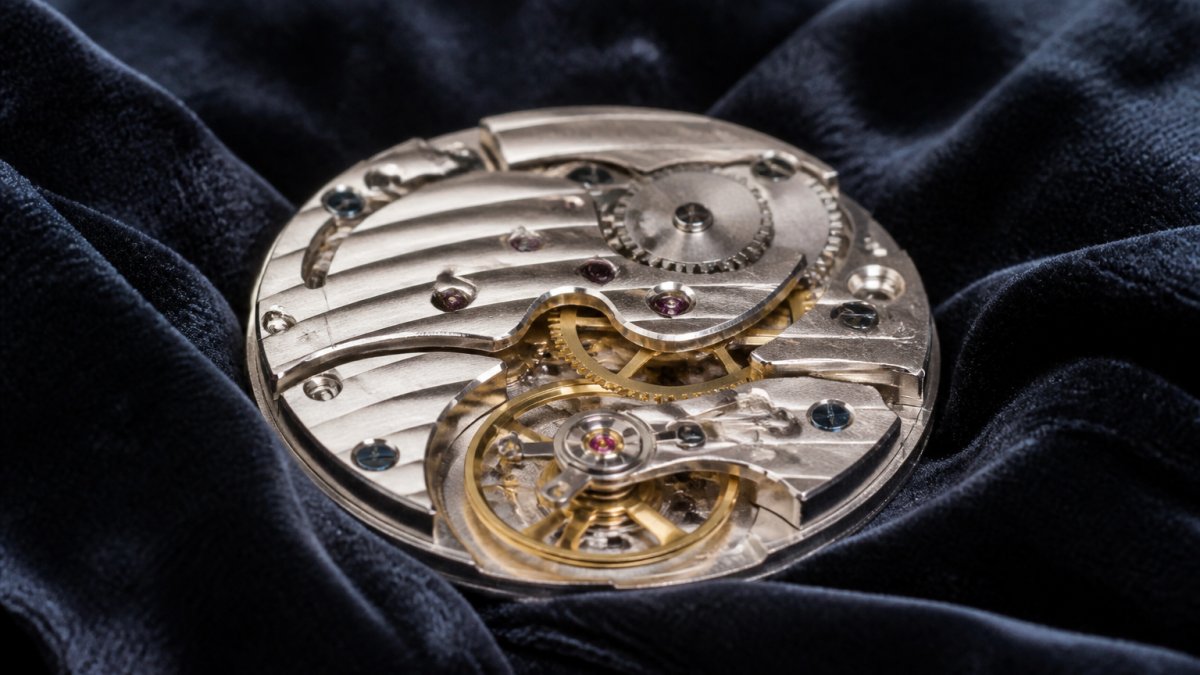
The Difference Between a Manufacture Caliber and a Modified Ébauche
An ébauche is a partially assembled movement kit that a brand buys and then finishes, decorates, or modifies. A true manufacture caliber is built from the ground up.
That gap matters more than marketing suggests. A modified ébauche can be excellent, and many respected watches use one. But the brand is working within someone else's architecture. A manufacture caliber lets a brand tune oscillation, power reserve, and caliber architecture to its own design goals.
The Real Benefits of In-House Movements vs Outsourced Calibers
The core benefit of an in-house movement is control. When a brand makes its own caliber, it sets the manufacturing standards, the finishing, and the tolerances rather than accepting whatever a supplier offers.
That control shows up in three places: quality consistency, design freedom, and long-term parts availability. A supplier can change or discontinue a movement, leaving owners stranded.
There's a trade-off worth naming. In-house production costs more to set up, and not every brand that claims "in-house" truly builds from scratch. Some assemble purchased components and call it proprietary. That's the part most buyers miss.
Vertical Integration and Quality Control
Vertical integration means a brand controls more of its own supply chain, from component sourcing to final assembly. More integration usually means tighter quality control.
When one team oversees assembly and finishing, defects get caught earlier. When a brand outsources, quality depends on a supplier relationship it may not fully control.
Proprietary Design and Horological Value
A proprietary caliber lets a brand create something no one else has. That's where horological value lives: a movement designed for a specific watch, not adapted to fit one.
For collectors, this is the difference between a watch that feels considered and one that feels assembled from a catalog. Innovation in complications, finishing, and architecture all depend on owning the design.
Watch Movement Reliability Comparison: In-House vs Outsourced
For a watch movement reliability comparison, the honest answer is that both can be reliable, and both can be disappointing. Reliability depends far more on execution, regulation, and quality control than on who owns the factory.
What actually determines how a movement behaves over years of wear:
- Tolerance control during assembly. A movement built to tight tolerances holds its rate longer between services. Loose tolerances show up as positional variation, where the watch runs fast on the wrist and slow on the nightstand.
- Escapement and balance quality. The escapement, balance wheel, and hairspring are where accuracy is won or lost. A well-made outsourced caliber with a free-sprung balance can outperform a rushed in-house design with a cheaper regulator.
- Regulation standard. Movements are typically regulated to a range of daily rate deviation. A chronometer-grade caliber is certified to a tighter band than a standard-grade one, regardless of who built it.
- Shock and magnetic resistance. Anti-shock settings and anti-magnetic components (like a silicon hairspring or a soft-iron cage) matter more to real-world reliability than the in-house label.
| Factor | In-House Movement | Outsourced Movement |
|---|---|---|
| Quality control | Brand-controlled end to end | Depends on supplier and brand's incoming inspection |
| Parts availability | Brand-managed; may be restricted | Often widely stocked by independents |
| Design freedom | High; architecture built for the watch | Limited to the supplier's platform |
| Upfront cost | Higher | Lower |
| Serviceability | Varies; often brand-only | Frequently supported by local watchmakers |
| Regulation ceiling | Set by the brand | Set by the supplier's grade |
| Brand prestige | Strong story | Weaker story |
The practical takeaway: judge the specific movement, not the category. A chronometer-grade outsourced caliber can outperform a mediocre in-house one, and a well-executed in-house caliber can beat a generic outsourced platform on both rate stability and finishing.
The Independent Watchmaker Test
One of the most useful reliability questions is also the least asked: can a local independent watchmaker service this movement?
- Widely used outsourced calibers are the friendliest. Parts are stocked, service manuals circulate, and many independents can turn the watch around in weeks without shipping it across the country.
- Proprietary in-house calibers often require a return to the brand or an authorized service center. That means longer waits, higher labor rates, and parts that may not be released to independents at all.
- Modified ébauche movements are a mixed bag. The base platform may be well supported, but any custom module, rotor, or finishing the brand added can only be replaced by the brand.
This is where the reliability conversation and the ownership conversation meet. A movement that runs beautifully but cannot be serviced locally is, in practice, less reliable to own than one that runs slightly less precisely but can be fixed down the street.
The Cost of In-House vs Outsourced Watch Movements
The cost of in-house vs outsourced watch movements cuts two ways. In-house development demands serious investment in tooling, engineering, assembly lines, and the watchmakers who run them, and that cost reaches the buyer. Outsourced movements lower the entry cost because the brand skips that development and buys a proven platform instead.
For a buyer, the question is whether the premium buys something real: better finishing, a unique design, or stronger long-term support. That last one is where the money actually lives, and it is the part most comparisons skip.
Long-Term Cost of Ownership and Serviceability
Here is the angle most guides ignore: the long-term cost of ownership. Serviceability and parts availability decide what a watch costs you over ten or twenty years, and they often matter more than the sticker price.
A mechanical watch is not a one-time purchase.
- Widely used outsourced calibers are the easiest to live with. Independent watchmakers stock the gaskets, mainsprings, balance staffs, and reverser wheels, and many can service the watch in-house without shipping it anywhere. Turnaround is often measured in weeks.
- Proprietary in-house calibers frequently require a return to the brand or an authorized service center. That can mean longer waits, higher labor rates, and parts that are only released to approved partners. Some brands will not sell components to independent watchmakers at all.
- Modified ébauche movements sit in between. The base platform may be widely supported, but any custom rotor, module, or finishing that the brand added can only be replaced by the brand itself.
A common pattern is that the service bill for a proprietary caliber runs meaningfully higher than for a comparable outsourced one, not because the work is harder but because the parts channel is narrower.
A common mistake is buying on the movement label alone. A proprietary caliber with no independent parts channel can become expensive or impossible to service if the brand changes direction, discontinues the line, or is acquired. Always check who can service the watch before you commit, and ask specifically whether independent watchmakers can buy parts.
What to Ask Before You Buy
Before you commit to any watch, get straight answers to four questions:
- Who is authorized to service this movement, and can independent watchmakers buy parts?
- What is the recommended service interval, and what does a standard service typically include?
- If the brand discontinues this caliber, what is the plan for owners?
- Are consumable parts like gaskets, crystals, and mainsprings still in production?
The answers tell you more about the real cost of ownership than any spec sheet.
The Modified Movement Middle Ground
The "modified" movement is the middle ground most guides ignore. It starts as a purchased ébauche that a brand then finishes, decorates, and tunes to its own standards.
This approach blends cost-effectiveness with real customization. A brand gets a proven base and adds its own finishing, regulation, and design touches.
It's not a lesser choice by default. Many respected watches use modified movements to hit a price point while still offering genuine horological character. The key is honesty: a brand should say what it modified and why.
What to Ignore When Comparing Watch Movements
Ignore brand prestige as a proxy for quality. A famous name doesn't guarantee a better movement, and a smaller brand can deliver excellent engineering.
Also ignore the assumption that "in-house" always wins. The category is real, but execution decides the outcome. A well-tuned outsourced or modified caliber can beat a rushed in-house one.
What actually matters: manufacturing standards, finishing quality, parts availability, and who can service the watch. Judge those, and the marketing fades into the background.
Conclusion: Choosing the Right Movement for Your Collection
Choosing a movement comes down to what you value: a unique proprietary design with strong brand support, or a proven outsourced caliber with easy service. Both are valid. The mistake is choosing on the label instead of the details.
At Haim Watch Company, our custom-designed calibers and 100% US-assembled Legacy Automatic exist for collectors who want horological value and hand-finished craftsmanship in a single piece. Our Swiss-made Viajero SE and hand-finished titanium cases carry the same commitment to precision.
Explore the collection and find the movement that fits your journey. Worn & Wound watch reviews and industry coverage
Frequently Asked Questions
What are the primary advantages of an in-house watch movement?
In-house movements offer several key benefits. They allow brands to control quality at every stage, from design to assembly, which can lead to higher precision and finishing standards. They also enable unique features like proprietary complications and custom caliber architecture. For collectors, an in-house movement often represents greater horological value and brand prestige, as it demonstrates a deeper commitment to watchmaking heritage and innovation. This vertical integration can also improve long-term parts availability and serviceability.
Are outsourced movements less reliable than in-house calibers?
Not necessarily. Many outsourced movements, such as those from ETA or Sellita, are proven, robust designs with excellent reliability and widespread parts availability. The watch movement reliability comparison is not about in-house versus outsourced as a rule, but about the specific execution, manufacturing standards, and quality control applied by the brand. A well-finished and properly regulated outsourced caliber can be just as precise and dependable as an in-house one, especially for everyday wear.
How does an in-house movement affect the resale value of a watch?
An in-house movement can positively influence resale value, particularly for established brands with a strong reputation for horological innovation. Collectors often place a premium on proprietary calibers because they are unique to the brand and cannot be easily replicated. However, resale value also depends heavily on brand prestige, model demand, and overall market trends. It adds a layer of distinctiveness that can appeal to enthusiasts.
Do outsourced movements make watches more affordable for consumers?
Yes, using outsourced movements can significantly reduce production costs, which often translates to more accessible pricing for consumers. Brands that purchase base movements from suppliers like ETA or Sellita avoid the substantial research, development, and tooling expenses required to create a caliber from scratch. This cost-effectiveness allows microbrands and entry-level luxury watches to offer features like automatic winding, chronometer certification, or complications at a lower price point. However, the final cost also reflects the brand's finishing, case materials, and assembly standards.
The real challenge in watch collecting isn't finding a movement with a good story. It's finding one backed by genuine craftsmanship and long-term support. Haim Watch Company builds custom-designed calibers, offers 100% US assembly on the Legacy Automatic, and finishes each titanium case by hand. Shop now and find a timepiece made to be part of your journey.