

Table of Contents
- Lorier Watches vs Independent Microbrands: The 2026 Spec Sheet
- Price-to-Performance: Where the Money Actually Goes
- Microbrand Watch Value Retention: What the Secondary Market Says
- How to Choose a Microbrand Watch: A Buyer's Framework
- US-Assembled Watch Brands and the American-Made Question
- Style Versatility: Wearing a Microbrand Watch Beyond the Office
- Long-Term Ownership: What Five Years With a Microbrand Looks Like
- Conclusion: Picking the Right Microbrand for Your Collection
- Frequently Asked Questions
Last Updated: September 24, 2026
Lorier Watches vs Independent Microbrands: The 2026 Spec Sheet
The independent microbrand watch market has matured, and Lorier Watches vs independent microbrands now comes down to concrete specs rather than brand loyalty. At Haim Watch Company, we build watches in this exact tier. Lorier wins on approachable vintage styling and low entry pricing; brands like Haim Watch Company compete on movement engineering, case finishing, and limited-run scarcity. Below, seven objective criteria.

How We Compared: Seven Objective Criteria
We scored each brand type on price-to-performance, movement selection, case finishing, production scale, secondary market behavior, serviceability, and wrist fit, all verifiable on a spec sheet or your own wrist.
At-a-Glance: What Each Brand Type Delivers
| Criterion | Lorier-Style Approach | Independent Engineering-Led Brands |
|---|---|---|
| Entry price | Lower | Higher |
| Movement | Off-the-shelf automatics | Custom or modified calibers |
| Case material | Steel | Steel, titanium |
| Production | Larger runs | Limited, numbered |
| Resale behavior | Modest | Stronger on scarce references |
| Serviceability | Broad parts access | Brand-dependent |
| Best for | First mechanical watch | Collectors wanting differentiation |
Price-to-Performance: Where the Money Actually Goes
Price-to-performance is the most misunderstood metric in microbrand collecting: a lower price is not better value if the movement inside is a generic unit you could find anywhere.
Movement Selection and Caliber Reliability
Off-the-shelf automatic calibers are reliable, well-documented, and cheap to service. Engineering-led independents separate themselves with custom calibers, which allow unique complications and tighter finishing. The trade-off: a proprietary caliber usually means the brand services it, so after-sales support becomes part of the purchase decision.
Case Finishing and Build Quality
Case finishing is where you can judge a microbrand in ten seconds under good light: the transition between brushed and polished surfaces, the chamfered edges, and whether bezel action feels consistent through its full rotation. Hand-finished titanium sits at the top of this tier; stamped steel with minimal surface variation at the bottom.
Microbrand Watch Value Retention: What the Secondary Market Says
Microbrand watch value retention depends far more on production numbers than brand age. A well-regarded reference produced in the thousands trades near retail used; a numbered run of a few dozen pieces often trades above it.
Where Microbrand Watches Actually Trade
Most microbrand secondary activity happens on three venues: enthusiast forums with for-sale sections, Reddit's r/Watchexchange, and general marketplaces like eBay and Chrono24. Forum and Reddit sales clear fastest because the buyer pool is informed and the seller is usually a known community member. eBay and Chrono24 reach a wider audience but carry higher fees and slower sell-through, a watch that moves in days on a forum can sit for months on a general marketplace at the same ask.
Limited Production and Drop Models
Drop models create scarcity by design. When a dial variant is capped at a small number of pieces and each caseback is individually numbered, the secondary market has something to price; when a brand restocks indefinitely, resale softens. A numbered caseback gives buyers a verifiable supply ceiling, and that ceiling lets a used listing command a premium over retail.
Resale Value and Market Liquidity
Market liquidity matters more than headline resale prices. A watch that sells in a week at a fair price is a better asset than one listed for months at an inflated ask. Thin production runs help, but only with a genuine collector community behind them.
Three signals indicate real liquidity:
- Active owner community. If owners post wrist shots, trade straps, and discuss service experiences, there is a pool of future buyers.
- Consistent sold prices. When completed sales cluster in a narrow band rather than swinging wildly, the market has found its level.
- Brand communication. Brands that publish production numbers, restock plans, and service policies give the secondary market the information it needs to price confidently.
What Depresses Resale
Several factors reliably push microbrand resale below retail: open-ended production with no stated cap, frequent dial or colorway refreshes that fragment demand, unclear service policies that scare off secondhand buyers, and brands that go silent after a launch. A watch with no parts pipeline and no brand presence is difficult to sell at any price, because the buyer inherits the same risk the seller is trying to exit.
How to Choose a Microbrand Watch: A Buyer's Framework
Choosing a microbrand watch comes down to four questions: what movement is inside, who services it, how it fits your wrist, and whether the production run is small enough to hold interest.
Serviceability and Parts Availability
Serviceability is the most overlooked factor in microbrand ownership. Before buying, confirm the service interval, whether the brand stocks replacement parts, and whether an independent watchmaker can work on the caliber. A beautiful watch with no parts pipeline becomes a paperweight.
Wrist Fit: Lug-to-Lug Distance and Case Thickness
Lug-to-lug distance decides whether a watch wears well, not case diameter. A 38mm case with short, hollowed lugs can fit a smaller wrist better than a 36mm case with long lugs. Case thickness matters for cuff clearance: around 10.5mm slides under a shirt cuff, while thicker cases catch on fabric.
US-Assembled Watch Brands and the American-Made Question
US-assembled watch brands occupy a distinct position in this market. Assembly and movement production on American soil is rare, and brands that do it tend to be smaller and more expensive than imported counterparts.
Style Versatility: Wearing a Microbrand Watch Beyond the Office
Style versatility determines how often a watch actually leaves the box. A vintage-inspired sports watch on a leather strap moves between desk and dinner without looking borrowed from either.
Long-Term Ownership: What Five Years With a Microbrand Looks Like
Most microbrand content stops at the unboxing. The more useful question is what the watch looks like after two or three years of daily wear, and what it costs to keep it running.
How the Watch Ages
Stainless steel cases accumulate micro-scratches on brushed surfaces and hairlines on polished flanks, normal and largely reversible with a refinish. Titanium scratches similarly but develops a duller, more uniform patina many owners prefer, and is harder to polish back to a factory look without specialized equipment.
Service Intervals and What They Cost
Mechanical watches generally need a full service every five to seven years, or sooner if timekeeping drifts noticeably or winding feels gritty. Off-the-shelf automatic calibers, the ETA, Sellita, Miyota, and Seiko families common in this tier, can be serviced by a wide range of independent watchmakers, and many are cheap enough that a watchmaker may recommend a movement swap over a full overhaul.
Parts Availability and the Independent Watchmaker Question
Off-the-shelf calibers have broad parts availability through watchmaking supply channels, so an independent watchmaker can usually source what they need. Proprietary calibers depend entirely on the brand stocking parts, and if the brand folds, those parts may become unobtainable.
Whether the Design Still Holds Up
The brands that survive usually have a clear design language rather than a rotating catalog of trend-chasing releases. Five years in, the watches people still wear are the ones that looked distinctive on day one. Vintage-inspired sports watches with restrained dials age well because they never chased a trend; busy, trend-driven designs date faster and get rotated out of the box.
The Ownership Math
Add it up before you buy: purchase price, one service, several straps, and the risk premium of a proprietary caliber versus an off-the-shelf one. A lower sticker price on a watch with a custom movement and no independent service path can cost more over five years than a slightly pricier watch with a widely serviceable caliber, a trade-off most buyers only discover after the first service bill.
Conclusion: Picking the Right Microbrand for Your Collection
The hard part is not finding a microbrand. It is finding one whose movement, finishing, and production run still make sense five years from now, when the watch is just part of your rotation.
Frequently Asked Questions
Are Lorier watches good quality compared to independent microbrands?
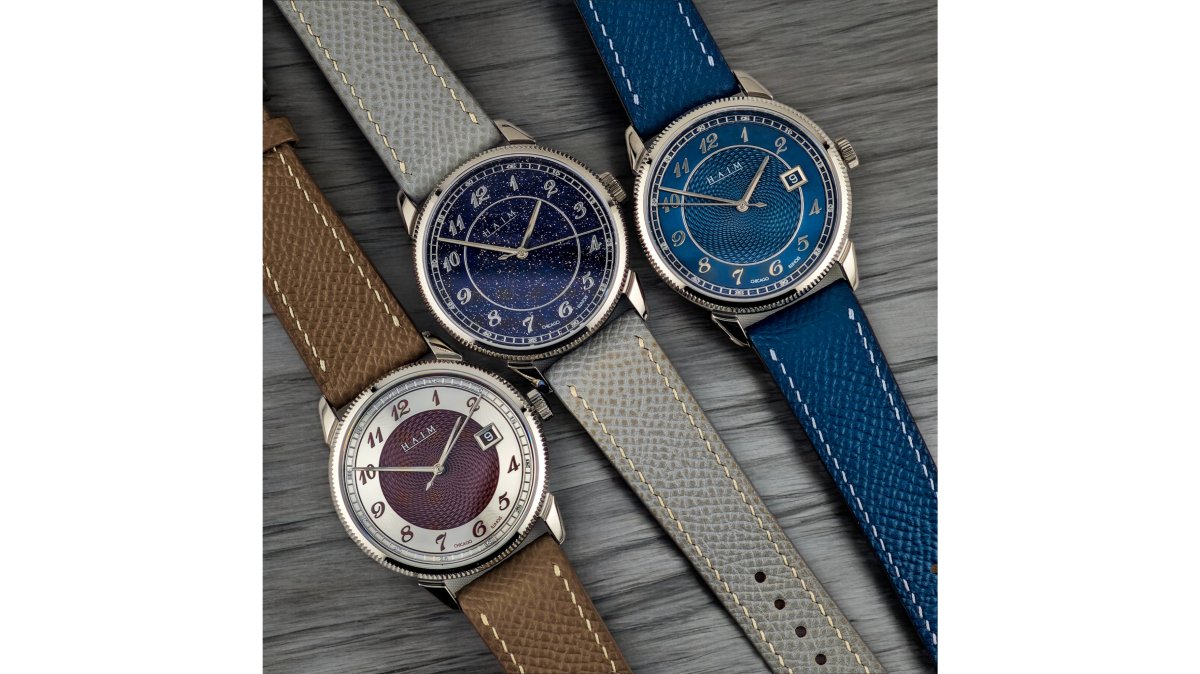
Lorier has built a solid reputation for vintage-inspired design and reliable automatic movements, and most owners report good everyday performance. The gap shows up in finishing and movement specification. Lorier watches typically use stock automatic calibers, while some independent microbrands now offer custom-designed movements and hand-finished cases. For example, the Legacy Automatic from Haim Watch Company uses a custom caliber and a hand-finished titanium case at $1,350, with each dial limited to 50 pieces. Compare case finishing, movement type, and water resistance rating side by side before deciding.
Are microbrand watches worth buying in 2026?
They can be, if you buy for the watch rather than the logo. Microbrands compete on design, materials, and limited production instead of advertising budgets, so your money goes further into the case, dial, and movement. The trade-offs are thinner after-sales support and less predictable resale value. Look for brands that publish caliber details, offer serviceable movements, and keep production limited enough that your watch stays distinctive. A $489 L2 Chronograph with a VK64 caliber and chamfered case is a reasonable entry point; a $2,149.99 Annum with a custom calendar module and moonphase sits at the other end.
How do I evaluate microbrand watch value retention before buying?
Start with production numbers. A dial limited to 50 pieces, like the Legacy Automatic, or 25 pieces, like the Legacy Automatic: Azure, creates scarcity that supports resale. Then check movement serviceability: a widely serviced caliber keeps repair costs predictable, which buyers factor into resale. Finally, look at the brand's release cadence. Frequent, high-volume drops dilute value; slower, numbered releases hold it better. No microbrand guarantees liquidity, so treat retention as a bonus rather than the reason to buy.
What should I look for when comparing independent watch brands?
Build a short checklist: case material and finishing, movement origin and serviceability, water resistance rating, lug-to-lug distance and case thickness for wrist fit, and whether the brand publishes real specifications. For US-assembled watch brands, ask what percentage of the watch is actually assembled domestically, including the movement. Haim Watch Company states the Legacy Automatic is 100% US assembled, movement included, which is a specific claim you can verify. Vague heritage language is a warning sign; published specs are not.
Do microbrand watches work for casual, everyday wear?
Yes, and case dimensions decide it more than styling. A 38mm case with a 20mm lug width and 10.5mm thickness, like the Legacy Automatic, slides under a shirt cuff and reads clean with a t-shirt or a sweater. The Descent takes the opposite approach: a brushed steel rotational Duo-Bezel combining a 60-minute timer and GMT, plus 200m of water resistance, so it handles swimming and travel. Pick based on your week, not your wardrobe. If you dress casually most days, a slimmer case and a leather strap will feel more natural than a thick sports profile.