

Table of Contents
- Why Collectors Seek Vortic Watch Alternatives
- Heritage and Railroad Era Horology in Modern Timepieces
- Mechanical Movement Restoration and Custom-Engineered Calibers
- Best Watch Movements for Conversion and Bespoke Services
- How to Authenticate Vintage Watches Before Purchasing
- Vintage Pocket Watch Conversion Techniques and Standards
- Investment Value and Secondary Market Performance
- Conclusion
Last Updated: August 14, 2026
Why Collectors Seek Vortic Watch Alternatives
Collectors pursuing vortic watch alternatives are searching for something specific: timepieces that blend mechanical excellence with distinctive design, without the premium price tag or long wait times that come with established names. The market for independent watchmakers has expanded dramatically, offering serious enthusiasts access to custom-engineered movements, hand-finished cases, and bespoke complications that rival luxury Swiss production at a fraction of the cost.
The appeal runs deeper than affordability. Collectors want authenticity, watches built by artisans who understand horological heritage and can articulate why their design choices matter. They're tired of marketing narratives and want evidence: visible hand-finishing, transparent movement specifications, and verifiable craftsmanship standards. A watch from a microbrand like Haim Watch Company delivers exactly that: custom-designed calibers, hand-finished titanium cases, and the kind of dial decoration that catches light differently depending on how you move your wrist.

What makes vortic watch alternatives compelling is the intersection of accessibility and exclusivity. Limited production runs mean your watch won't appear on every collector's wrist. Custom-engineered movements ensure you're not wearing an off-the-shelf ETA caliber dressed up with a fancy dial. The secondary market for these pieces is still developing, which means prices remain rational, you're buying for passion, not speculation.
Heritage and Railroad Era Horology in Modern Timepieces
The railroad era established standards for precision timekeeping that still define watchmaking today. Pocket watches built for railroad conductors needed to be accurate within strict tolerances; a watch that lost or gained more than a few seconds per day could cause schedule failures and safety issues. This obsession with precision created a golden age of American watchmaking, when brands like Hamilton and Illinois produced movements of extraordinary refinement.
Modern timepieces drawing on this heritage aren't simply copying the past, they're reinterpreting it through contemporary manufacturing and design sensibilities. A watch like the Haim Watch Company Legacy Automatic honors that tradition by incorporating hand-finished details and custom-designed calibers that echo the meticulous standards of railroad-grade movements. The 38mm case size, the coin-edge bezel, and the exhibition caseback all reference vintage proportions while delivering modern reliability.
What collectors appreciate about heritage-focused design is the intentionality behind every detail. The dial decoration on these timepieces, whether guillochéed surfaces, applied numerals, or hand-drawn elements, serves no functional purpose beyond aesthetics. That's precisely why it matters. A movement that's beautiful enough to display through a caseback suggests the maker cares about every component, not just the ones visible from the wrist.
The horological heritage angle also means these watches age gracefully. A bronze patina that develops over years of wear becomes part of the watch's story. Scratches on a titanium case mark moments in time. This is the opposite of treating a watch as a disposable accessory, it's an object meant to accumulate meaning.
Mechanical Movement Restoration and Custom-Engineered Calibers
Vintage watch movements often require restoration before they can be trusted for daily wear. A pocket watch movement from the 1920s might keep time beautifully when freshly serviced, but without proper maintenance, it will eventually develop play in the pivots, allowing the balance wheel to wander. Restoration means disassembling the movement completely, replacing worn jewels, polishing pivots, and reassembling with fresh lubricants formulated for vintage specifications.
Custom-engineered calibers take this concept further. Instead of restoring an original movement, watchmakers design new movements inspired by vintage principles. These movements use modern materials and manufacturing tolerances while maintaining the visual language of classical horology. Hand-finishing, the process of polishing and decorating visible movement components, transforms a functional mechanism into something worth displaying.
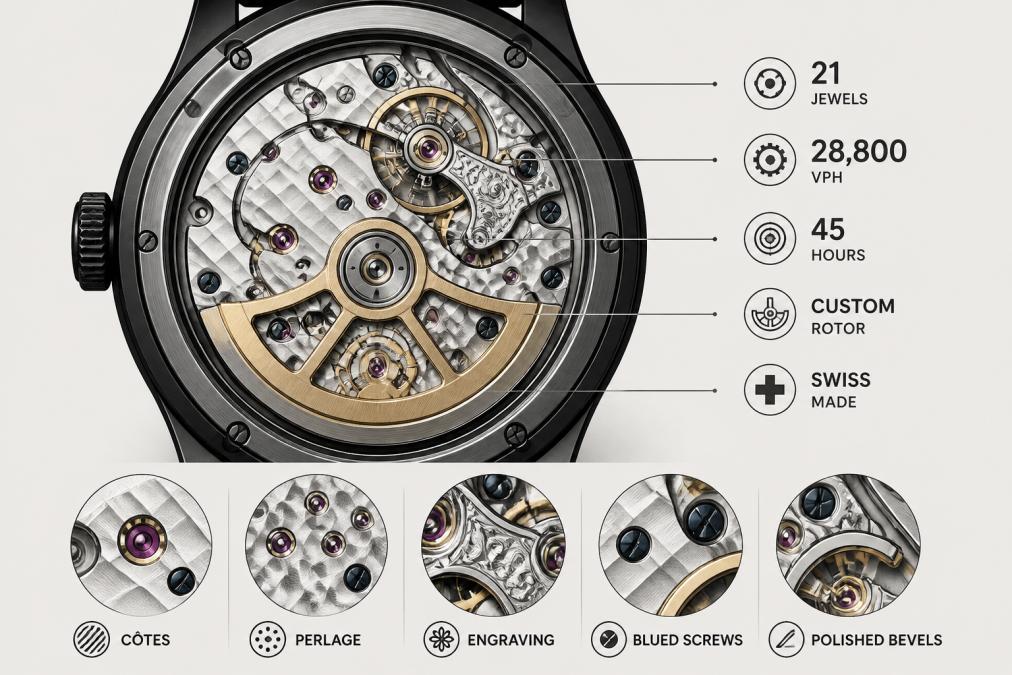
The difference between a mass-produced movement and a custom-engineered caliber becomes obvious when you examine the finishing. A standard ETA movement has functional beauty, clean lines, efficient design. A hand-finished custom caliber shows evidence of human judgment: beveled edges on bridges, circular graining on the mainplate, polished screw slots. Each decision adds production time and cost, which is why only independent makers and luxury brands pursue this level of detail.
Haim Watch Company's approach with their custom-designed calibers demonstrates this philosophy. The Legacy Automatic features Caliber HWC-1, a movement designed specifically for that watch. The Annum introduces Caliber HWC-2 alongside a custom mechanical calendar module. This isn't off-the-shelf engineering, it's bespoke caliber design that gives each watch a mechanical identity distinct from competitors.

The practical benefit of custom movements is reliability matched to intended use. A movement designed for a specific case geometry, balance weight, and mainspring strength will perform more consistently than a generic movement adapted to fit whatever case was available.
Best Watch Movements for Conversion and Bespoke Services
Selecting the right movement for a conversion project, transforming a pocket watch into a wristwatch, requires understanding movement dimensions, power reserve, and finishing standards. Not all vintage movements convert successfully. A movement designed to run for eight days in a pocket watch case might not fit a 38mm wristwatch lug width, or the balance wheel might require different regulation for wrist motion.
The most successful conversions use movements that were originally designed for precision. Railroad-grade movements from American manufacturers offer excellent starting points: they're strong, well-finished, and often equipped with jeweled bearings that suggest quality. Swiss movements from the mid-20th century, particularly chronographs and annual calendars, convert beautifully because they were engineered with tighter tolerances than many contemporaries.
Bespoke services extend beyond simple conversion. A skilled watchmaker can modify movement geometry, upgrade jeweling, or add complications like date windows or moonphase displays. This requires deep knowledge of movement architecture and the ability to work with materials at tolerances measured in fractions of a millimeter.
When evaluating conversion options, consider these factors:
- Movement diameter: Pocket watch movements often exceed 35mm, requiring significant case modifications or custom case designs
- Jewel count: Higher jewel counts (17, 21, or more) indicate more pivot bearings, suggesting better precision and durability
- Finishing standard: Hand-finished movements command premium prices but reward careful examination
- Availability of parts: Vintage movements sometimes require custom-fabricated components if original parts are damaged
The investment in a proper conversion is substantial, often exceeding the cost of a new mass-produced watch. The value lies in owning a unique timepiece with mechanical integrity and aesthetic character that no factory can replicate.
How to Authenticate Vintage Watches Before Purchasing
Authentication protects you from counterfeits and misrepresented movements. A watch advertised as a railroad-grade Hamilton might actually be a commercial-grade variant with less precise regulation. A "Swiss movement" might be Swiss-assembled using non-Swiss components. These distinctions matter for both value and performance.
Start with movement inspection. Remove the caseback and examine the movement plate for maker's marks, serial numbers, and finishing quality. Genuine railroad-grade movements display consistent hand-finishing: beveled bridges, polished screw slots, and circular graining on the mainplate. Mass-produced movements show simpler finishing or no finishing at all.
Serial number research reveals production year and original specifications. Most major manufacturers maintained records, Hamilton, Elgin, and Illinois all documented their movements by serial number. Cross-referencing your movement's serial against these records confirms authenticity and original caliber designation.
Case examination follows movement authentication. Look for maker's hallmarks, material stamps (14K, 18K for gold; sterling for silver), and maker's marks. Counterfeit cases often show inconsistent stamping or incorrect hallmark formats. The case should show appropriate wear for its age, a 100-year-old case shouldn't look pristine.
Documentation strengthens authentication. Original boxes, warranty cards, or sales receipts provide provenance. Even without documentation, a watch's condition and movement specifications tell a coherent story. A watch claiming 1950s manufacture but showing 1930s-style finishing suggests misattribution.
Testing movement performance provides final confirmation. A genuine movement should regulate smoothly, maintain consistent rate, and respond predictably to regulation adjustments. Counterfeit movements often show erratic behavior, poor regulation response, or mechanical issues that suggest inferior manufacturing.
Vintage Pocket Watch Conversion Techniques and Standards
Converting a pocket watch to wristwatch format requires more than installing a movement in a smaller case. The conversion must address power delivery, motion dynamics, and aesthetic integration, each presenting distinct technical challenges.
Power reserve changes when a movement transitions from pocket to wrist. A pocket watch sits in a vest pocket, moving minimally. A wristwatch experiences constant motion, which winds the mainspring more aggressively. A movement designed for eight-day power reserve in a pocket might overwind in a wristwatch, potentially damaging the mainspring or balance wheel. Skilled converters address this by selecting movements with shorter power reserves or modifying mainspring specifications.
Motion dynamics differ fundamentally between formats. A wrist-worn watch experiences rotational motion in three dimensions. The balance wheel must regulate consistently regardless of wrist angle. A pocket watch movement might show acceptable rate variation in a vertical pocket that becomes problematic on a wrist. Testing a converted movement on a watch rate app (measuring beats per hour) reveals these issues before a watch reaches your wrist.
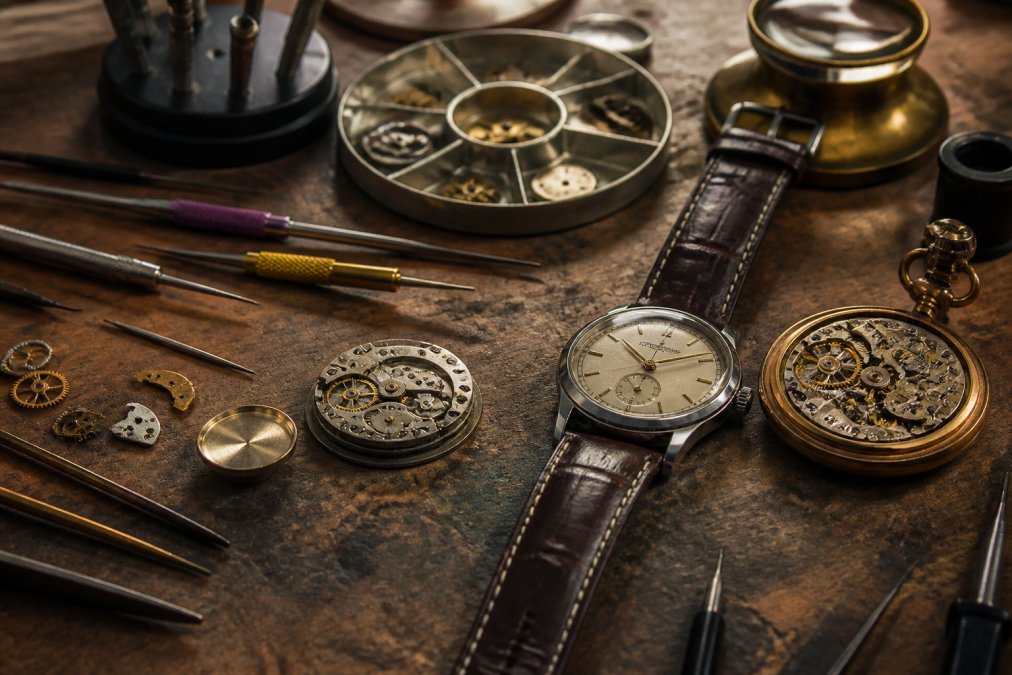
Case design for conversions offers two approaches: modifying an existing pocket watch case or commissioning a purpose-built wristwatch case. Modification preserves historical authenticity but limits wearability, pocket watch cases often exceed 45mm diameter, making them unwieldy on the wrist. Custom cases allow proper proportions (typically 36-40mm) while maintaining design language from the original movement era.
Lug attachment requires precision. A poorly executed lug installation can transmit case vibration to the movement, degrading timekeeping. Professional converters use custom-designed lugs that distribute force evenly across the case, protecting the movement from shock and vibration.
The aesthetic challenge lies in integrating a pocket watch dial into a wristwatch format. Pocket watch dials often feature ornate design elements, railroad minute markers, subsidiary seconds dials, or elaborate numerals, that demand visual space. A successful conversion respects these elements rather than cramming them into a smaller dial. Some converters enlarge the original dial design, others reinterpret it for wristwatch proportions.
Standards for conversion quality remain informal because conversions are inherently bespoke. However, professional converters maintain consistent practices: movements are fully serviced before installation, cases are tested for water resistance appropriate to intended use, and finishing standards match movement quality. A movement with hand-finished bridges deserves a case with equally refined finishing.
Investment Value and Secondary Market Performance
The secondary market for independent watchmaker timepieces is maturing rapidly. Five years ago, watches from microbrands were considered speculative. Today, certain pieces command significant premiums on the resale market, particularly limited editions with strong design credentials and documented provenance.
Several factors drive secondary market value. Limited production runs create scarcity, a watch limited to 50 pieces has more inherent rarity than a mass-produced model. Custom-engineered movements add value because they cannot be replicated or sourced elsewhere. Hand-finished cases and dials command premiums because they require artisan labor that becomes more expensive over time.
Aesthetic durability matters more than you might expect. A watch with timeless design proportions, 38mm case, classic dial layout, refined finishing, maintains appeal across market cycles. Trendy design choices that feel contemporary today often look dated within five years. The best independent makers design conservatively, drawing on horological heritage rather than chasing trends.
Documentation and condition preservation directly impact resale value. A watch with original box, warranty card, and service history commands a premium over an identical watch without documentation. Regular professional servicing, documented with service receipts, signals responsible ownership and preserves mechanical integrity.
The secondary market for vortic watch alternatives remains less developed than markets for established Swiss brands, which actually creates opportunity. Early adopters of quality independent maker watches often purchase below market value, then benefit as brand recognition increases. A Haim Watch Company timepiece purchased today at retail might appreciate significantly as the brand's reputation strengthens and secondary demand increases.
Collector psychology also influences value. Watches purchased as wearable art, objects meant to be worn, serviced, and passed forward, hold value differently than watches purchased as investment vehicles. A watch you genuinely wear develops patina and character that collectors often prefer to pristine condition. A watch that sits in a safe loses the intangible value that comes from being part of your life.
Conclusion
Finding the right vortic watch alternative means looking beyond brand recognition to mechanical substance. You're evaluating custom-engineered movements, hand-finished cases, and design integrity that reflects genuine horological knowledge. The best alternatives share a common philosophy: every component serves a purpose, every finishing choice reflects intention, and every watch tells a story worth wearing.
Haim Watch Company exemplifies this approach. The Legacy Automatic delivers 100% US assembly including the custom-designed Caliber HWC-1, hand-finished titanium cases, and dial decoration that punches well above its price point. The Viajero SE, their Swiss-made flagship, showcases how heritage design principles translate into contemporary watchmaking excellence. Each timepiece is built to be worn, serviced, and appreciated, not speculated upon.

Start your search by identifying what matters most: mechanical complexity, aesthetic refinement, or investment potential. Then examine how candidates address each criterion. A watch that checks every box on paper might feel wrong on your wrist. A watch that simply feels right when you wear it might exceed every technical specification you had in mind. Trust both the data and your instinct.
Frequently Asked Questions
What makes vortic watch alternatives worth considering for serious collectors?
Alternatives to Vortic watches offer distinct approaches to horological craftsmanship. Some emphasize 100% US assembly with custom-designed calibers, while others focus on Swiss-made precision or unique complications like complete calendars and moonphase displays. Collectors benefit from comparing movement quality, case finishing, dial aesthetics, and investment potential. The key is matching your priorities, whether that's American-made heritage, bespoke customization, or secondary market appreciation, with the right timepiece.
How do I authenticate vintage watches before investing in a conversion?
Authenticate vintage watches by examining movement markings, case hallmarks, and dial printing quality. Verify serial numbers against manufacturer records when available. Look for consistent wear patterns that match the watch's age, proper jeweling in the movement, and original components. Consult reference guides specific to the caliber and manufacturer. For high-value pieces, request documentation from reputable dealers or have the movement inspected by a certified watchmaker before committing to conversion work.
What are the best watch movements for conversion into wristwatch format?
Railroad-grade pocket watch movements like Elgin, Hamilton, and Waltham calibers are prized for conversions due to their robust construction, jeweled bearings, and reliable timekeeping. Modern alternatives use custom-engineered calibers or proven ETA movements. The best choice depends on your aesthetic goals, vintage movements offer historical character and patina, while custom calibers provide contemporary reliability and unique complications. Consider movement size, hand-wind versus automatic operation, and whether the caliber suits your desired case design.
Do custom-engineered watch movements hold their value better than standard movements?
Custom-engineered movements can enhance collectibility and resale value, particularly when paired with limited production runs, hand-finished aesthetics, and recognized artisan craftsmanship. Collectors value proprietary calibers that demonstrate technical innovation and design cohesion. However, value depends on brand reputation, production scarcity, condition, and market demand. Watches with proven secondary market performance and strong collector communities appreciate more reliably than speculative releases. Research comparable sales and brand longevity before purchasing.
This article was written using GrandRanker