

Table of Contents
- Understanding Luxury Watch Movement Manufacturers
- What Makes the Best Watch Movements Stand Out
- In-House Watch Movements vs. Third-Party Calibers
- Watch Movement Finishing and Craftsmanship
- Automatic Watch Movement Accuracy and Reliability
- Key Considerations When Evaluating Movement Manufacturers
- Frequently Asked Questions
Last Updated: October 17, 2026
Understanding Luxury Watch Movement Manufacturers
A watch movement, or caliber, is the mechanical heart that powers timekeeping, the gears, springs, and escapements that transform stored energy into precise seconds, minutes, and hours. Luxury watch movement manufacturers are the specialized companies that design and produce these mechanisms, from independent makers crafting movements from scratch to vertically integrated brands engineering calibers in-house. The distinction matters for collectors evaluating quality, heritage, and value.
At Haim Watch Company, we understand that the movement defines the watch. Our approach blends heritage with modern horological progress, whether through Swiss-made precision or 100% US-assembled innovation.
Most pages ranking "top luxury watch movement manufacturers" actually rank watch brands, a category error. A movement manufacturer designs and produces calibers; a watch brand sources, finishes, cases, and services them. The two overlap only when a brand is vertically integrated. This list ranks movement makers on movement-level criteria, not marketing prestige.
How the Five Were Selected
We applied five equally weighted criteria:
- Production capability and scale, annual output, breadth of caliber families, and ability to supply third parties or a full brand catalog.
- Technical innovation, escapement design, materials (silicon, anti-magnetic alloys), frequency, power reserve, and complications.
- Finishing and craftsmanship, hand-finishing, decoration consistency, and assembly/regulation discipline.
- Reliability and serviceability, field track record, parts availability, and qualified service networks.
- Industry influence, how widely the maker's calibers shape the market through supply, licensing, or technical standards.
The Five, Ranked
1. Rolex (in-house, vertically integrated). Rolex designs and produces its own movements in high volume and does not sell them to third parties.
2. ETA (specialist supplier, Swatch Group). ETA is the industry's dominant third-party movement supplier; its 2824- and 2892-family calibers underpin countless watches across price tiers.
3. Sellita (specialist supplier, independent). Sellita emerged as the primary ETA alternative after supply restrictions. Its SW200 and SW300 families are dimensionally compatible with ETA equivalents, making them easy to case and service.
4. Seiko Instruments / Seiko Watch Corporation (vertically integrated, with limited external supply). Seiko produces mechanical calibers at enormous scale, from entry-level 4R families to the high-beat 9S and Spring Drive lines.
5. Patek Philippe (in-house, vertically integrated). Patek Philippe designs and produces its own movements, including the CH 28-520 family and the 31-260 ultra-thin automatic.
What This Ranking Is Not
This is not a ranking of watch brands by prestige, nor a claim that an ETA or Sellita movement is inferior to an in-house caliber. Execution matters more than origin: a well-finished Sellita in a carefully regulated watch can outperform a poorly finished in-house caliber. The ranking reflects movement-level capability and industry role, not retail positioning.
What Makes the Best Watch Movements Stand Out
The finest luxury watch movements combine precision with artistry. A superior movement maintains accuracy within tight tolerances, typically within seconds per day. But precision alone doesn't define excellence. Hand-polished surfaces, beveled edges, and decorated components signal a maker invested time and skill beyond what functionality demands.
Reliability shapes reputation as well. A movement that runs consistently for decades speaks to engineering discipline and material quality. The best manufacturers use proven escapement designs, strong mainsprings, and carefully selected jewel counts, because a movement must survive years of wrist time, temperature swings, moisture, and shock while keeping its original character.
Heritage and innovation coexist in the best movements. Established manufacturers refine proven designs incrementally, knowing radical changes often introduce unforeseen problems, while pursuing genuine improvements: corrosion-resistant materials, escapement refinements, and finishing techniques that elevate aesthetics without compromising function.
In-House Watch Movements vs. Third-Party Calibers
The distinction between in-house movements and third-party calibers shapes the entire watch industry. An in-house movement is designed and produced by the brand itself, often with proprietary features and finishing that reflect the maker's philosophy.
Third-party movements, often called ETA movements or outsourced calibers, come from specialized suppliers like ETA and Sellita and are used across multiple brands.
The prestige hierarchy favors in-house movements, though the reality is more nuanced. A well-finished third-party movement in an expertly cased watch can outperform a poorly finished in-house caliber. Execution matters: meticulous finishing and excellent service demonstrate genuine commitment, while careless in-house production wastes the opportunity.
Vertical integration gives brands like Rolex, Omega, and Patek Philippe strategic advantages: movements optimized to specific cases and complications, supply chains ensuring parts availability for decades, and institutional knowledge that compounds over generations. Yet it demands enormous capital and manufacturing sophistication.
Watch Movement Finishing and Craftsmanship
Finishing transforms a functional mechanism into an object worthy of admiration. The finest luxury watch movement manufacturers apply hand-finishing techniques that add no mechanical value but unmistakable aesthetic impact.
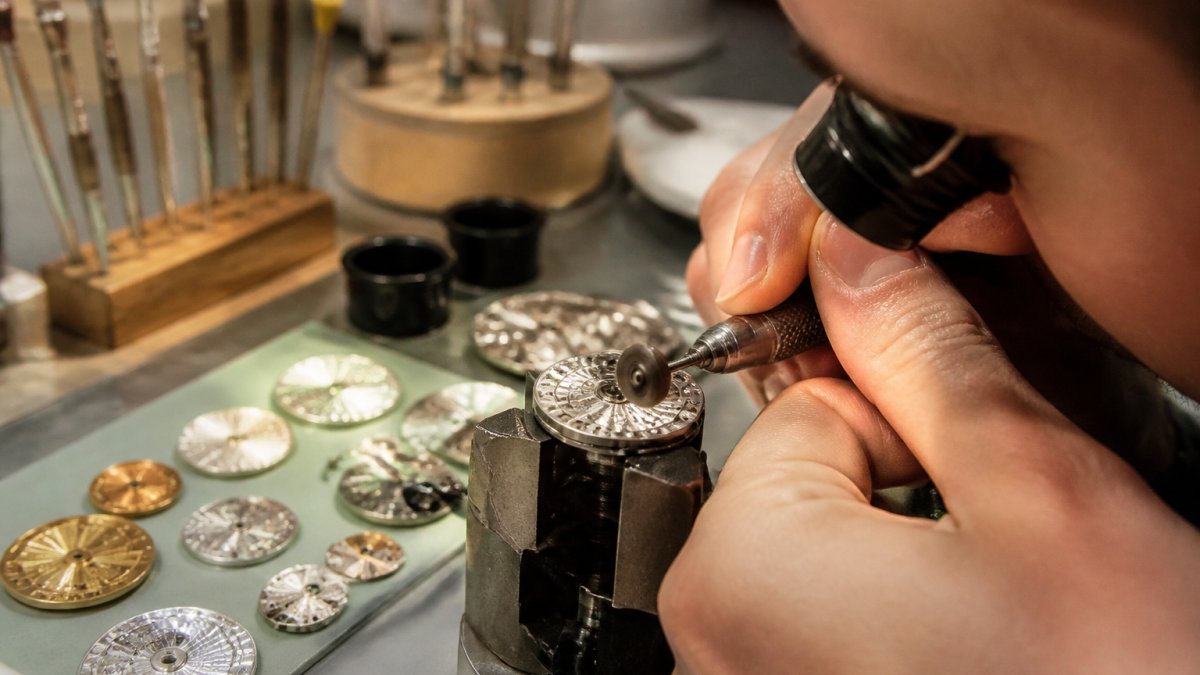
This finishing reflects philosophy. A brand that hand-finishes movements is saying: "We care about what you'll never see." Opening the caseback reveals the maker's true character: rushed finishing and visible tool marks signal indifference; meticulous work signals respect for the craft and the wearer.
The best manufacturers employ master finishers trained over years or decades, developing an intuition for angles, pressure, and technique that cannot be automated.
Craftsmanship extends beyond aesthetics to assembly and regulation. Precision assembly ensures components mesh perfectly, minimizing friction and wear, while careful regulation of the balance wheel and escapement demonstrates commitment to performance. The best manufacturers test movements extensively before casing them.
Automatic Watch Movement Accuracy and Reliability
Automatic watch movements power themselves through wrist motion, eliminating manual winding. A freely swinging weighted rotor transfers kinetic energy to the mainspring as you move, an elegant solution that lets watches run indefinitely with regular wear.
Accuracy in automatic movements depends on precise escapement function, balanced oscillation of the balance wheel, and consistent mainspring tension.
Reliability requires attention to materials and assembly. The balance wheel must oscillate at precisely 28,800 vibrations per hour (or 36,000 in higher-beat movements), and any deviation compounds into timing errors. Quality materials, tempered steel, jeweled bearings, hardened pivots, resist wear and maintain their original geometry.
Power reserve, how long a fully wound movement runs without motion, varies by design. Most automatic movements offer 38-48 hours, though some achieve 70+. A longer reserve keeps your watch running if you skip a day or two, but often requires larger mainsprings that introduce other complications.
Key Considerations When Evaluating Movement Manufacturers
Start by distinguishing movement manufacturers from watch brands. A movement manufacturer produces calibers; a watch brand sources, finishes, and cases movements (in-house or third-party). Understanding this difference prevents confusion when researching luxury watch movement manufacturers.
Compare Specifications, Not Slogans
The most useful comparison is a consistent specification table. The table below covers representative movement families from the five makers ranked above. Figures are typical published specifications; always confirm against the maker's current documentation, because grades and revisions vary.
| Maker | Representative Family | Frequency | Power Reserve (typical) | Accuracy Claim | Production Approach |
|---|---|---|---|---|---|
| Rolex | 3235 / 3135 | 28,800 vph | ~70 hours (3235) | COSC chronometer | In-house, high volume, not sold externally |
| ETA | 2824-2 / 2892-A2 | 28,800 vph | ~38-42 hours | Grades from Standard to Chronometer | Specialist supplier; finished movements and ébauches |
| Sellita | SW200-1 / SW300-1 | 28,800 vph | ~38-42 hours | Grades from Standard to Chronometer | Specialist supplier; ETA-compatible architecture |
| Seiko | 4R / 6R / 9S; Spring Drive | 21,600-28,800 vph; 9S high-beat | Varies by family; Spring Drive ~72 hours | In-house standards; Spring Drive very high accuracy | Vertically integrated; limited external supply |
| Patek Philippe | CH 28-520 / 31-260 | 28,800 vph | Varies by caliber | Patek Philippe Seal | In-house; not sold externally |
Use the table to ask the right questions. A 28,800 vph movement is the modern standard; 21,600 vph trades some smoothness for longer service life and lower wear. A 70-hour power reserve reduces the need for a winder but often requires a larger mainspring and barrel. A chronometer claim means multi-position testing; a maker's own seal may be stricter or simply different.
Serviceability and Parts Availability
A movement is only as good as its support infrastructure. ETA and Sellita calibers are widely serviced by independent watchmakers, with parts broadly available through distributors. Rolex, Seiko, and Patek Philippe movements are typically serviced through brand-controlled networks, higher cost and longer turnaround, but factory-trained technicians and genuine parts.
Ask three questions before buying:
- Who can service it? If only the brand can, plan for brand service intervals and pricing.
- Are parts available? ETA-compatible architectures (including Sellita) have the widest independent parts access.
- What is the recommended service interval? Many modern calibers are rated for longer intervals than older designs, but wrist time, moisture exposure, and shock history matter more than the calendar.
Ownership Costs Beyond the Purchase Price
Movement-level value is not the same as retail price. Two watches at similar prices can carry very different long-term costs depending on service network, parts availability, and whether the movement is a proven family or a new design. A proven ETA or Sellita family typically offers predictable service costs and broad independent options; a brand-controlled in-house movement may cost more to service but can offer tighter factory support.
Heritage, Transparency, and Track Record
Examine the movement's history. Has this caliber been in production for years with consistent field reports? Established families benefit from refinement and parts availability. Newer movements may offer innovation but carry higher uncertainty. Makers confident in their movements publish detailed specifications; those hiding them often have reason to do so.
| Consideration | What to Evaluate | Why It Matters |
|---|---|---|
| Movement Type | In-house vs. third-party | Affects exclusivity, support, and long-term value |
| Accuracy Standard | Chronometer-certified or maker seal | Determines real-world timekeeping performance |
| Finishing Quality | Hand-polished surfaces and decoration | Reflects craftsmanship and attention to detail |
| Power Reserve | Hours of operation without motion | Influences practical daily use and convenience |
| Parts Availability | Replacement components and service support | Ensures long-term reliability and repairability |
| Heritage | Years in production and brand reputation | Indicates proven performance and market confidence |
Evaluating luxury watch movement manufacturers requires looking beyond marketing claims to actual construction, finishing, and support. The best movements combine proven accuracy with meticulous craftsmanship, hand-finished details that reveal a maker's true commitment to quality. When you choose a watch, you're choosing a movement first, and that movement will be with you for decades.
At Haim Watch Company, we've built our reputation on this philosophy. Our Swiss-made Viajero SE and 100% US-assembled Legacy Automatic each feature custom-designed calibers and ornate dial designs that blend heritage with modern horological progress.
Frequently Asked Questions
What is the difference between an in-house movement and a third-party movement?
In-house movements are designed and manufactured by the watch brand itself, offering complete control over caliber specifications, finishing, and quality standards. Third-party movements are purchased from external suppliers like ETA or Sellita. In-house movements typically command premium pricing because they reflect a brand's proprietary engineering, heritage, and craftsmanship. Third-party movements reduce production costs and allow smaller brands to focus on case design and finishing. Both can deliver precision and reliability, but in-house movements often signal vertical integration and brand prestige.
What makes a luxury watch movement high quality?
High-quality luxury watch movements combine precision, durability, and finishing excellence. Key indicators include accuracy within -4 to +6 seconds per day for mechanical watches, adequate power reserve (typically 40+ hours for automatic movements), jeweled bearings (17+ jewels indicates quality construction), and hand-finished components like perlage and côtes de Genève. Reliability depends on escapement design, balance wheel frequency, and material selection. Premium finishing, visible through exhibition case backs, reflects the caliber's overall construction quality and the manufacturer's commitment to horological standards.
Why do some watch brands design their own movements instead of using standard calibers?
Brands develop proprietary movements to differentiate themselves, achieve specific performance goals, and build long-term heritage. Custom-engineered calibers allow manufacturers to integrate unique complications, optimize power reserve, and create distinctive aesthetics that reflect brand identity. In-house production also provides supply-chain independence and the ability to offer comprehensive after-sales service. For luxury and microbrand manufacturers, proprietary movements justify premium positioning and foster collector loyalty. However, developing movements requires significant investment in R&D, tooling, and skilled horologists, making this approach viable primarily for established or well-funded brands.
Are Swiss-made watch movements better than movements made elsewhere?
Swiss-made movements carry prestige and strict quality standards enforced by Swiss law, which requires 50% of manufacturing costs and final assembly to occur in Switzerland. This heritage creates consistency and accountability. However, quality depends more on the specific manufacturer and caliber design than geography alone. High-quality movements are now produced in Germany, Japan, and the United States by independent watchmakers and established manufacturers. What matters most is the movement's precision specifications, finishing standards, serviceability, and the brand's commitment to quality control, factors that transcend origin.