

Table of Contents
- Why Collectors Consider Alternatives to Standard Swiss Movements
- Japanese Watch Movements: Precision and Reliability Beyond Switzerland
- In-House Watch Movements: The Case for Custom Calibers
- Sellita vs ETA Movements: Understanding the Standard Swiss Baseline
- Mechanical Watch Movement Reliability: What Actually Matters
- German and Other National Watchmaking Traditions
- How to Choose: Movement Comparison and Selection Criteria
- Frequently Asked Questions
Last Updated: October 12, 2026
Why Collectors Consider Alternatives to Standard Swiss Movements
Swiss-made has long been the default assumption for quality timepieces, but collectors are discovering that alternatives to standard Swiss movements deliver precision, reliability, and value that challenge that wisdom.
Collectors explore alternatives to standard Swiss movements for practical reasons. ETA and Sellita calibers are excellent but constrained by limited customization and a price premium that doesn't always reflect performance gains.
At Haim Watch Company, our Legacy Automatic features a 100% US-assembled movement alongside our Swiss-made Viajero SE, each a deliberate choice about what matters most in a timepiece.
Japanese Watch Movements: Precision and Reliability Beyond Switzerland
Japanese movements have earned quiet respect in horological circles, yet casual buyers underestimate them. Seiko, Miyota, and Citizen produce calibers that match or exceed Swiss precision at lower price points.
How Japanese movements compare on accuracy and durability
Japanese manufacturers prioritize reliability and consistency over hand-finishing aesthetics. A Seiko NH35 or Miyota OS20 keeps time within acceptable tolerances day after day, with functional rather than ornamental finishing.
Durability is where Japanese movements shine. They're engineered for real-world wear, with higher shock resistance and exceptional parts availability, you can source a replacement balance wheel or mainspring for a Seiko movement from multiple suppliers worldwide.
The trade-off is visual. Japanese movements aren't designed to be seen through a display caseback; their bridges lack the hand-beveling and perlage of high-end Swiss finishing.
In-House Watch Movements: The Case for Custom Calibers
In-house movements reject off-the-shelf standardization. A custom-engineered caliber is built specifically for one brand's design vision, tolerances, and finishing standards.
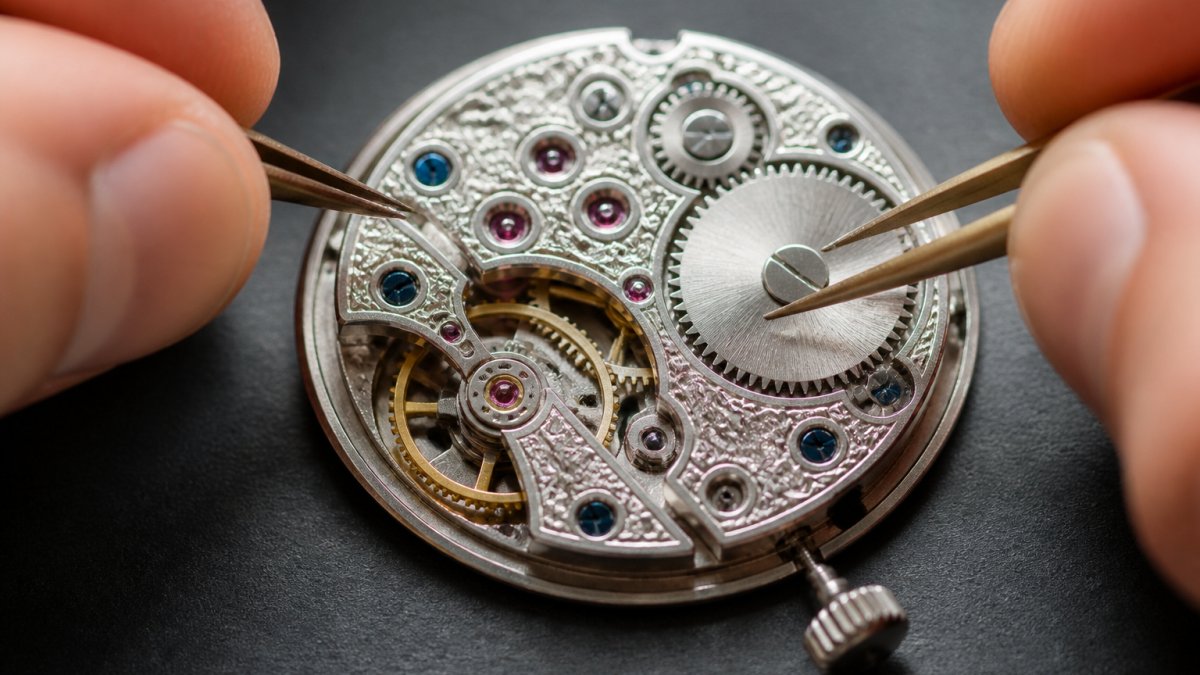
What sets custom-engineered calibers apart
Custom calibers let brands control every detail: balance wheel frequency, power reserve, hand-winding capability, date window placement, flexibility a standard ETA or Sellita can't match.
Developing an in-house movement is costly: you're commissioning engineering, tooling, and production setup, not buying a finished caliber. That's why in-house movements appear mainly above a certain price point.
Custom calibers also enable superior serviceability: when a movement is designed for one specific case and dial configuration, technicians know exactly what they're working with, with no guesswork about parts sourcing.
Sellita vs ETA Movements: Understanding the Standard Swiss Baseline
To evaluate alternatives to standard Swiss movements, you need a fixed reference point. "Standard Swiss movement" describes mass-produced, off-the-shelf automatic and quartz calibers supplied to many brands rather than built for one. The dominant families are ETA and Sellita: the ETA 2824-2, ETA 2892-A2, Sellita SW200-1, and Sellita SW300-1, plus quartz workhorses like the ETA 955.112 and Ronda 715.
The concrete baseline: specs that matter
The ETA 2824-2 and its Sellita counterpart, the SW200-1, are the reference automatics: both 25.6 mm in diameter, 4.6 mm thick, running at 28,800 vibrations per hour (4 Hz), with 25 or 26 jewels and roughly 38 to 40 hours of power reserve. The ETA 2892-A2 and Sellita SW300-1 are the slimmer siblings at about 3.6 mm thick, which is why they appear in thinner dress watches and watches with added modules.
Where Sellita and ETA actually diverge
Functionally, the SW200-1 and 2824-2 are close enough that many watchmakers treat them as interchangeable in service. The meaningful differences are commercial: ETA, owned by the Swatch Group, has restricted third-party supply over the years, pushing many independent brands toward Sellita, which positioned itself as the open-market alternative with similar performance and more willingness to customize. That history explains why two watches with near-identical specs may contain different calibers, and why parts and service access can differ years later. ETA generally has the deeper global service network; Sellita is the more accessible supply for smaller brands.
Compatibility and replacement considerations
If you're weighing an alternative as a drop-in replacement, dimensions decide everything: case diameter, thickness, stem height, dial feet positions, and hand sizes must all match. The 2824-2 and SW200-1 share a 25.6 mm diameter and similar hand-fitting sizes, which is why they're often swapped in the same case; the 2892-A2 and SW300-1 form a second, slimmer pairing. Japanese calibers such as the Seiko NH35 and Miyota 9015 sit in a different dimensional envelope, so they're rarely direct replacements without a new case, dial, and hands.
Why this baseline matters for alternatives
Once you know the reference, alternatives become measurable rather than rhetorical. A Miyota 9015 runs at 28,800 vph with about 42 hours of reserve and a slim profile that competes with the 2892 family. A Seiko NH35 runs at 21,600 vph with roughly 41 hours and a reputation for toughness rather than finishing. An in-house caliber may beat the baseline on finishing and design coherence while costing more to service. "Standard Swiss" has a spec sheet, and every alternative should be judged against it on accuracy grade, power reserve, beat rate, dimensions, serviceability, and parts availability.
Mechanical Watch Movement Reliability: What Actually Matters
Reliability in mechanical watches is the sum of design choices, materials, assembly precision, and long-term maintenance.
Service intervals and long-term ownership costs
A mechanical movement should be serviced every 5-10 years depending on wear and exposure.
Movement choice has real financial impact. Japanese movements often cost less to service because parts are abundant and labor time is shorter. Swiss movements can be pricier, particularly if the watch is rare or customized.
Reliability also depends on how the watch is worn.
The sealed movement, one designed to minimize dust and moisture ingress, matters more than caliber type for long-term reliability. A well-sealed Japanese movement outlasts a beautiful but exposed Swiss one.
German and Other National Watchmaking Traditions
German watchmaking is a set of engineering philosophies clustered around Glashutte. The most cited example is the Glashutte Original Caliber 39 family, an automatic with a three-quarter plate, swan-neck fine adjustment, and hand-engraved balance cock. Nomos builds in-house calibers such as the Alpha and DUW 3001, focused on slim, clean, highly finished movements. These are produced in smaller volumes than ETA or Sellita, so German movements are rarer and often more expensive to buy and service. German calibers frequently pursue chronometer-grade accuracy and visible engineering, sometimes at the expense of the decorative flourishes of high-end Swiss finishing.
What German movements actually offer
The appeal is transparency and verifiable performance. German makers often submit movements for independent chronometer testing, and the design language favors functional honesty over ornament. If you want accuracy that can be independently confirmed and construction legible through a display caseback, German calibers deliver. The cost is narrower parts availability and service network depth than the Swiss mainstream.
Other national traditions and the American revival
British, French, and American watchmaking largely faded from mass production in the twentieth century, but the American tradition is being revived by independent and microbrand operations combining modern precision manufacturing with small-batch assembly. This is a genuine alternative category, not nostalgia: domestic assembly can shorten supply chains and tighten control over finishing and quality checks. The practical question is the same as with German calibers: who services it, how available are parts, and what does a service cost over ten years.
The comparison competitors skip: movement-to-movement and lifecycle cost
Most coverage of national traditions stops at brand storytelling. A more useful approach compares movement families on the factors that determine ownership cost.
Service interval and cost. A standard Swiss automatic is commonly serviced every five to ten years, with full service often running several hundred dollars depending on complications and the watchmaker.
Parts availability. ETA and Sellita have broad global parts networks. Seiko and Miyota have deep aftermarket support.
Expected service life. A well-sealed, regularly serviced mechanical movement can run for decades.
Accuracy grade. Compare stated tolerances, not reputations.
Matching the tradition to your use case
Use-case recommendations cut through the marketing. For low maintenance and easy servicing, a Japanese automatic or mainstream Swiss caliber is the pragmatic choice. For high accuracy with independent verification, look for a chronometer-certified German or Swiss caliber. For mechanical interest and visible engineering, German and in-house calibers reward close inspection. If affordability and parts availability matter most, Japanese and standard Swiss calibers win. For a distinctive, small-batch movement with a narrower service network, German and domestic-assembled calibers are worth the trade-off.
How to Choose: Movement Comparison and Selection Criteria
Choosing between alternatives to standard Swiss movements requires clarity about what you value in a watch.
Key specifications to evaluate
Accuracy tolerance: How close to perfect timekeeping matters depends on your use case.
Power reserve: How long the watch runs after winding. 40 hours is standard; 70+ hours is luxury.
Jewel count: More jewels don't equal a better movement. Jewels reduce friction at specific pivot points, and beyond 17 they're often ornamental.
Hacking seconds: The ability to stop the seconds hand for precise time-setting. Useful if you sync watches frequently, irrelevant if you don't.
Hand-winding capability: Some automatic movements allow manual winding; others don't. Manual winding is useful for watches worn irregularly.
| Specification | Why It Matters | What to Look For |
|---|---|---|
| Accuracy | Determines how often you adjust | COSC certified or -10/+10 SPD minimum |
| Power Reserve | How long it runs unwound | 40+ hours for daily wear; 70+ for occasional |
| Serviceability | Long-term ownership cost | Parts availability and service network |
| Finishing | Visual appeal through caseback | Hand-beveling, perlage if display matters to you |
| Customization | Design coherence | In-house calibers for unique configurations |
Common mistakes when evaluating alternatives to standard swiss movements
The biggest mistake is treating movement choice as the primary decision.
Another common error is confusing brand prestige with movement quality.
Don't assume newer is better. A proven movement design from 20 years ago often outperforms a recent "innovation." Horological engineering has plateaued; execution and finishing matter now, not novelty.
Finally, avoid analysis paralysis. Movement choice matters, but it isn't the most important factor.
Choosing a timepiece means weighing trade-offs between precision, aesthetics, reliability, and cost. Standard Swiss movements are excellent, but they're not the only path to a watch you'll treasure for decades.
Frequently Asked Questions
Are Japanese watch movements as reliable as Swiss movements?
Japanese movements, particularly those from Seiko and Citizen, match or exceed Swiss reliability in many cases. Japanese manufacturers emphasize precision manufacturing and rigorous quality control. The key difference is philosophy: Swiss brands often prioritize finishing and heritage, while Japanese makers focus on accuracy and durability. Both approaches produce reliable timepieces; the choice depends on your priorities and budget.
What is the difference between a Swiss movement and an in-house movement?
Swiss movements typically refer to off-the-shelf calibers like ETA or Sellita, manufactured by dedicated movement suppliers and used by multiple watch brands. In-house movements are designed and built by individual watchmakers for their own watches. In-house calibers offer customization, unique finishing, and brand identity, but require significant investment and expertise. They often command premium prices because they reflect the maker's horological vision.
Are Sellita movements considered standard Swiss movements?
Yes, Sellita movements are produced in Switzerland and meet the criteria for Swiss-made certification. Sellita is an independent movement manufacturer that supplies calibers to numerous brands. While technically Swiss, Sellita movements are off-the-shelf alternatives to ETA calibers. They offer similar reliability and accuracy but provide brands with supply independence from ETA's parent company, making them a practical alternative within the Swiss movement category.
What should I compare when choosing a mechanical watch movement?
Focus on power reserve (how long it runs without winding), beat rate (frequency of oscillation, measured in Hz), accuracy specifications, jewel count (indicates friction reduction), and serviceability. Check whether parts are readily available and what service intervals the maker recommends. Consider finishing quality, hacking seconds (ability to stop the seconds hand for precise setting), and whether the movement suits your lifestyle. Warranty length and repair costs also matter for long-term ownership.