

Last Updated: October 26, 2026
Quick Summary
Most well-built microbrand watches last 20 to 30 years or more with proper service every 5 to 7 years. That figure reflects the movement, not the company behind it, so a well-maintained watch can outlast the brand itself.
- Automatic and manual calibers last decades when serviced, while quartz batteries run 2 to 5 years each.
- A standard automatic service costs $150 to $350, while custom calibers run $250 to $600 or more.
- A full mechanical service includes disassembly, ultrasonic cleaning, re-oiling, and pressure testing.
- Avoid setting the date between 9 p.m. and 3 a.m. and keep the watch away from magnets.
- Before buying, confirm the movement is named and replacement parts are available to independent watchmakers.
Table of Contents
- The Short Answer on Microbrand Watch Longevity
- What Actually Drives How Long a Microbrand Watch Lasts
- Automatic Watch Lifespan: What to Expect From a Mechanical Movement
- Quartz Watch Battery Life and the Trade-Offs of a Quartz Caliber
- Microbrand Watch Servicing: Intervals, Costs, and What Gets Replaced
- How to Care for an Automatic Watch in Daily Wear
- What Happens If the Microbrand Shuts Down
- Assessing Durability and Service Support Before You Buy
- Frequently Asked Questions
The Short Answer on Microbrand Watch Longevity
Most well-built microbrand watches last 20 to 30 years or more with proper service every 5 to 7 years, according to Indie Watches' guide to microbrand watches. That figure reflects the movement, not the company behind it.
A microbrand watch is a timepiece produced in small batches by an independent company, often using custom or modified movements rather than mass-market components.
The catch sits in that second word, "company." A watch's mechanical lifespan and a brand's business lifespan are two different things. That gap is where most buyers get confused.
Below, we break down what really drives how long do microbrand watches last, from movement type to service access. You will also see what happens if a small brand closes its doors.
What Actually Drives How Long a Microbrand Watch Lasts
Four factors decide the answer: the movement inside, the materials around it, how you wear the watch, and whether parts and service stay available. Skip any one and the clock starts ticking faster.
Movement Type and Caliber Quality
A movement is the engine of a watch, the mechanism that tracks and displays time. Automatic and manual movements rely on gears and springs. Quartz movements run on a battery and a circuit.
Automatic and manual calibers last decades when serviced. Quartz calibers often run 2 to 5 years per battery, with the circuit itself lasting much longer. Custom-designed calibers are a feature of the Legacy Automatic.
Build Quality, Case Material, and Water Resistance
The case protects everything inside. A hand-finished titanium case is a feature of Haim Watch Company timepieces.
Water resistance is the quiet killer.
- Titanium and stainless steel: strong corrosion resistance
- Sapphire crystal: high scratch resistance
- 100m+ water resistance: safe for swimming, not diving
Automatic Watch Lifespan: What to Expect From a Mechanical Movement
A common mistake is waiting for a watch to stop before booking service. By then, wear has already set in. Treat the 5-to-7-year window as a maintenance reminder, not a repair trigger.
Quartz Watch Battery Life and the Trade-Offs of a Quartz Caliber
If you are weighing the two, our guide to automatic vs quartz watches breaks down the differences in depth.
Microbrand Watch Servicing: Intervals, Costs, and What Gets Replaced
Service is the single biggest lever you control over how long a microbrand watch lasts. A mechanical movement that gets fresh lubricant on schedule can run for decades; the same movement left dry will wear its pivots and gear teeth long before its time. The table below gives realistic intervals and cost ranges based on movement type and common service tiers.
| Movement Type | Typical Service Interval | What Gets Replaced | Typical Cost Range (USD) |
|---|---|---|---|
| Automatic (standard Swiss or Japanese caliber) | 5 to 7 years | Lubricants, gaskets, worn gears, mainspring if needed | $150 to $350 |
| Automatic (custom or modified caliber) | 5 to 7 years | Lubricants, gaskets, proprietary parts as available | $250 to $600+ |
| Manual wind | 5 to 7 years | Lubricants, mainspring, seals | $150 to $350 |
| Quartz | Battery every 2 to 5 years; full service every 8 to 10 years | Battery, gaskets at each swap; module cleaning at full service | $10 to $30 per battery; $75 to $150 full service |
What a full mechanical service actually involves:
- Disassembly of the movement down to individual components
- Ultrasonic cleaning of every part to remove old, gummy lubricant
- Inspection of pivots, jewels, and gear teeth for wear
- Reassembly and re-oiling with the correct lubricants for each contact point
- Replacement of gaskets, seals, and the mainspring as a matter of course
- Timing and regulation on a timegrapher before the case is closed
- Pressure testing to confirm water resistance after resealing
For a deeper look at what a service involves, see our guide to servicing microbrand watch movements and our breakdown of what an automatic watch service costs.
How to Care for an Automatic Watch in Daily Wear
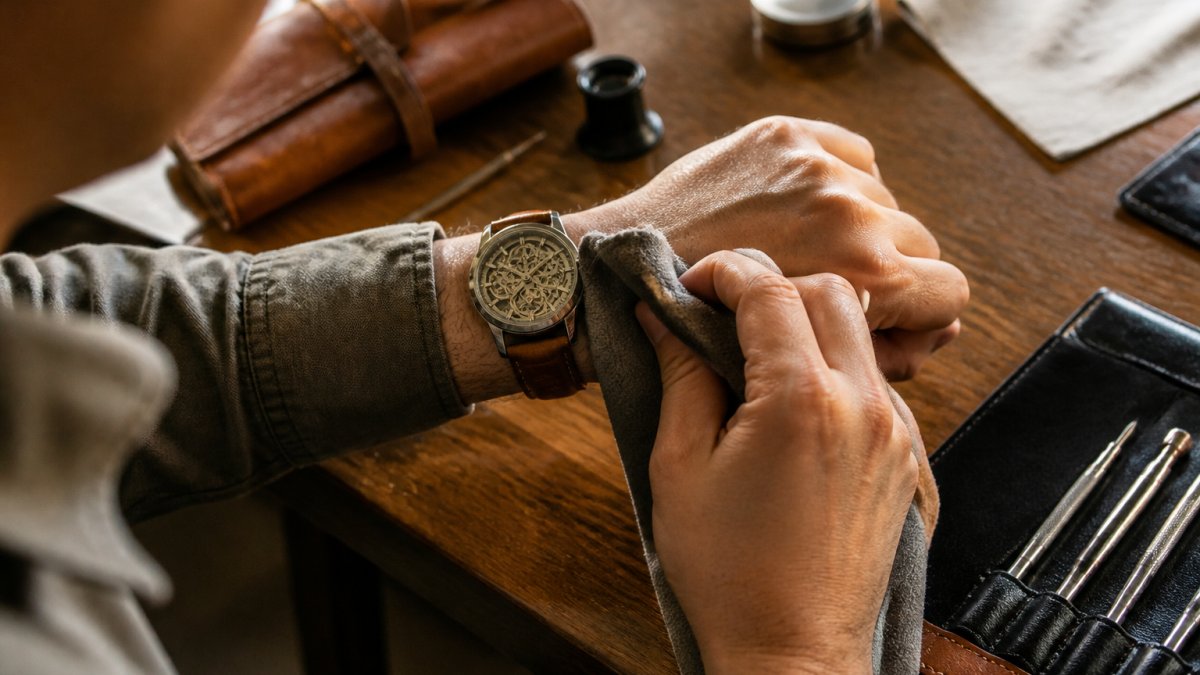
- Wipe the case and crystal with a soft cloth each week
- Avoid setting the date between 9 p.m. and 3 a.m.
- Store it on a winder or wear it regularly to keep it running
- Keep it away from magnets, like speakers and phone cases
- Have it pressure-tested after any hard impact
- Learn the signs your automatic watch needs servicing
What Happens If the Microbrand Shuts Down
A forum participant on Watchuseek's microbrand discussion made the point plainly: a well-maintained microbrand watch can outlast the brand itself. That is an opinion, not a guarantee, but it reflects how the hobby actually works.
Assessing Durability and Service Support Before You Buy
Durability is a pre-purchase decision, not a post-purchase hope. Ask direct questions and read the answers closely.
Use this checklist before you commit:
- The movement is named, not hidden behind vague language
- The case material and crystal type are specified
- Water resistance is rated and realistic for your use
- The brand states a service policy and turnaround
- Replacement parts are available to independent watchmakers
- The warranty covers defects, not just the first scratch
For a full framework, our guide to evaluating microbrand watch quality walks through what to inspect and what to ask.
At Haim Watch Company, our collection includes the Swiss-made Viajero SE and the 100% US-assembled Legacy Automatic, with hand-finished titanium cases and custom-designed calibers.
Frequently Asked Questions
Do mechanical watches typically last longer than quartz watches?
A mechanical movement can run for 20 to 30 years or more with service every 5 to 7 years, according to Indie Watches. Quartz movements often run 15 to 25 years but are frequently swapped out rather than repaired, and their batteries need replacing every 2 to 3 years. The deciding factor is not the movement type alone but whether parts and a watchmaker remain available. A well-supported quartz caliber can outlast a neglected automatic.
How often does an automatic watch need servicing?
Plan on a full service every 5 to 7 years for a mechanical movement, which is the interval Indie Watches cites alongside a 20 to 30 year lifespan. That means cleaning, re-lubricating, and re-sealing the case. If the watch runs fast or slow, the power reserve drops, or moisture fogs the crystal, move the service up. Skipping it wears the pivots and turns a routine service into a parts replacement.
Can a microbrand watch be repaired if the brand closes?
Often yes, but it depends on the movement. Watches built on widely used calibers can be serviced by any competent watchmaker because parts are common. Custom-designed calibers are harder: a watchmaker may need to fabricate or source parts, and the cost rises. Before buying, ask which movement the watch uses and whether the brand stocks spare parts. A Watchuseek forum participant notes a maintained watch can outlast the brand itself.
How can you make a microbrand watch last longer?
Keep it away from magnets, shocks, and hot water, and rinse a diver watch with fresh water after saltwater use. Have the gaskets checked at every service so water resistance holds. Store an automatic on a winder or wear it regularly to keep lubricants moving, and avoid leaving a quartz watch with a dead battery inside, since leakage damages the movement. Proper maintenance is the single biggest factor in reaching the 20 to 30 year range.
The real challenge is not finding a beautiful watch. It is finding one built to last and backed by a brand that answers for it. Haim Watch Company meets that test with hand-finished titanium cases, custom-designed calibers, and movements sourced and assembled with care. Explore the collection and choose a piece made to stay with you. Get started with Haim Watch Company and wear a watch built for the long run.
