

Table of Contents
- Why Titanium Watches Command a Premium
- Titanium Watch Scratch Resistance and Durability
- Weight and Wearing Comfort
- Titanium vs. Stainless Steel Watch: Which Material Wins?
- Hypoallergenic Watch Materials and Skin Sensitivity
- Resale Value and Long-Term Investment Potential
- The Real Cost of Ownership
Last Updated: August 27, 2026
Why Titanium Watches Command a Premium
Titanium delivers specific performance characteristics that justify its cost for serious watch collectors and daily wearers. Titanium costs roughly 3-5 times more to machine and finish than stainless steel, requiring specialized tooling, slower production speeds, and sophisticated surface treatments (peer-reviewed research). The real expense lies in manufacturing complexity rather than raw material alone.
Whether titanium justifies its premium depends entirely on what you value in a timepiece. For some collectors, weight reduction changes how a watch feels on the wrist. For others, hypoallergenic properties solve a genuine problem. Understanding which benefits apply to you determines whether the premium makes sense.
Titanium Watch Scratch Resistance and Durability
Titanium scratches more easily than stainless steel, the most important limitation to understand before committing to the material. On the Vickers hardness scale, titanium measures around 100-150 HV, while stainless steel typically reaches 200-300 HV (astm.org). A titanium watch case will show wear marks from everyday contact more readily than a steel equivalent.
However, Grade 5 titanium develops a natural oxide layer that hardens the surface over time. This patina effect means a titanium watch's scratch resistance actually improves slightly with age and wear. Many collectors appreciate this characteristic because it creates a unique finish specific to each watch's individual wear pattern.
Titanium's durability truly excels in corrosion resistance. Salt water, sweat, humidity, and harsh chemicals cause virtually no degradation to titanium. A titanium watch can be worn continuously in environments where a steel watch would eventually show rust or pitting, making it superior for diving watches and genuinely demanding conditions.
Surface treatment matters significantly. A brushed finish hides scratches far more effectively than polished finishes. Bead-blasted surfaces scatter light in ways that minimize the appearance of wear marks. Selecting a titanium watch with appropriate finishing makes scratch visibility far less concerning in practice.
Weight and Wearing Comfort
A titanium case weighs approximately 40-50% less than an equivalent stainless steel case (peer-reviewed research). For a typical 42mm sports watch, this means the difference between roughly 95 grams and 160 grams, a shift you'll notice immediately.
This weight advantage compounds over hours of wearing. A lighter watch fatigues your wrist less, reduces pressure on the lugs, and feels less intrusive during everyday activities. For people who wear watches 12+ hours daily, this ergonomic benefit becomes genuinely meaningful.
Titanium's thermal conductivity differs from stainless steel in ways that affect comfort. Titanium conducts heat more slowly than steel, meaning the case doesn't feel as cold when you first put it on. The case warms to body temperature more gradually, creating a gentler transition.
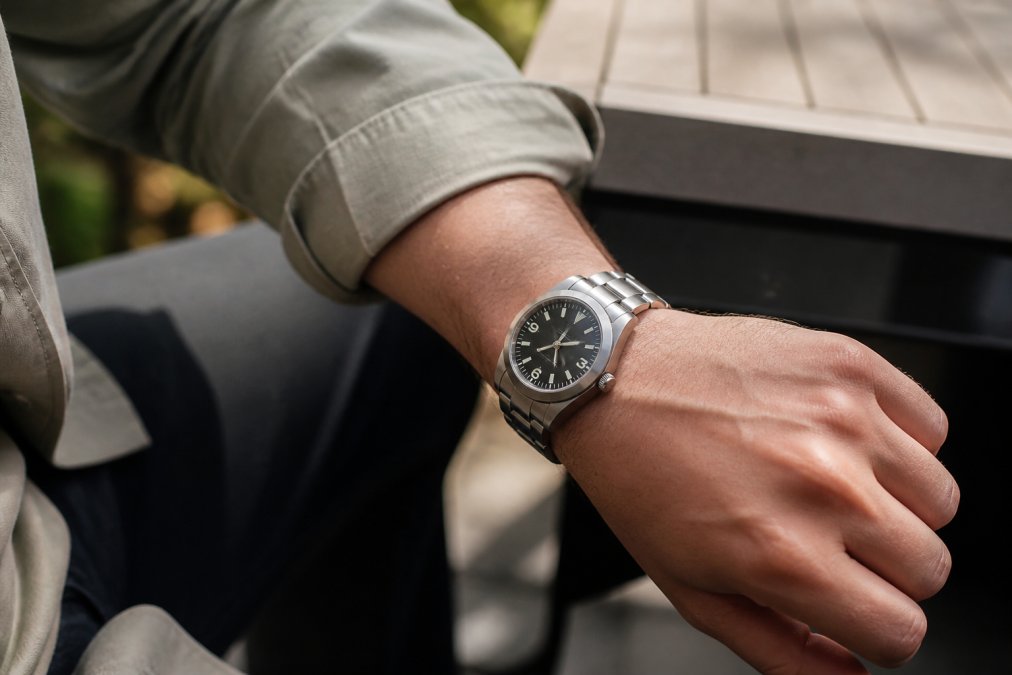
The combination of weight reduction and thermal properties makes titanium watches particularly well-suited for people who value comfort as much as aesthetics. A 50-gram difference might sound trivial on paper, but wearing it consistently reveals why watchmakers specifically choose titanium for sports models and daily drivers.
Titanium vs. Stainless Steel Watch: Which Material Wins?
Neither material is universally superior. The choice depends on what performance characteristics matter most for your specific situation.
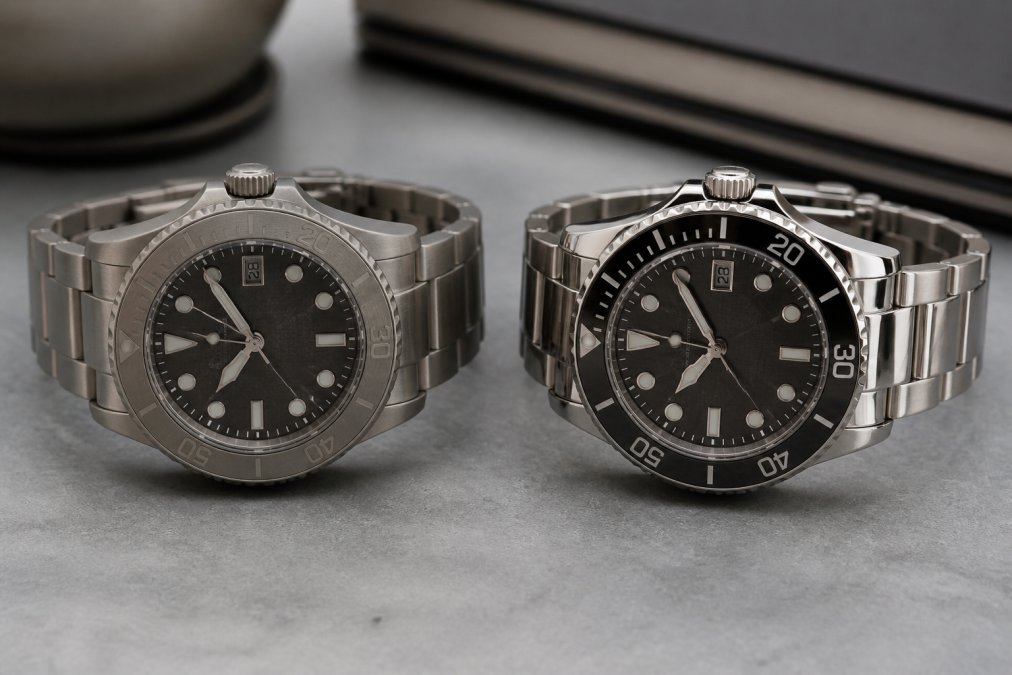
Stainless steel delivers superior surface hardness and scratch resistance. A steel watch can be polished and refinished repeatedly without concern about material degradation. Steel also costs significantly less, both in raw material and manufacturing.
Titanium wins on weight, corrosion resistance, and hypoallergenic properties. A titanium watch feels dramatically lighter on your wrist and resists environmental degradation far more effectively than steel, making it superior for diving watches and water sports. For people with sensitive skin or nickel allergies, titanium eliminates an entire category of potential problems.
| Characteristic | Titanium | Stainless Steel |
|---|---|---|
| Weight | 40-50% lighter | Heavier, more substantial feel |
| Scratch Resistance | Scratches more easily | Superior surface hardness |
| Corrosion Resistance | Exceptional in all environments | Vulnerable to salt water, sweat |
| Hypoallergenic | Yes, nickel-free | May contain nickel (allergen) |
| Refinishing | Limited options | Can be polished repeatedly |
| Cost | Higher premium | More affordable |
| Best For | Daily wear, sports, diving | Professional, conservative aesthetics |
The decision ultimately hinges on whether the specific advantages of titanium address real needs in your life. If you dive regularly, have a nickel allergy, or value weight reduction for comfort, titanium delivers measurable benefit. If none of these factors apply, stainless steel provides excellent performance at lower cost.
Hypoallergenic Watch Materials and Skin Sensitivity
Nickel allergies affect roughly 10-15% of the population, and stainless steel watches frequently trigger reactions because many steel alloys contain nickel as a binding element. Titanium is naturally nickel-free and biocompatible, posing no risk to people with metal sensitivities.
This single characteristic makes titanium the obvious choice for anyone with a documented nickel allergy or sensitive skin that reacts to certain metals. You don't need to research alloy compositions or hope the manufacturer used nickel-free steel. Titanium simply works.
If you've had negative experiences with steel watches causing rashes, discoloration, or irritation, titanium eliminates that problem entirely.
Resale Value and Long-Term Investment Potential
Titanium watches hold value differently than stainless steel watches. A titanium watch from an emerging brand doesn't command the resale premium of a Rolex or Omega, but it also doesn't depreciate as sharply as mass-market watches.
Titanium's scratch-prone nature creates a practical challenge for resale. A heavily worn titanium case shows its age visibly, while a comparable steel watch might polish and refinish more easily. However, titanium's durability means the watch remains functionally excellent even if the case shows wear.
For microbrands specifically, resale value depends on whether the brand achieves sustained recognition in the watch community. A Haim Watch Company timepiece with hand-finished titanium holds appeal to serious collectors who value artisanal craftsmanship. As the brand's reputation solidifies, the resale value of early pieces tends to appreciate rather than depreciate.
The investment case for a titanium watch from an emerging watchmaker rests on whether you believe in the brand's long-term viability and whether you'd wear the watch regardless of resale potential.
The Real Cost of Ownership
Titanium requires specialized cleaning and polishing techniques because standard steel polishing compounds can damage the surface. Professional refinishing of titanium is more expensive than steel refinishing, and fewer watchmakers offer the service.
However, titanium's corrosion resistance means fewer maintenance interventions overall. A titanium watch doesn't require regular servicing to prevent rust or oxidation. The maintenance profile is simpler: wear it, keep it clean, service the movement on the standard schedule.
Water resistance maintenance costs the same regardless of case material. Seals degrade over time, and periodic pressure testing ensures your watch remains waterproof.
Haim Watch Company's hand-finished titanium cases are designed to age gracefully. The brushed and bead-blasted finishes minimize the appearance of cosmetic wear, reducing the psychological burden of visible scratches.
The decision to invest in a titanium watch ultimately depends on matching the material's specific strengths to your actual needs. If weight matters, if you wear watches in challenging environments, if you have skin sensitivities, or if you value the engineering sophistication of the material, then a titanium watch worth the investment becomes clear. If you wear watches casually in professional settings and don't encounter the conditions where titanium excels, stainless steel delivers excellent performance at lower cost.
Haim Watch Company's titanium timepieces represent a commitment to the material precisely because we believe in its advantages for serious watch enthusiasts. Our hand-finished cases and custom-engineered calibers are designed to deliver the performance and aesthetic sophistication that justify the premium. Explore our collection and discover whether a titanium watch aligns with your vision of the perfect timepiece. Shop Now
Frequently Asked Questions
Q: Do titanium watches hold their value over time?
A: Titanium watches from microbrand makers tend to hold value, though resale depends on brand reputation and condition. Limited production runs and hand-finished cases can contribute to value. However, titanium watches are not commodities like precious metals, so resale depends heavily on the brand's market position and collector demand rather than material alone.
Q: What is the main disadvantage of a titanium watch?
A: The primary disadvantage is cost. Titanium watches carry a significant premium over stainless steel due to manufacturing complexity and material expense. Additionally, while titanium resists corrosion exceptionally well, it can scratch more easily than hardened stainless steel, and refinishing requires specialized expertise. Titanium also conducts heat differently than steel, which some wearers notice on their wrist. For casual daily wear, these trade-offs may not justify the investment.
Q: Is titanium significantly more durable than stainless steel?
A: Durability depends on the metric. Titanium offers superior corrosion resistance and is lighter for its strength-to-weight ratio, making it ideal for active wear and water resistance. However, stainless steel typically resists surface scratching better due to higher surface hardness on the Vickers scale. Titanium's durability advantage shines in harsh environments (saltwater, extreme temperatures) and long-term structural integrity. For a daily desk watch, stainless steel may outlast titanium visually, though both will function reliably for decades.
Q: Are titanium watches worth it for someone who wears casual clothes?
A: Yes, if you value lightweight comfort and durability. Titanium's reduced weight makes it ideal for all-day wear, even in casual settings. The refined aesthetic of hand-finished titanium cases works well with both dressy and casual outfits, it doesn't require formal attire to justify its presence on your wrist. However, if you rarely wear watches or prefer budget-friendly options, stainless steel or other materials may serve you better. The investment makes sense when you'll actually wear the watch regularly and appreciate craftsmanship.
This article was written using GrandRanker